








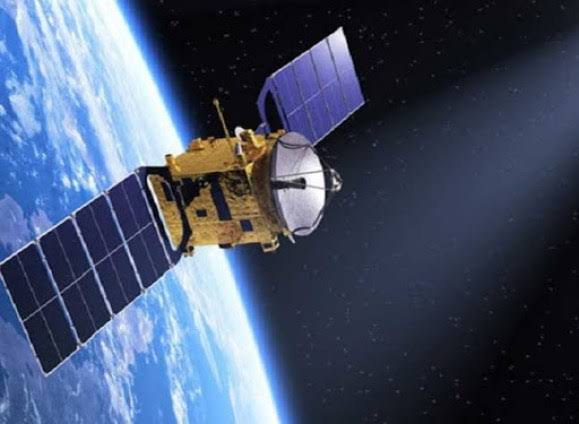
Satellites have become essential to modern life, supporting communication, navigation, weather monitoring and scientific research. But as more spacecraft enter orbit, another problem is growing alongside them: space debris.
Tiny fragments of old satellites, rocket components and other objects can travel through orbit at extremely high speeds. Even a relatively small piece of debris can cause serious damage when it collides with a spacecraft.
Scientists and engineers are therefore developing new types of lightweight shielding that could give satellites better protection without adding excessive weight.
Why Space Debris Is Such a Threat
Objects in orbit can move at several kilometres per second. At those speeds, even a small fragment carries enough kinetic energy to damage sensitive spacecraft components.
Traditional protection methods already use layers of shielding to break up or disperse an incoming object before it reaches the main spacecraft structure. But modern satellites need protection that is both effective and lightweight.
That has pushed researchers towards advanced materials and layered designs.
New Materials Could Act Like Space Armour
Researchers are exploring combinations of composite tiles, high-strength fabrics and lightweight foams to absorb or disperse the energy produced during an impact.
Materials such as Kevlar and ceramic fibres are particularly useful because they can provide strong protection without the weight associated with thick metal armour.
Some modern shielding concepts also use multiple layers separated by a gap. When debris strikes the outer layer, it can break apart before reaching the spacecraft’s main wall, spreading the impact energy over a larger area.
The Challenge: Protection Without Extra Weight
Adding more material to a satellite might seem like an easy solution, but spacecraft design is extremely sensitive to mass.
Every additional kilogram can affect launch requirements, cost and mission performance. Engineers therefore need shields that provide maximum protection while adding as little weight as possible.
This is why lightweight composites, fabrics and foam-based structures are attracting attention.
3D Printing Could Open New Possibilities
Manufacturing technology is also becoming part of the solution.
Advanced and 3D-printed structures can allow engineers to create complex shapes and internal patterns designed to manage impact energy more efficiently. Lightweight structures can potentially be tailored for specific parts of a spacecraft instead of relying on a single heavy protective layer.
Metal foams are another area of interest because their internal structure can provide useful energy-absorbing properties while keeping weight relatively low.
More Than Just Protecting Satellites
Better debris protection could have wider implications for the future of space activity.
Earth’s orbit is becoming increasingly important for communication networks, navigation systems, Earth observation and scientific missions. As the number of spacecraft increases, reducing the risk of collisions becomes more important.
Improved shielding could help spacecraft survive impacts that might otherwise end a mission, potentially making some space operations more resilient.
A New Era of Spacecraft Protection
Spacecraft armour is unlikely to look like the heavy metal protection associated with vehicles on Earth. Instead, the future may involve thin composite layers, high-strength fabrics, ceramics, foams and specially engineered structures working together.
The goal is simple: protect valuable spacecraft from an increasingly crowded orbital environment without making them too heavy to launch.
As humanity sends more satellites into orbit, this new generation of protective materials could become an increasingly important part of keeping space infrastructure safe.