







Robots usually depend on motors, batteries and complicated mechanical systems to move. But researchers have developed a much simpler design that can repeatedly leap using nothing more than infrared light.
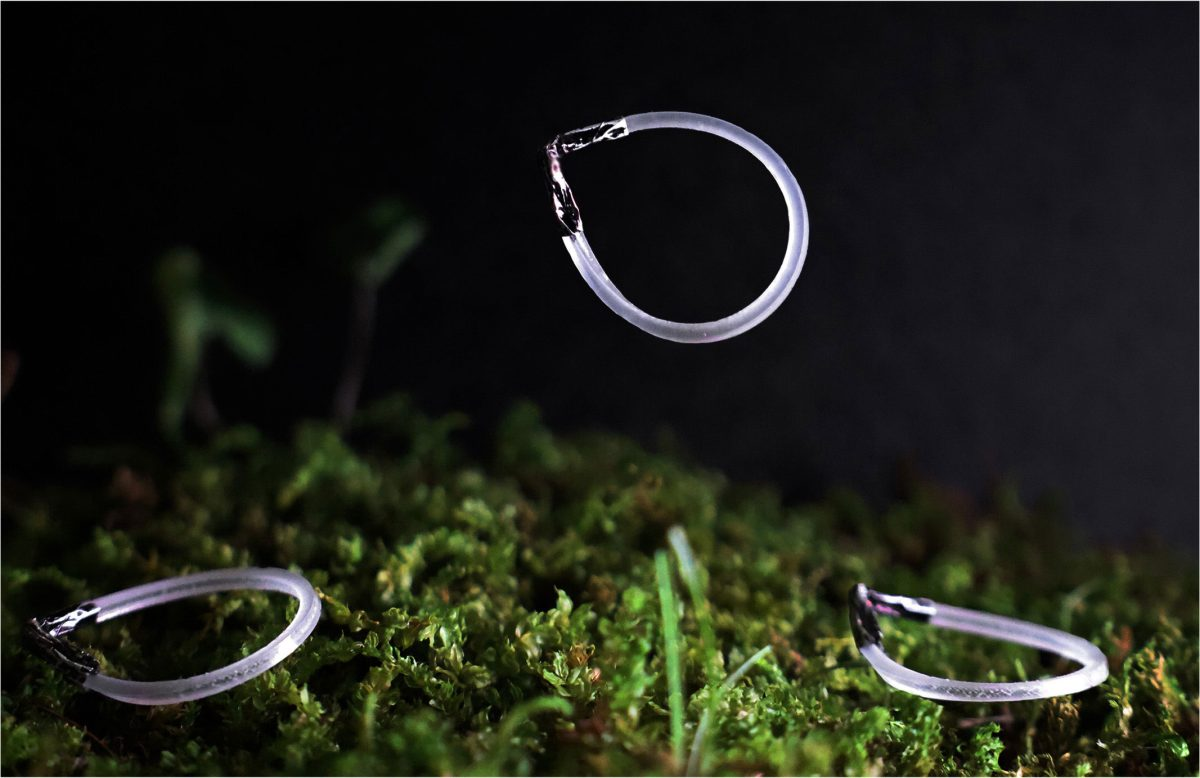
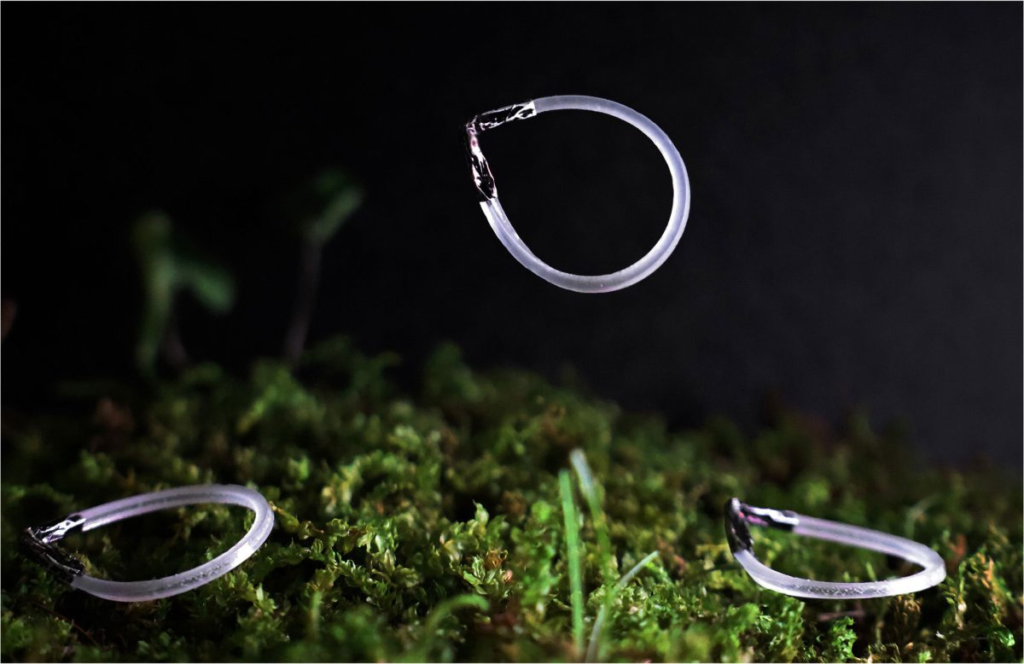
Scientists at North Carolina State University have created a soft, teardrop-shaped robot that can jump continuously as long as infrared light is shining on it. The design automatically resets after every leap, allowing the cycle to repeat without human intervention.
How the Light-Powered Robot Moves
The robot is made from a flexible liquid crystal elastomer ribbon combined with a small V-shaped aluminium tube.
When infrared light hits the ribbon, its surface contracts and causes the structure to twist. The twisting stores elastic energy until it reaches a critical point. The stored energy is then suddenly released, launching the robot into the air.
After landing, the robot naturally returns to its original shape and begins storing energy again. As long as the light remains available, the jumping cycle can continue.
A Small Design Change Can Change Its Movement
One of the most interesting aspects of the system is how easily its movement can be controlled.
Researchers found that changing the angle of the V-shaped section can make the robot behave differently. A wider angle allows it to crawl, while smaller angles make it jump forward or leap vertically.
Adding a small amount of weight to the robot can also improve its jumping distance and stability.
It Can Handle Uneven Surfaces
In early demonstrations, the soft robots were able to move across challenging surfaces including grass, sand, rocks and mulch. They also successfully crossed slopes and obstacles.
The intensity of the infrared light provides another control mechanism. The light needs to be strong enough to trigger movement, but excessive intensity can make the robot’s jumps less predictable.
Could These Robots Explore Difficult Terrain?
The researchers say the technology is still at an experimental stage and does not yet have an immediate commercial application.
However, the self-resetting mechanism could eventually be explored for environmental navigation, swarm robotics and movement through unstructured terrain. Small robots that can move without conventional motors or complex reset mechanisms could potentially be useful in places that are difficult for traditional machines to navigate.
A New Direction for Soft Robotics
The study demonstrates how relatively simple materials and clever mechanical design can produce complex robotic movement.
Rather than relying on a conventional motor to power every movement, the robot uses light to repeatedly load and release stored elastic energy. That approach could inspire new generations of lightweight soft robots designed to move through environments where conventional machines may struggle.