






The India-Pakistan rivalry returns to the centre of women’s cricket as the two teams meet in the Women’s Asia Cup 2026 in Dubai on September 5.
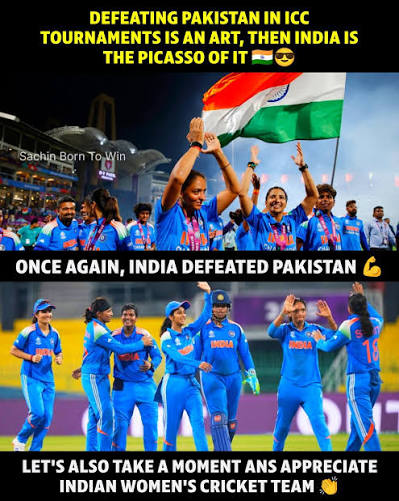
While the latest contest comes in a different tournament, memories of their previous meeting remain fresh. India produced a commanding performance against Pakistan at the 2026 Women’s T20 World Cup, winning by 64 runs at Edgbaston. Now, with both sides back on the same stage, that result provides an important reference point—but not a guarantee of what will happen next.
India have already secured their place in the Asia Cup semi-finals after convincing victories over Thailand and Hong Kong. Their 137 run win over Hong Kong, in particular, underlined the team’s strong early tournament form.
The Last Meeting Ended in a One-Sided Result
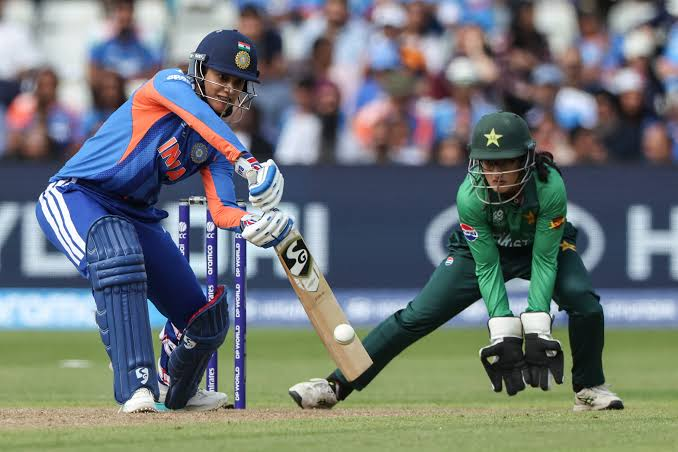
When India and Pakistan met at the T20 World Cup in June, India controlled the game from the beginning.
India posted 170/6 in 20 overs, with Smriti Mandhana leading the scoring with a fluent 68 from 44 deliveries. Harmanpreet Kaur contributed 36, while Richa Ghosh provided late acceleration with a quick 34 from just 17 balls.
Pakistan never managed to build a sustained chase.
They were bowled out for 106 in 17 overs, leaving India with a 64-run victory. The decisive performance came from Deepti Sharma, who claimed five wickets and broke Pakistan’s batting resistance at crucial moments.
That match demonstrated India’s ability to win through contributions from several departments rather than depending on one player.
Mandhana’s Batting Set the Tone
One of the clearest memories from the World Cup clash was Mandhana’s innings.
Her 68 off 44 balls gave India the platform to post a competitive total. She combined controlled strokeplay with aggressive scoring, putting Pakistan’s bowlers under pressure during the first innings.
Mandhana’s role could again be important in Dubai.
India’s batting lineup has shown plenty of firepower during the Asia Cup, and another strong start from the experienced opener would give the middle order considerable freedom.
Her battle with Pakistan’s bowling attack could therefore become one of the key individual contests of the evening.
Deepti Sharma Was the Game-Changer

If Mandhana shaped India’s innings, Deepti decided the World Cup contest with the ball.
The all-rounder finished with 5/10, producing the second five-wicket haul of her T20I career. Her spell helped India dismantle Pakistan’s chase and earned her the Player of the Match award.
Deepti has continued to be an important part of India’s Asia Cup campaign.
Her ability to contribute with both bat and ball gives India flexibility, particularly in the middle overs when the game can change quickly.
Pakistan will therefore need a plan not only for India’s top-order batters but also for the all round threat posed by players such as Deepti.
Pakistan Cannot Rely on the Old Script
The World Cup result gives India psychological momentum, but Pakistan will be aware that another match provides a fresh opportunity.
A team cannot afford to carry the scoreboard from a previous encounter into a new game.
Pakistan’s challenge will be to prevent India’s top order from establishing control early and to produce a more stable batting performance than it did at Edgbaston.
Their Asia Cup campaign also gives them a chance to reset. Pakistan began their tournament against Thailand before arriving at the India fixture, while India entered the contest after two strong wins.
India’s Form Makes Them the Team to Beat
India’s current Asia Cup campaign has strengthened their position as one of the tournament favourites.
After defeating Thailand, India produced an emphatic 193/5 against Hong Kong and then bowled their opponents out for just 56. The resulting 137-run victory was one of the tournament’s most dominant performances so far.
That result also showed the depth of India’s squad.
The team is not relying entirely on one batter or one bowler. Its strength comes from having several players capable of influencing a game.
For Pakistan, disrupting that balance will be the central challenge.
Why This Match Still Matters for India
India have already qualified for the semi-finals, so the match does not carry the same qualification pressure for them.
But an India-Pakistan contest rarely feels like an ordinary group-stage game.
For India, the match offers an opportunity to maintain their winning momentum and test themselves against one of the tournament’s biggest rivals before the knockout stage.
It is also another chance to build confidence in a tournament where the team has started strongly.
Pakistan’s Biggest Task: Survive India’s Pressure
Pakistan’s route to victory will likely require a much more complete performance than the one produced at the World Cup.
Their bowlers will need to prevent India from reaching another imposing total, while the batting unit must avoid the collapse that turned the previous meeting into a comfortable Indian victory.
The first six overs could be particularly important.
If Pakistan can restrict India’s opening partnership, the pressure could move onto the Indian middle order. If India gets another fast start, Pakistan could once again find itself defending against an increasingly difficult total.
The Head-to-Head Story Adds Another Layer
India have historically enjoyed the stronger record against Pakistan in women’s T20 cricket.
That advantage adds context to the rivalry, but recent matches also show why individual performances matter. One exceptional spell or one rapid innings can completely alter the balance of a T20 contest.
India’s 64-run World Cup win is therefore useful as a warning for Pakistan but it should not be treated as a prediction.
A Different Tournament, Same Rivalry
The World Cup meeting was about making a strong start to a global tournament. The Asia Cup contest arrives with a different atmosphere.
India are already through to the semi-finals. Pakistan are looking to make an impact against their biggest regional rival. And both teams know that the next few games will increasingly determine the shape of the tournament.
That makes the September 5 encounter more than a replay of their World Cup meeting.
It is a new test.
What to Watch in India vs Pakistan
Smriti Mandhana’s start
India’s opening phase could determine how much pressure is placed on Pakistan’s bowling attack.
Deepti Sharma’s all-round influence
After her five-wicket World Cup performance, Pakistan will be keen to prevent Deepti from having another decisive impact.
Pakistan’s batting response
The biggest question is whether Pakistan can put together a longer, more resilient innings than the 106 they managed at Edgbaston.
India’s middle order
With players such as Harmanpreet Kaur and Richa Ghosh capable of accelerating the scoring, Pakistan cannot afford to focus only on India’s openers.
The psychological battle
The previous World Cup result gives India confidence, but Pakistan have the opportunity to create an entirely different story in Dubai.
India vs Pakistan: The Bigger Asia Cup Picture
The result will certainly attract headlines, but India’s broader tournament campaign will continue beyond this rivalry.
India have already demonstrated their strength with two major wins and have secured their semi-final place. Pakistan, meanwhile, have the opportunity to make a statement against one of the tournament’s leading sides.
That is what makes this fixture so compelling.
The World Cup has already shown how quickly India can seize control of an India-Pakistan match. The Asia Cup now gives Pakistan a chance to answer back.
Whether India repeat their dominance or Pakistan produce a different result, the September 5 encounter promises another important chapter in one of women’s cricket’s most closely followed rivalries.