







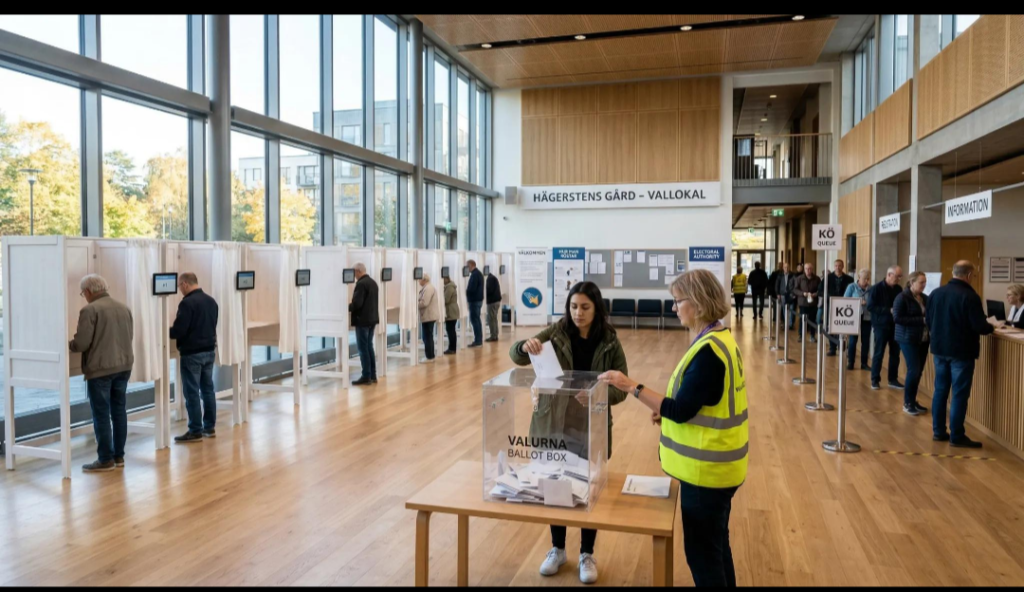
Sweden opened polling stations across the country on Sunday, September 13, 2026, for a parliamentary election that has become one of the tightest in recent decades. Around eight million eligible voters in the nation of roughly 10.6 million are deciding the makeup of the 349-seat Riksdag, with simultaneous regional and municipal elections also underway.
The race pits the centre-left opposition bloc, led by former Prime Minister Magdalena Andersson of the Social Democrats, against the ruling right-wing alliance headed by current Prime Minister Ulf Kristersson of the Moderates. Kristersson’s bloc includes the Christian Democrats, Liberals, and — for the first time as a full governing partner — the anti-immigration Sweden Democrats.
Opinion polls throughout much of the campaign gave the left a clear lead. In the final weeks and days, however, the gap narrowed dramatically, with several surveys showing the two blocs essentially neck-and-neck or within the margin of error. A key variable remains whether the Liberals clear the 4% electoral threshold needed to win seats; their performance could tip the arithmetic in the right’s favour.
If the right wins a majority, Kristersson has pledged to bring the Sweden Democrats into cabinet for the first time, granting the party — which has neo-Nazi roots but has moderated its image and supported the minority government since 2022 — formal ministerial posts. The left, led by Andersson, has warned against a government influenced by the Sweden Democrats and campaigned on protecting the welfare state, supporting households facing cost-of-living pressures, and maintaining a more progressive direction.
Major campaign issues include organised crime and gang violence, immigration and integration policy, welfare spending, the cost of living, energy security, and defence (Sweden is NATO’s newest member). Both sides have converged on support for Ukraine and higher defence spending, while differing sharply on the role of the far right and the balance between stricter law-and-order measures and traditional social-democratic values.
Advance voting has been unusually high, with reports indicating that roughly half of eligible voters had already cast ballots before election day. Polling stations are open from 8 a.m. to 8 p.m. local time. Exit polls are expected shortly after closing, with preliminary official results beginning to appear later in the evening. Final certified results typically take several days.