







As temperatures rise across many parts of the world, keeping homes, offices and other buildings cool is becoming increasingly expensive. Air conditioners provide relief, but they consume large amounts of electricity and can add to the heat problem in cities.
Scientists are now exploring a simpler idea: cooling buildings through specially designed surfaces that reflect sunlight and release heat naturally.
One promising approach involves advanced cooling coatings that could eventually help roofs and other exposed surfaces stay significantly cooler without requiring additional electricity.
A New Generation of Cooling Paint
Researchers at University College London have developed a coating designed to reflect a very high proportion of incoming sunlight.
The material reportedly reflects around 93% of sunlight, compared with about 84% for conventional white paint. Tests in Madrid found that surfaces covered with the experimental coating were up to 8°C cooler than those using standard white paint.
The principle is relatively simple: the less solar energy a surface absorbs, the less heat it has to deal with.
How Radiative Cooling Works
Radiative cooling takes advantage of the way different objects interact with light.
During the day, a building surface receives energy from the Sun. A specially engineered coating can reflect much of that incoming radiation while allowing the heat already stored in the material to escape as infrared radiation.
Some of that radiation can pass through the atmosphere and travel into space. This means the surface can lose heat without relying on an electrical cooling system.
Why Roofs Could Make a Big Difference
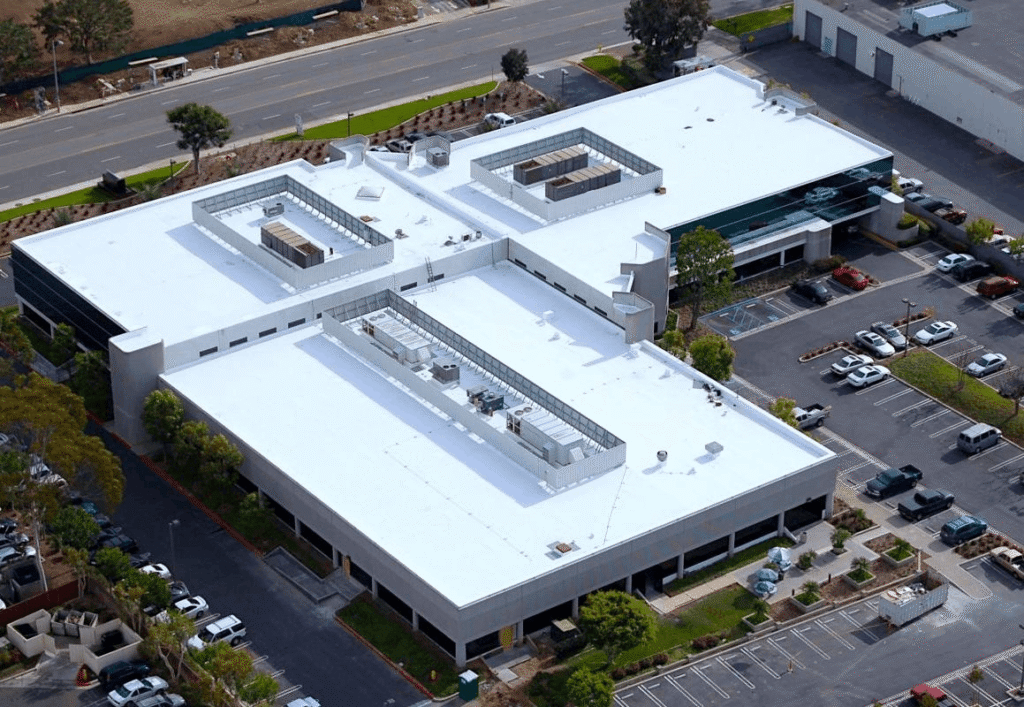
Roofs are among the parts of buildings most exposed to direct sunlight. Keeping them cooler could reduce the amount of heat transferred into indoor spaces.
That could be particularly useful in hot climates, where air conditioning is responsible for a growing share of electricity demand.
The need is also becoming more urgent as heatwaves become more frequent and cooling becomes increasingly important for public health and everyday comfort.
Scientists Are Looking Beyond Paint
Paint is not the only solution being explored.
Researchers are also developing cement-based materials that combine sunlight reflection with evaporative cooling. These materials contain tiny pores that can absorb water. As the water evaporates, it carries heat away from the surface, similar to how sweating helps cool the human body.
In one reported trial, such a material remained about 5°C cooler than a standard radiative coating and delivered significant energy savings when used on an air-conditioned building.
Could This Reduce Air-Conditioning Demand?
The potential is significant, particularly for countries where air conditioning is expensive or not widely accessible.
Cooling buildings passively could lower electricity consumption while also reducing the environmental impact associated with conventional cooling systems.
Some radiative-cooling products are already beginning to enter the market, although researchers say newer materials still need further development before they can be widely deployed.
A Cooler Future for Buildings
The next generation of buildings may not depend entirely on powerful air conditioners to deal with extreme heat.
Highly reflective coatings, heat-releasing surfaces and water-based cooling materials could become part of a broader strategy for keeping buildings comfortable while using less energy.
As global temperatures rise, these seemingly simple materials could become an important part of the science of staying cool.