







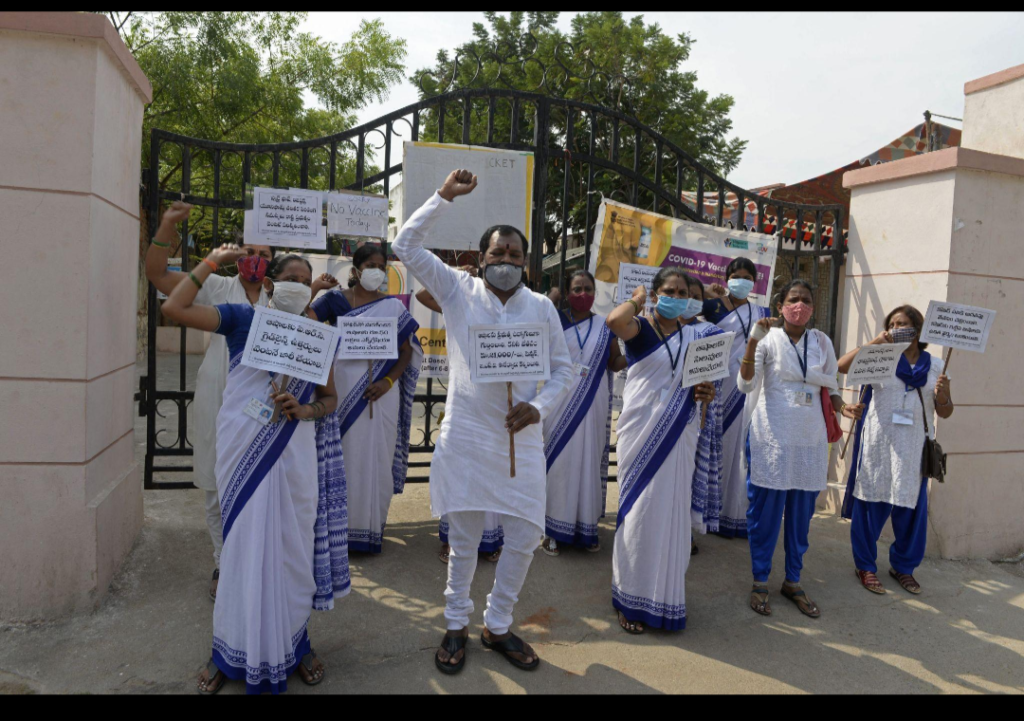
Several Accredited Social Health Activist (ASHA) workers were detained by police near the Telangana Legislative Assembly in Hyderabad on Friday (September 11, 2026) while attempting to protest for better pay and working conditions.
The workers were stopped as they tried to approach the Assembly in small groups and were later shifted to a police station. Their main demands include a fixed monthly salary of ₹18,000, job security, and coverage under Provident Fund (PF) and Employees’ State Insurance (ESI) schemes.
Long-Standing Demands
ASHA workers form the backbone of India’s community health system, delivering essential services such as maternal and child healthcare, immunisation drives, and disease surveillance at the grassroots level. In Telangana, they currently receive an incentive-based honorarium (reportedly around ₹9,900 per month in many cases), which is not a fixed salary and can fluctuate.
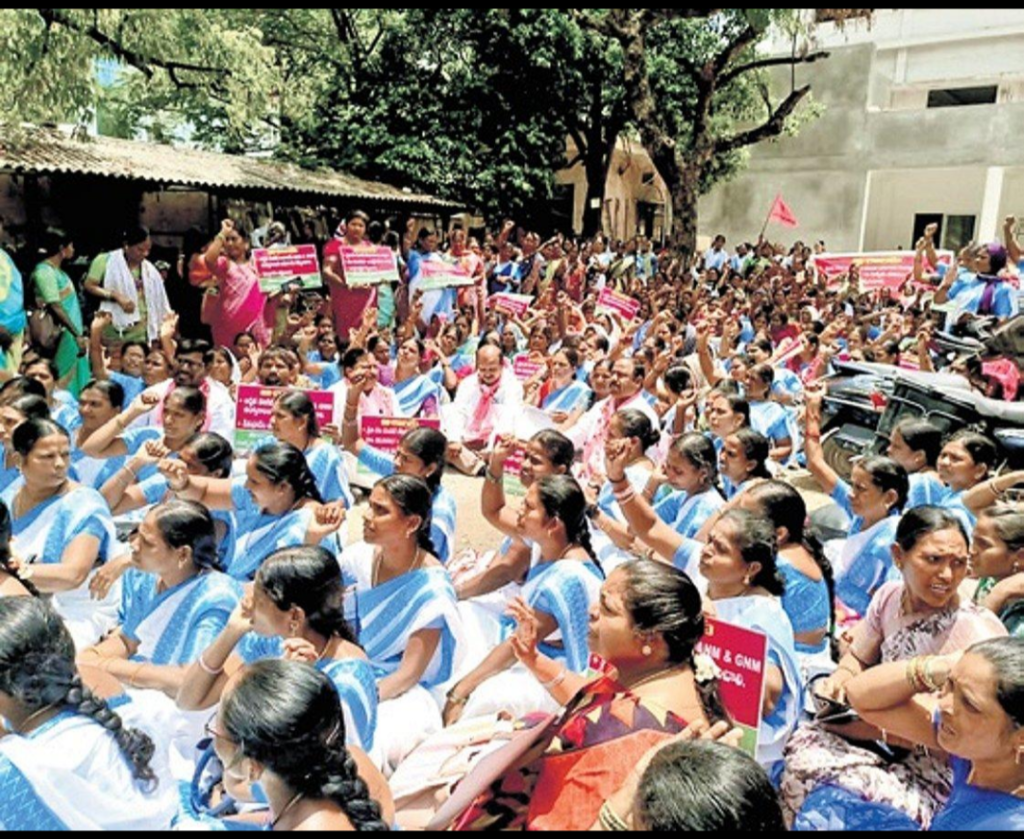
Unions have repeatedly highlighted the lack of financial security, absence of social security benefits, and the need for formal recognition of their role. The demand for a fixed ₹18,000 monthly pay has been a central issue for years and was also raised during a larger “Chalo Assembly” protest on September 8, 2026, in which thousands of workers participated.
Unions Warn of Intensified Agitation
Labour unions representing the workers have accused the state government of failing to fulfil earlier assurances. They have warned that if the demands are not addressed before the ongoing Assembly session concludes, the agitation will be intensified, potentially including further statewide actions.
The latest detention comes amid ongoing tension between protesting ASHA workers and authorities, with previous demonstrations also seeing preventive detentions and confrontations with police.
Community health workers and their supporters continue to press for recognition of ASHA workers as formal employees entitled to stable wages and social security benefits, arguing that their contribution to public health warrants better institutional support.