








India is often introduced to international travellers through a familiar collection of images: the Taj Mahal at sunrise, colourful Rajasthan, Kerala’s backwaters, Goa’s beaches and the crowded lanes of its biggest cities.
But those famous sights tell only part of the story.
Travel deeper into the country and the picture changes dramatically. There are Himalayan valleys where villages remain surrounded by enormous mountains, islands shaped by centuries of river life, ancient ruins spread across landscapes that seem almost unreal, and communities whose traditions have survived for generations.
For international travellers, this lesser-seen side of India can sometimes be the biggest surprise.
Recent travel interest also suggests that visitors are increasingly looking beyond conventional tourist circuits in search of quieter landscapes, local culture and more immersive experiences. India’s official tourism platform now features several “off the beaten path” itineraries, including Hampi and Lunglei.
Here are 10 destinations and experiences that can change the way travellers see India.
1. Ziro Valley, Arunachal Pradesh — Where the Landscape Slows Everything Down
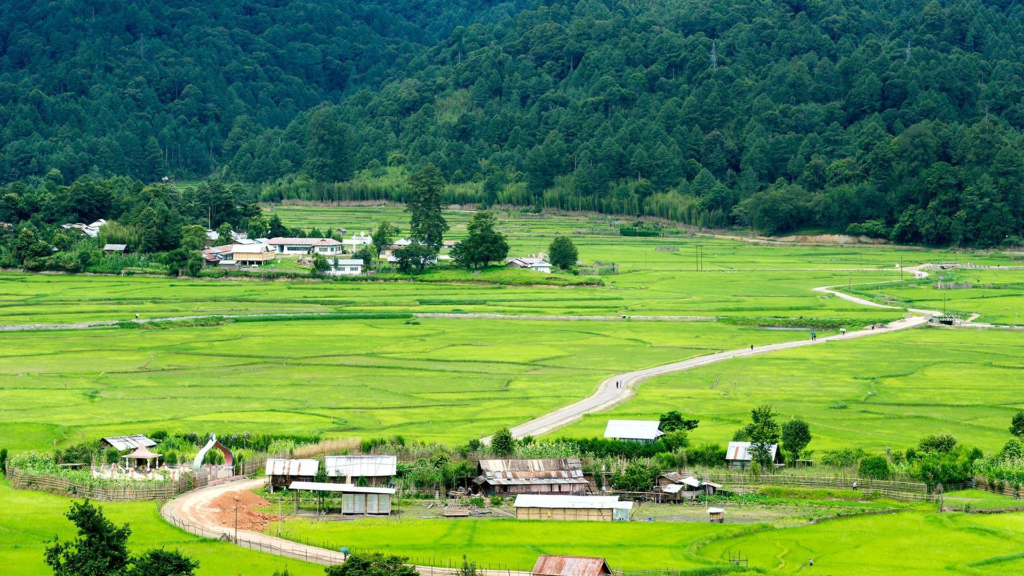
Surrounded by green hills and rice fields, Ziro Valley offers a very different image of India from the country’s busy metropolitan centres.
The valley is particularly interesting for travellers who want to experience local life rather than simply move between monuments. Its connection with the Apatani cultural landscape adds depth to the scenery, while the surrounding hills make the journey itself part of the experience.
For an international visitor, Ziro can feel less like ticking off a sightseeing attraction and more like discovering a place with its own rhythm.
Experience to look for: village walks, local food, landscapes and cultural encounters.
2. Majuli, Assam — Life on a River Island
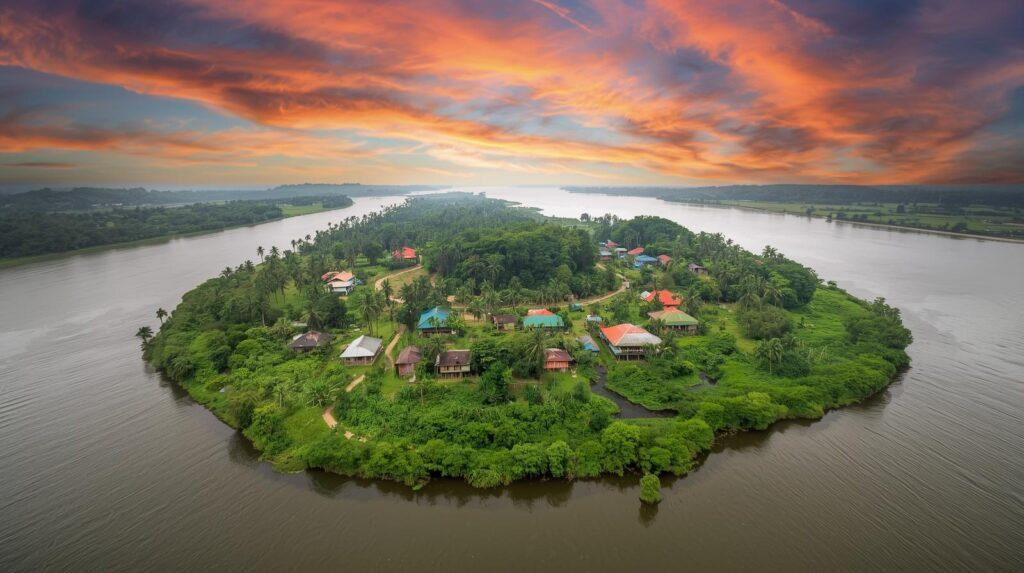
Majuli sits amid the waterways of the Brahmaputra and has developed a distinctive cultural identity shaped by its island environment.
Its appeal isn’t based on one spectacular monument. Instead, travellers encounter rural landscapes, traditional communities, monasteries associated with the Vaishnavite tradition and a slower pace of life.
The journey to Majuli is also part of the story. Reaching an island by ferry creates an immediate sense of leaving the conventional tourist trail behind.
Experience to look for: river journeys, satras, village life and traditional crafts.
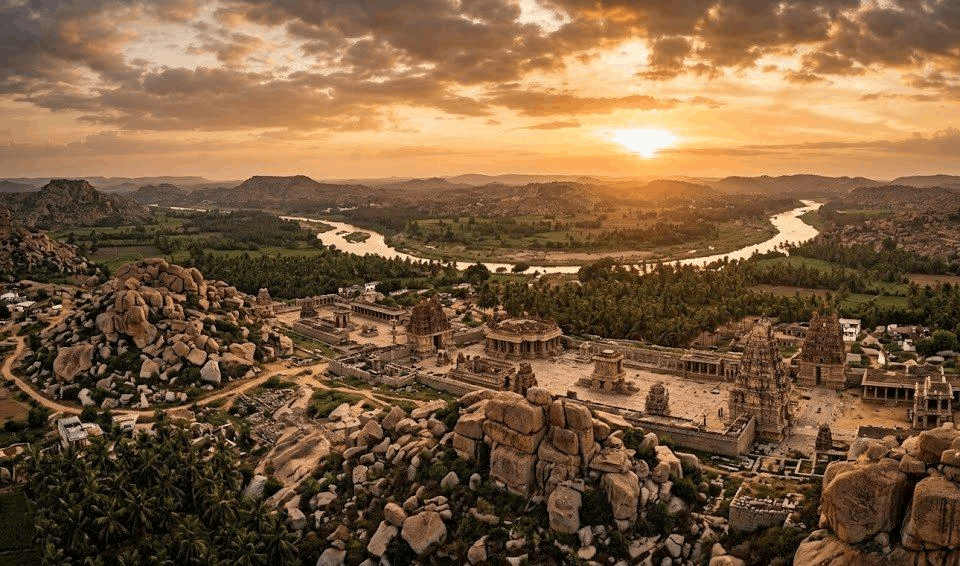
3. Hampi, Karnataka — Ancient Ruins in a Surreal Landscape
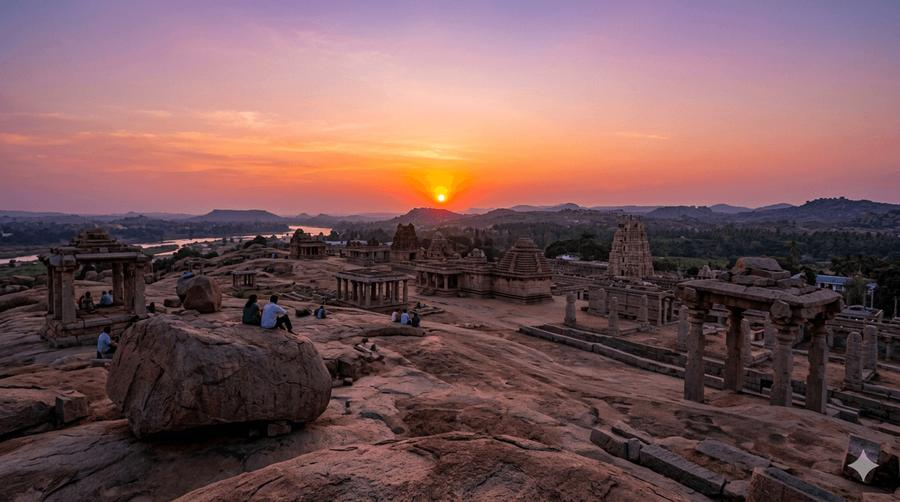
Hampi is one of India’s most visually striking heritage destinations.
The remains of the Vijayanagara Empire are scattered among enormous boulders, hills and open landscapes, creating a setting that feels dramatically different from the monumental architecture found elsewhere in India.
For travellers arriving from abroad, Hampi can be especially memorable because history isn’t confined to a single building. Temples, market streets, gateways and other ruins appear across the landscape.
India’s official tourism platform describes Hampi as a cultural hub combining architectural marvels with a distinctive landscape.
Experience to look for: exploring ruins by bicycle, walking through historic areas and watching the landscape change at sunrise or sunset.
4. Meghalaya’s Living Root Bridges — When Nature Becomes Architecture
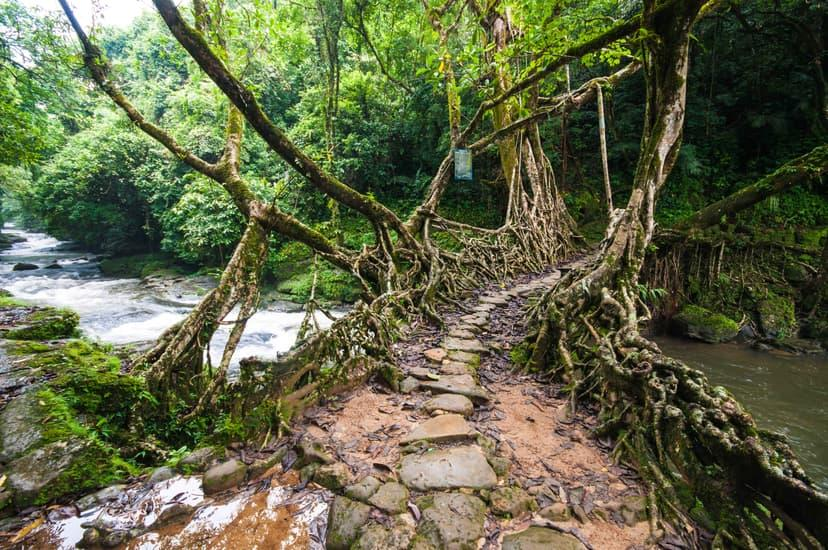
Few Indian travel experiences demonstrate the relationship between people and nature as vividly as Meghalaya’s living root bridges.
Created by guiding and training the roots of rubber fig trees, these remarkable structures developed through traditional knowledge passed between generations.
For visitors accustomed to seeing bridges as concrete or steel structures, walking across one can be an extraordinary experience.
The journey can involve forest trails and village landscapes, making the attraction as much about the surrounding environment as the bridge itself.
Experience to look for: trekking, village visits and learning how traditional ecological knowledge shapes everyday life.
5. Orchha, Madhya Pradesh — A Heritage Town Beside the Betwa
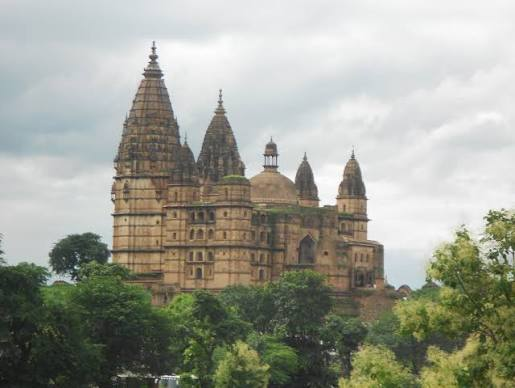
Orchha offers a quieter introduction to India’s royal history.
Its palaces, temples and riverside cenotaphs create an atmospheric landscape where historic architecture and nature exist side by side. The town can be particularly rewarding for travellers who want to slow down rather than spend an entire day rushing between attractions.
A walk around the heritage area near sunset can reveal details that are easy to miss during a quick sightseeing stop.
The official Incredible India platform includes Orchha in an itinerary focused on royal heritage and describes its monuments along the Betwa River.
Experience to look for: heritage walks, riverside views and exploring the town at a relaxed pace.
6. Dzukou Valley, Nagaland — A Himalayan Landscape Without the Usual Crowds
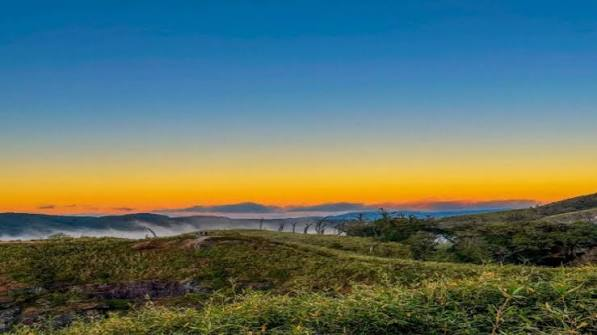
For travellers drawn to mountains but looking beyond India’s most famous Himalayan destinations, Dzukou Valley offers an entirely different setting.
The valley is known for rolling green terrain and seasonal flowers, with trekking forming a major part of the experience.
What makes the destination memorable is not simply the view at the end of a trail. The journey through Nagaland also provides an opportunity to learn about the region’s distinctive communities and landscapes.
The official tourism platform lists Dzukou Valley among India’s lesser-known experiences.
Experience to look for: trekking, camping and experiencing Nagaland’s mountain environment.
7. Banswara, Rajasthan — A Different Side of the Desert State
Rajasthan is often imagined through forts, palaces and golden desert landscapes.
Banswara challenges that image.
Known for its lakes, greenery and numerous islands, the southern Rajasthan destination offers a softer landscape than many travellers associate with the state.
For visitors who have already experienced Jaipur or Jaisalmer, Banswara can reveal a less familiar side of Rajasthan.
Experience to look for: lakes, tribal culture, temples and slower rural exploration.
8. Dhanushkodi, Tamil Nadu — Where Land Meets the Sea
At the southeastern edge of Tamil Nadu, Dhanushkodi has an atmosphere unlike many conventional beach destinations.
The former settlement was devastated by the 1964 cyclone, and remnants of its past remain part of the landscape.
Today, the meeting of sea, sand and abandoned structures creates an unusual destination where history and nature overlap.
For international travellers, it offers something different from India’s conventional heritage circuit: a place where the landscape itself tells much of the story.
Experience to look for: coastal landscapes, historical remnants and the journey toward India’s southeastern edge.
9. Lonar, Maharashtra — A Crater With a Story Written in Stone
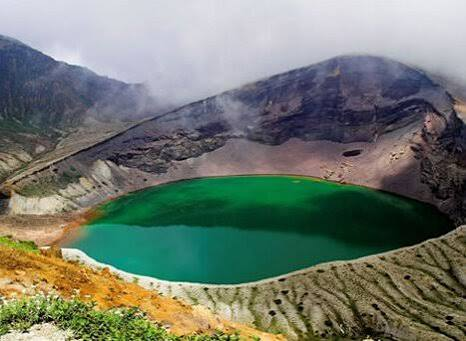
Lonar is one of India’s most unusual natural landscapes.
The crater lake was created by a meteorite impact, leaving behind a distinctive geological formation surrounded by forest and historic temples.
It is the kind of destination that can surprise travellers who assume India’s natural attractions are mainly mountains, beaches and national parks.
Here, geology becomes the attraction.
Experience to look for: exploring the crater landscape, visiting surrounding heritage sites and learning about the area’s unusual geology.
10. Varanasi Beyond the Famous Ghats — Experience the City Through Its Everyday Life
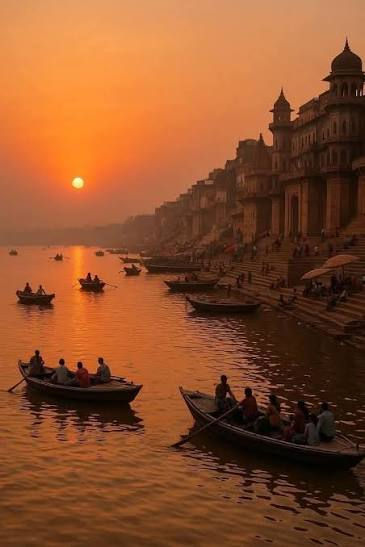
Varanasi is hardly an unknown destination, but international travellers can still experience a less familiar side of the city by moving beyond the standard sightseeing checklist.
The famous ghats and evening ceremonies are only one part of the experience. Early-morning walks, narrow neighbourhood lanes, local food, music and conversations with residents can reveal a city that operates on its own rhythm.
For first-time international visitors, this can be one of India’s most immersive cultural experiences precisely because it isn’t limited to a single attraction.
Experience to look for: early-morning walks, local food, traditional music and observing everyday life around the old city.
Why These Places Can Change the Way Visitors See India
What connects these destinations isn’t that they are completely unknown.
In fact, some are becoming increasingly popular.
The more interesting point is that they demonstrate how difficult it is to reduce India to a handful of famous images. The country can shift from Himalayan mountains to tropical forests, ancient ruins to river islands and desert landscapes to volcanic craters within the same national border.
That variety is increasingly being recognised by India’s tourism ecosystem, which promotes lesser-known destinations alongside established attractions.
For international travellers, the most memorable moments may therefore come when the itinerary becomes less predictable.
A ferry ride to an island. A walk through an ancient town. A conversation in a mountain village. A trek across a living root bridge. A sunset beside forgotten ruins.
These experiences don’t simply provide photographs.
They provide a different understanding of India.
The India Worth Discovering Beyond the Famous Landmarks
The Taj Mahal, Jaipur’s palaces and Kerala’s backwaters deserve their place on the world’s travel map. But they shouldn’t be the end of the story.
India’s deeper appeal lies in its contrasts and layers — places where geography, history, food and local traditions come together in ways that cannot easily be recreated elsewhere.
For travellers willing to take a longer route, slow down and look beyond the standard itinerary, the reward can be an India that feels less like a postcard and more like a living, constantly changing story.
And sometimes, that is the version of India that stays with a traveller longest.