







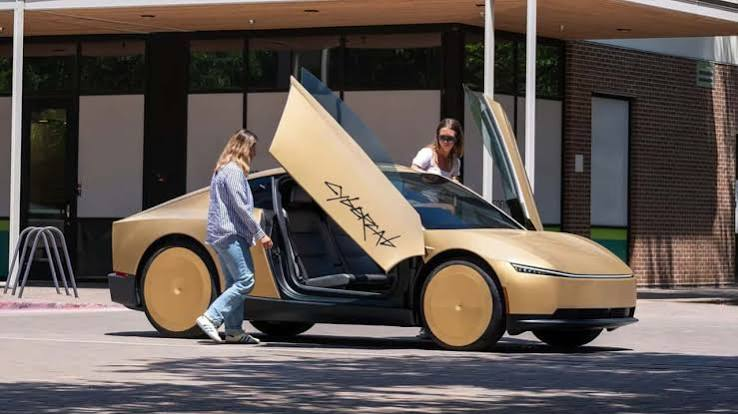
Tesla’s new Cybercab robotaxi is designed to look and operate very differently from a conventional car. The two-seat electric vehicle has no steering wheel or pedals, putting autonomous driving completely in control of the vehicle.
Tesla began offering limited Cybercab rides in designated parts of Austin, Texas, in September 2026. Its futuristic design, gold exterior and lounge-like interior have attracted attention, but the unusual setup has also raised questions about passenger safety and regulatory compliance.
A Car Without Traditional Controls
The Cybercab removes the steering wheel and brake pedals to simplify its autonomous driving system. Instead, passengers can use touchscreen controls to request a pull-over, while an overhead STOP button is available for non-emergency situations.
For emergencies, a mechanical door release can be used. Passengers can also contact Tesla representatives through the vehicle’s communication system.
The cabin includes a screen for entertainment, climate controls and an interior camera. Tesla has also promoted features that could allow passengers to watch videos, play games or work while travelling.
Why Is NHTSA Investigating?
The U.S. National Highway Traffic Safety Administration (NHTSA) has opened an investigation into Tesla’s self-certification of the Cybercab.
The agency is examining whether the vehicle complies with applicable Federal Motor Vehicle Safety Standards, particularly as existing regulations were largely developed around conventional vehicles.
The investigation comes as regulators are also examining Tesla’s broader Full Self-Driving technology and reported problems involving autonomous vehicles interacting with emergency responders.
The Bigger Robotaxi Debate
Robotaxis could offer important benefits, including reducing risks linked to distracted, tired or impaired human drivers. They could also improve transportation options for some people with disabilities.
However, autonomous vehicles still face difficult situations that are hard to predict. Reports and videos of driverless cars becoming confused by unusual road conditions, obstacles or emergency situations have raised questions about how reliably these systems respond outside normal driving conditions.
Tesla’s Cybercab therefore represents more than a new electric vehicle. It is also a test of how quickly automated driving technology and vehicle regulations can adapt to one another.
As regulators examine the Cybercab, the outcome could influence how steering-free and pedal-free vehicles are developed and approved in the future.