



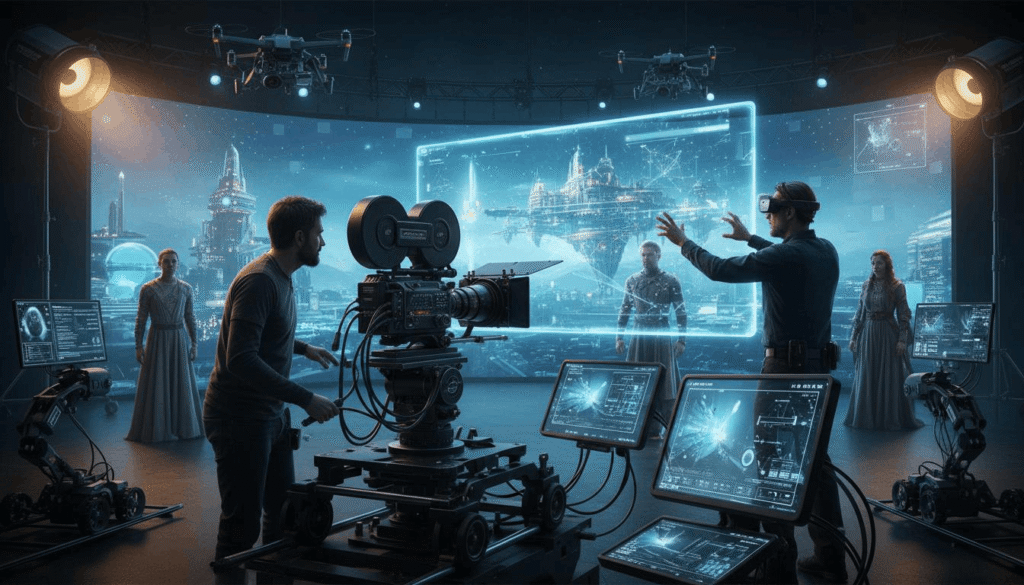
Artificial intelligence is no longer just a futuristic concept discussed by technology companies. It is increasingly becoming part of the entertainment business itself—working behind movie cameras, inside editing rooms, on streaming platforms and even in music studios.
What makes this shift different from earlier technological changes is the range of tasks AI can influence. It can help analyse a script, organise footage, generate visual effects, translate dialogue, recommend content to viewers and study audience behaviour.
For audiences, much of this transformation may happen without being immediately visible. But behind the scenes, the way entertainment is created, marketed and consumed is changing rapidly.
AI Is Moving From Experiment to Everyday Production
For years, entertainment companies treated AI largely as an experimental technology. That phase is gradually giving way to practical applications.
AI-assisted systems can now support different stages of production, from early development and story planning to editing and post-production. Industry research also points to generative AI lowering the cost and time required to produce certain forms of content.
In India, the entertainment and media sector is also expected to grow substantially through 2030, with AI playing a role in content creation, personalisation, production and monetisation.
The important change is therefore not simply that AI can make content. It is that AI is becoming part of the larger production pipeline.
Filmmaking Could Become Faster
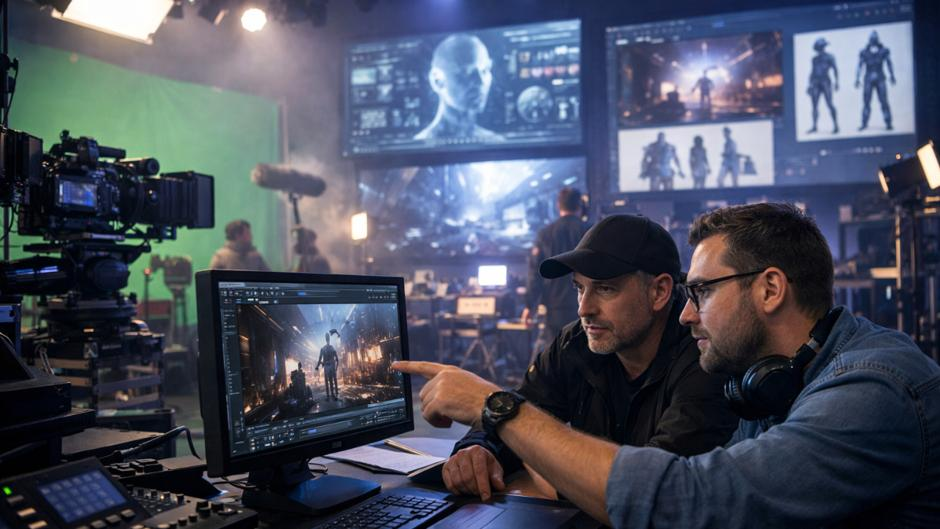
Making a film involves hundreds of decisions before audiences ever see the finished product.
AI can assist with tasks such as analysing scripts, organising production material, identifying useful footage and supporting post-production workflows. It can also help filmmakers experiment with visual concepts before committing significant resources to production.
Visual effects are another major area. AI-assisted tools can help generate or modify complex imagery, potentially allowing smaller productions to achieve effects that previously required larger teams and budgets.
That does not mean filmmakers will suddenly disappear from the process. Instead, AI is increasingly becoming another tool available to directors, editors, VFX artists and producers.
The Streaming Experience Is Becoming More Personal

One of the biggest effects of AI may actually be happening after a movie or series has already been made.
Streaming platforms have enormous libraries, creating a simple problem: viewers have too many choices.
AI can analyse viewing behaviour, searches, preferences and engagement patterns to help platforms recommend titles to individual users. It can even help classify content according to elements such as genre, mood, characters and scenes.
This means two people opening the same streaming service may receive very different recommendations.
The future of entertainment, therefore, may not only be about what gets produced, but also about what each viewer is shown first.
AI Could Change the Way Movies Are Dubbed
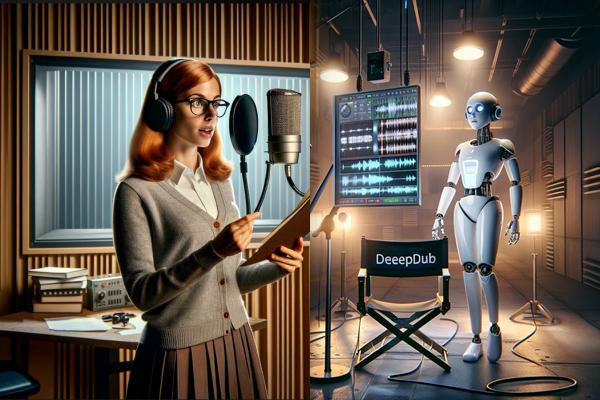
Language has traditionally been one of the biggest barriers preventing films and shows from travelling across borders.
AI-powered voice and localisation technology is creating new possibilities for multilingual entertainment. Systems can assist with dubbing and voice synthesis, potentially allowing content to reach audiences in more languages without rebuilding the entire production from scratch.
For India’s multilingual entertainment industry, this could be particularly significant.
A successful film could increasingly travel from one Indian language market to another—and eventually to international audiences—with technology helping reduce some of the traditional localisation barriers.
Music Is Entering a New AI Era
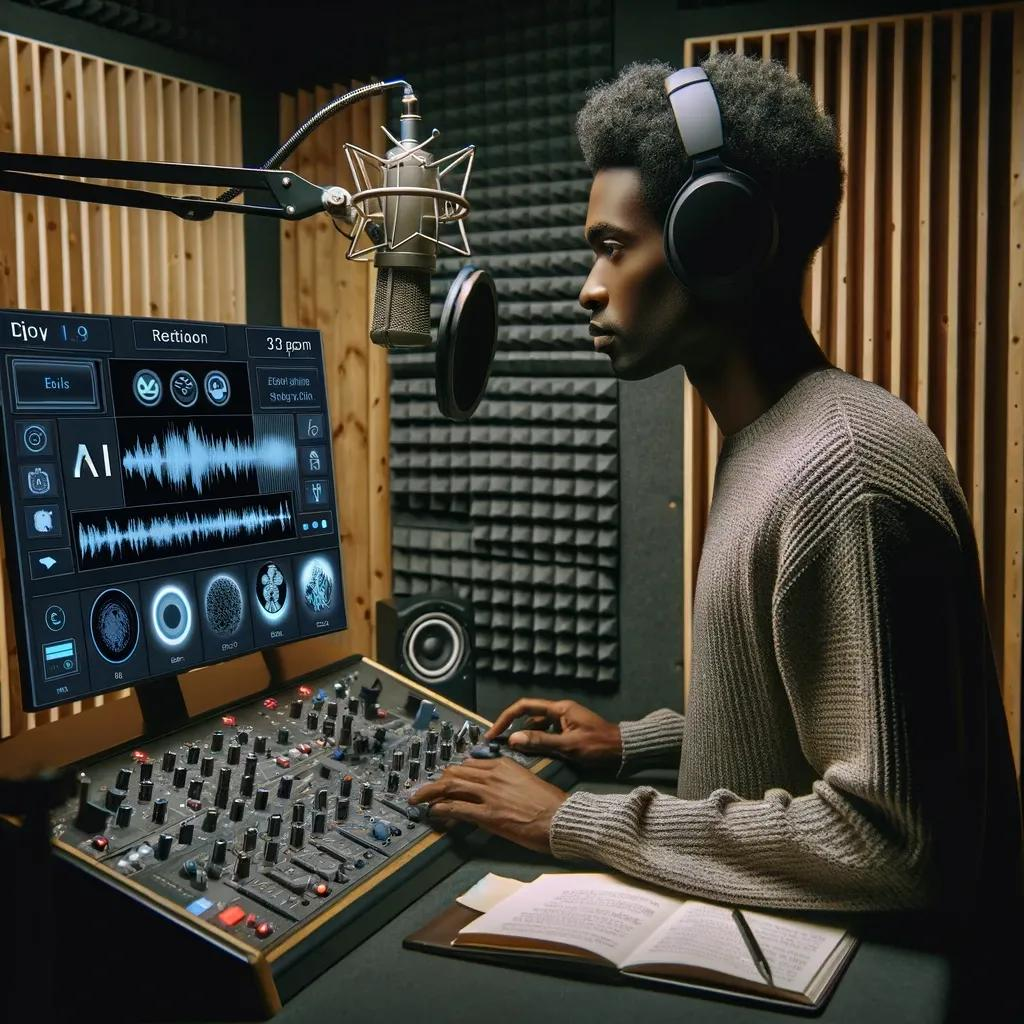
The impact is not limited to movies and streaming.
AI can analyse musical structures, assist with composition and support parts of the production process. At the same time, the rise of AI-generated music is creating difficult questions around artists, ownership and the use of human voices and styles.
The debate is already becoming real rather than theoretical. Music companies are exploring ways to work with generative AI while continuing to place value on artist-driven intellectual property.
That creates an unusual situation: AI may help musicians work faster, while simultaneously forcing the industry to rethink what makes a song genuinely human.
Even Marketing Decisions Could Become More Data-Driven
A movie’s success depends on much more than its production budget.
AI systems can analyse information such as audience reactions, trailer engagement, social media sentiment and historical performance to help studios assess marketing strategies and potential audience interest.
This could influence decisions ranging from advertising budgets to release strategies.
But prediction is not the same as certainty.
A computer can identify patterns in thousands of previous films, but it cannot completely predict why one unexpected performance will connect emotionally with audiences while another heavily promoted film fails.
The Biggest Question: Where Does Human Creativity End?
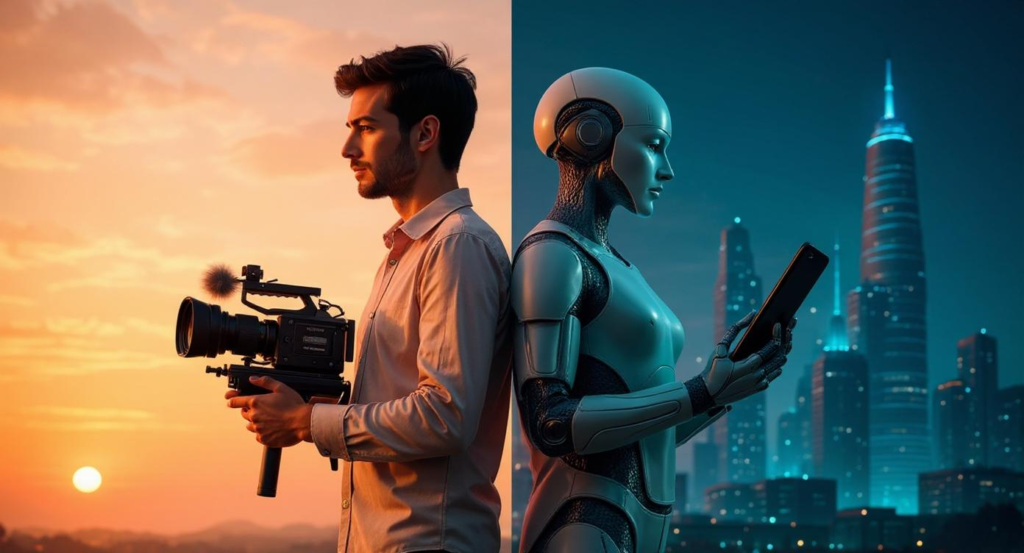
This is where the AI-entertainment story becomes complicated.
If AI can generate images, music, voices and video, questions about authorship and ownership become unavoidable.
Who owns an AI-generated performance?
What happens when a synthetic voice sounds like a real singer?
Should an actor have control over a digital version of their likeness?
And how much AI assistance is acceptable before audiences consider a production fundamentally machine-made?
These questions are becoming increasingly important as entertainment companies explore partnerships involving generative AI and copyrighted creative material.
Jobs May Change Before They Disappear
The most realistic scenario may not be AI versus humans.
Instead, many entertainment jobs could become AI-assisted jobs.
Editors may use AI to find and organise footage.
Designers may use it to explore concepts.
Filmmakers may use it for previsualisation.
Musicians may use it during experimentation.
Marketing teams may use it to understand audiences.
The skills that become valuable could therefore shift.
Knowing how to operate a camera, edit footage or write a screenplay may remain important—but understanding how to work effectively alongside new AI tools could become an additional advantage.
India Could Be One of the Major Testing Grounds
India’s enormous film, television, music, gaming and streaming ecosystem gives it a particularly interesting position in the AI revolution.
The country produces entertainment across multiple languages and has a huge digital audience. PwC India estimates that India’s entertainment and media market could rise from $25.7 billion in 2025 to $36.7 billion by 2030, with AI and digital ecosystems contributing to the sector’s evolution.
AI-powered localisation could also help Indian stories travel further.
A Tamil, Malayalam, Telugu, Bengali or Hindi production could potentially be adapted for wider audiences more quickly, while recommendation systems could help viewers discover regional titles they might otherwise miss.
The Next Entertainment Revolution May Be Invisible
The most interesting part of AI’s entertainment impact may be that audiences don’t always notice it.
A recommendation appearing on a streaming homepage, a faster VFX workflow, an automatically organised production archive or a multilingual version of a show may all involve AI without being marketed as an “AI product.”
That could be the real transformation.
Rather than replacing the entertainment industry overnight, artificial intelligence is becoming another layer inside it—quietly influencing how stories are developed, produced, distributed and discovered.
The technology will undoubtedly make entertainment faster and potentially cheaper. But the long-term winners may not be the companies that use the most AI.
They may be the creators and studios that figure out where technology should take over—and where the human touch should remain.