







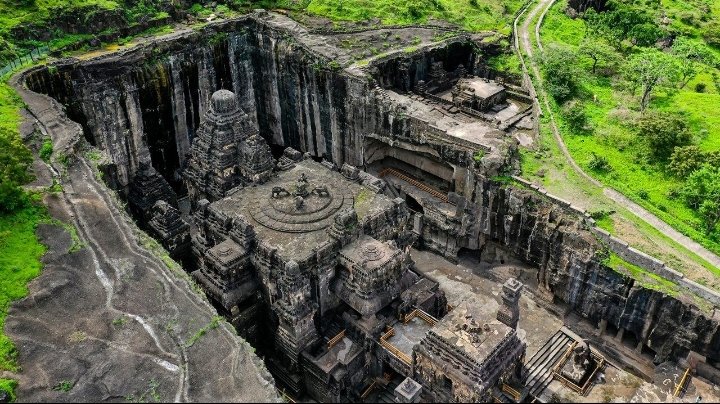
The Kailasa Temple at Ellora in Maharashtra is one of India’s most extraordinary rock-cut monuments.Built during the Rashtrakuta period in the 8th century, the monument is traditionally associated with King Krishna I and is generally dated to around 756–773 AD.Unlike a conventional temple built stone by stone, Kailasa was excavated directly from the living rock, creating a massive temple complex with courtyards, pillars, sculptures and intricate architectural details.The monument is part of the Ellora Caves, a UNESCO World Heritage Site that represents centuries of India’s religious and artistic traditions.Its enormous scale and highly detailed stonework continue to showcase the engineering skills, artistic excellence and craftsmanship of ancient India.
Dating back to the 8th century, the temple was built during the Rashtrakuta dynasty and is traditionally associated with King Krishna I.What makes Kailasa extraordinary is its construction technique. Instead of assembling the temple with separate stones, ancient craftsmen excavated and carved the structure directly from the surrounding rock.The complex features a magnificent temple, towering pillars, elaborate sculptures, large courtyards and detailed depictions from Hindu traditions.The scale of the monument reflects the remarkable planning, precision and craftsmanship achieved centuries before modern construction technology.Today, the Kailasa Temple remains a major symbol of India’s architectural heritage and ancient engineering excellence, attracting visitors from across the world.
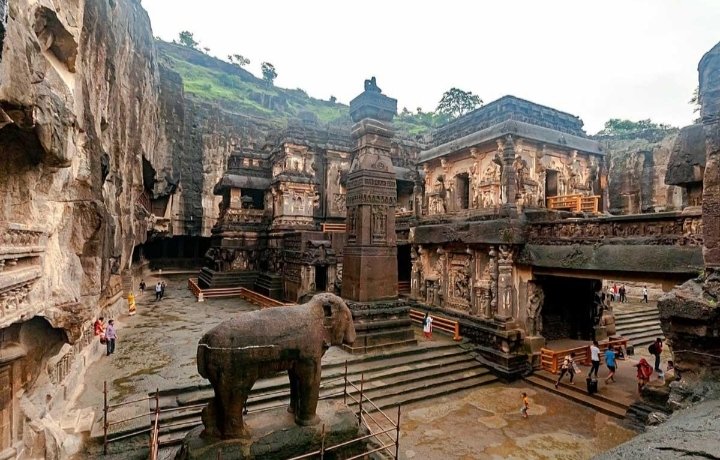
Centuries later, Kailasa remains a powerful symbol of India’s architectural genius and rich heritage.