

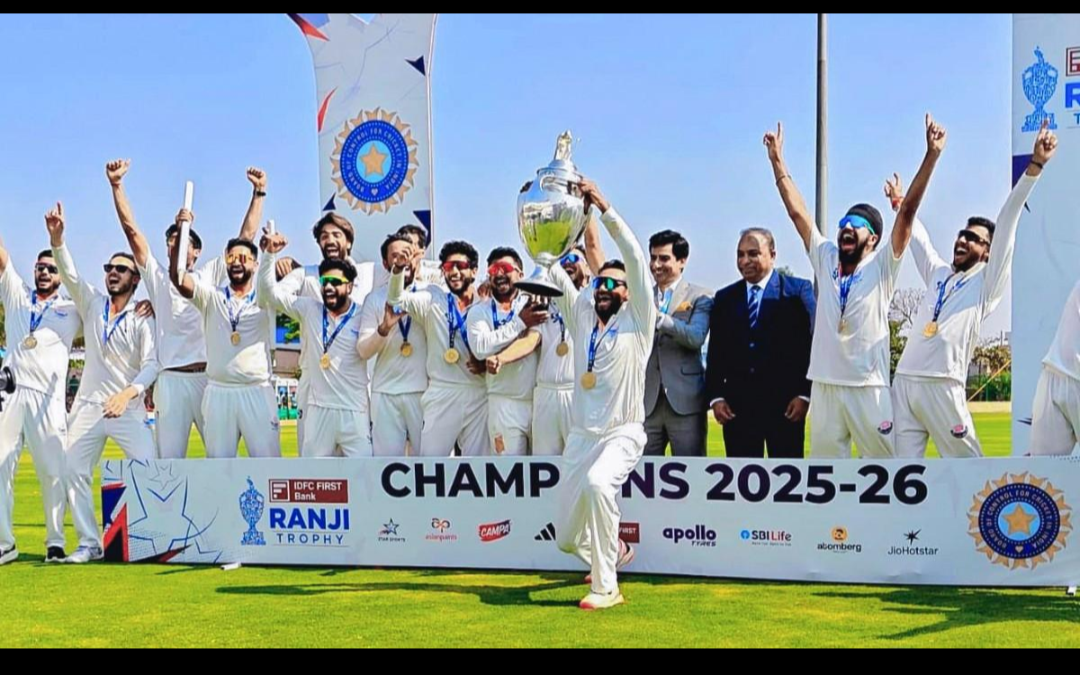


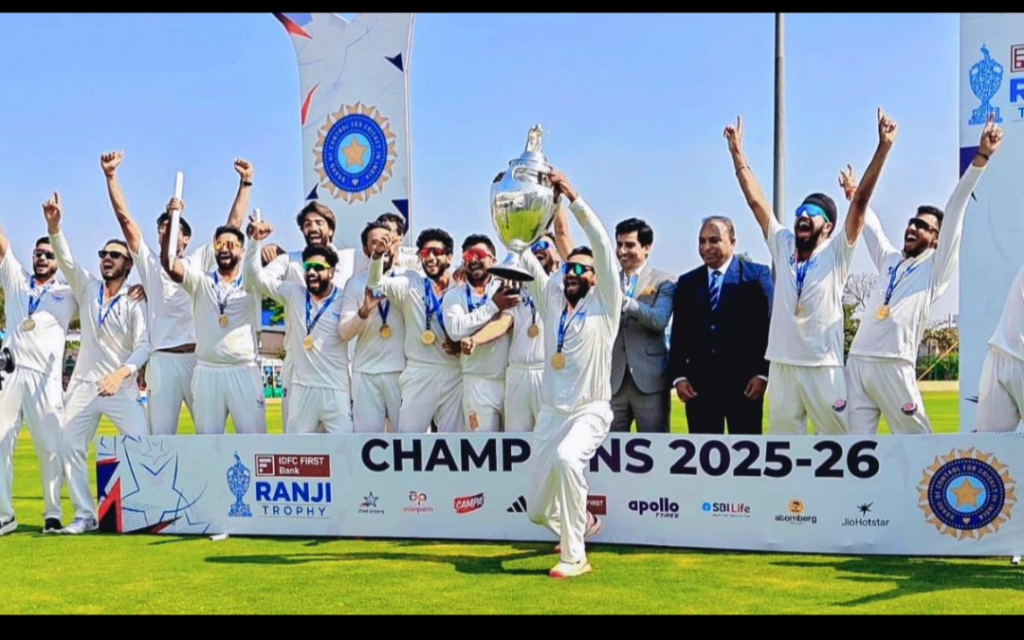
Former India captain Sunil Gavaskar has strongly criticised the BCCI’s 2026-27 domestic cricket schedule, arguing that the long break in the Ranji Trophy to accommodate white-ball competitions gives excessive priority to the IPL calendar.
For the third successive year, the Ranji Trophy has been split into two phases. The first leg of the Elite and Plate competitions is scheduled from October 11 to November 5. After this, the domestic calendar shifts to the Syed Mushtaq Ali Trophy (T20) and Vijay Hazare Trophy (50-over), before the Ranji Trophy resumes on January 17, 2027, with the final set for early March.
Gavaskar’s Key Arguments
In his column for Sportstar, Gavaskar questioned the decision to interrupt the premier first-class tournament:
How can a tournament be interrupted to accommodate a white-ball tournament? … The rhythm and momentum get destroyed.”
He pointed out the inconsistency in scheduling, asking why the Syed Mushtaq Ali Trophy is not similarly interrupted with a mid-tournament break for its knockouts, as happens with Ranji Trophy. According to him, the reason is clear: the IPL auction takes place soon after the T20 domestic competition ends.
Gavaskar suggested that the Syed Mushtaq Ali Trophy could instead be played at the start of the domestic season in September. He argued that IPL scouts would still identify talent even if the auction were held a couple of months later.
The batting legend stressed that the Ranji Trophy, India’s national first-class championship, needs to be given “pride of place” again rather than being “pushed around.” He has also linked the health of domestic red-ball cricket to the long-term strength of the national team, warning that neglecting the domestic structure will affect the pipeline of world-class players.
The 2026-27 season began with the Duleep Trophy, followed by the Irani Trophy in early October, before the first phase of Ranji Trophy. The scheduling continues a recent trend of prioritising limited-overs domestic cricket to align with franchise league timelines.
Gavaskar’s comments have reignited debate about the balance between red-ball and white-ball cricket in India and the influence of the IPL on the domestic calendar.