








The Cultural Significance of the Laal Paar Saree
The sight of Bengali women dressed in white sarees with red borders is one of the most recognisable images of Durga Puja. Known as the laal paar sada saree, this traditional attire reflects Bengal’s rich textile heritage, cultural identity and religious customs.
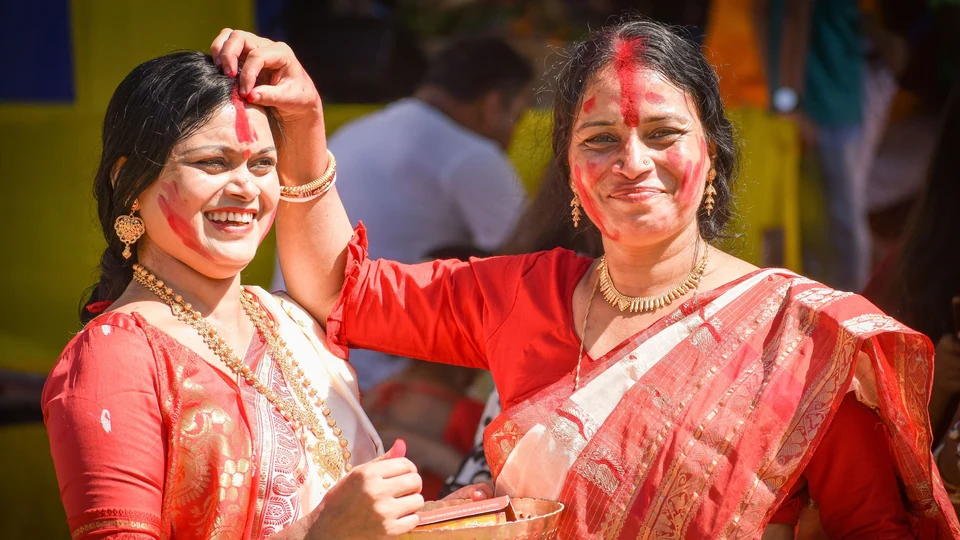
The saree holds particular significance during Sindoor Khela, a ritual performed on Vijayadashami, the final day of Durga Puja.
What Do White and Red Symbolise?
The two colours carry widely recognised cultural meanings. White is often associated with purity, simplicity and peace, while red represents strength, auspiciousness, fertility and feminine power.
Together, they create a striking combination that is closely associated with Bengali celebrations and the worship of Goddess Durga.
The Connection With Sindoor Khela
Sindoor Khela is a traditional Durga Puja ritual in which women offer vermilion to Goddess Durga before applying sindoor to one another. The practice takes place on Vijayadashami, when devotees prepare to bid farewell to the goddess before her immersion.
The red-and-white saree complements the ritual’s use of sindoor and reflects its cultural associations with blessings, prosperity and the feminine divine. The occasion is also marked by sweets, traditional jewellery and festive gatherings.
A Tradition Rooted in Bengal’s Textile Heritage
The laal paar saree is closely connected with Bengal’s handloom traditions. Traditionally made from cotton or silk, its white or off-white body and red border offer a distinctive appearance suited to religious ceremonies and celebrations.
Over time, the saree has become an enduring symbol of Bengali cultural identity. Its popularity extends beyond religious occasions, appearing in festivals, family celebrations, photographs and contemporary fashion.
Traditional Jewellery Completes the Look
Women often pair the saree with traditional Bengali jewellery and accessories. These may include shakha (white conch-shell bangles), pola (red bangles traditionally made from coral) and sindoor.
These accessories carry their own cultural and marital associations, particularly among married Bengali Hindu women. However, individual customs and participation in Sindoor Khela can vary across families and communities.
How the Tradition Continues to Evolve
Although the classic cotton saree remains popular, modern versions feature silk, organza, embroidery, zari borders and contemporary designs. Younger generations and fashion designers continue to reinterpret the traditional look while retaining its recognisable red-and-white palette.
Sindoor Khela has also prompted wider conversations about inclusion, with some communities and participants rethinking traditional restrictions around who can take part.
More Than a Festive Outfit
The white saree with a red border is much more than a fashion choice during Durga Puja. It brings together textile heritage, religious symbolism, community celebrations and a strong sense of Bengali identity.
As women gather for Sindoor Khela each year, the laal paar saree remains a powerful visual link between tradition and contemporary life.
