







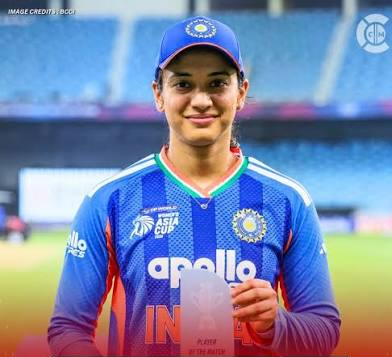
Smriti Mandhana’s latest milestone was not simply another big score. It was the kind of performance that changes the conversation around a player.
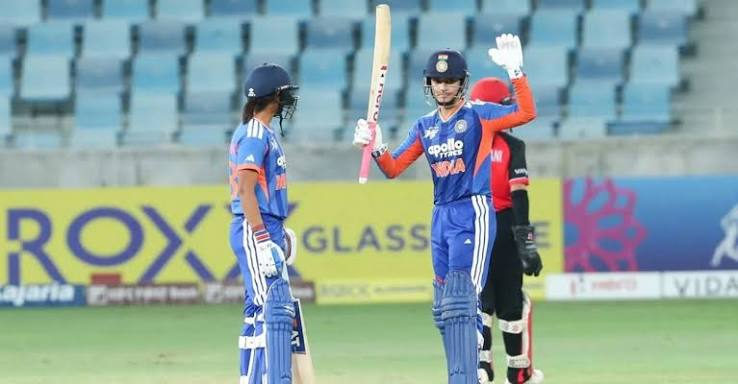
During India’s Women’s Asia Cup 2026 match against Hong Kong, Mandhana smashed 124 from 64 balls, producing 14 fours and seven sixes as India posted 193/5. India eventually won by 137 runs and secured its place in the semi-finals. But the result was only part of the story.
The innings pushed Mandhana beyond Mithali Raj’s previous women’s international run record of 10,868. She also reached her 18th international century, moving ahead of Meg Lanning and Laura Wolvaardt on the century list.
And just as Mandhana’s batting reached another historic level, a much bigger question emerged: could the star opener eventually become India’s captain across all three formats?
Former India captain Diana Edulji has publicly backed that idea, arguing that the time has come for Mandhana to take complete leadership responsibility.
A Record That Carries More Weight Than Numbers
Breaking a statistical record is impressive. Breaking Mithali Raj’s international run record carries an additional layer of significance.
Raj spent years as the defining run-machine of Indian women’s cricket. Her career established a benchmark for longevity, consistency and leadership. Mandhana’s achievement therefore represents more than a personal statistic — it marks a changing generation in Indian women’s cricket.
Mandhana’s record-breaking moment came in typically aggressive fashion.
Her 124 came from only 64 deliveries, giving her a strike rate of more than 193. She attacked the Hong Kong bowling from the beginning and turned what could have been a routine group-stage fixture into one of the most memorable innings of the tournament.
It was also her highest score in the T20 format, adding another dimension to a career that has already produced major performances across formats.
The Evolution of Mandhana’s Batting
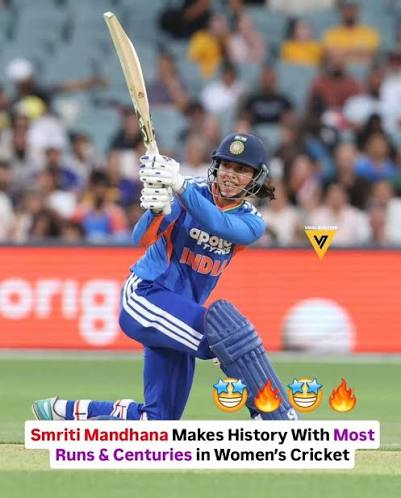
One reason Mandhana’s latest record is particularly interesting is the way her batting has developed.
Earlier in her career, Mandhana’s biggest strength was often associated with timing and elegant strokeplay. She could dominate attacks without appearing to force the pace.
The modern version of Mandhana has become increasingly destructive.
The Hong Kong innings demonstrated that combination clearly: classical left-handed strokes were mixed with aggressive boundary-hitting and calculated risks. Seven sixes in one international innings showed how comfortably she can now shift between accumulation and acceleration.
That evolution matters because India’s expectations from Mandhana have also changed.
She is no longer simply one of the team’s most talented batters. She has become one of the central figures around whom India’s batting strategy is built.
Why the Captaincy Debate Has Arrived Now
Diana Edulji’s call for Mandhana to captain India across all three formats adds another layer to the story.
Mandhana is already a senior figure in the dressing room and has experience of leadership responsibilities. Edulji’s argument is essentially that India’s most established batting star could now take the next step and become the team’s central leader.
But becoming an all-format captain is very different from being one of the team’s senior players.
A captain has to manage tactical decisions, bowling changes, field placements, player combinations and pressure situations while continuing to perform.
For a batter such as Mandhana, that creates an obvious question: would additional leadership responsibility enhance her influence, or put unnecessary pressure on one of India’s most important run-scorers?
That is the part of the debate selectors would need to consider carefully.
Harmanpreet Kaur Still Matters to the Conversation
Any discussion about Mandhana becoming captain has to acknowledge India’s current leadership structure.
Harmanpreet Kaur remains an important figure in Indian women’s cricket, and Mandhana has operated as vice-captain. That means the issue is not simply about finding a leader where none exists.
It is about deciding what India’s leadership structure should look like for the next phase.
The timing makes the discussion particularly interesting because Mandhana’s extraordinary form has arrived during a major tournament. India have already qualified for the semi-finals after defeating Hong Kong, while the team continues its Asia Cup campaign.
For now, the captaincy question remains a debate rather than an announced change.
Her Record Came With a Team Result
There is another reason Mandhana’s latest achievement stands out: India did not depend on her century alone.
After reaching 193/5, India’s bowlers dismantled the Hong Kong chase. Hong Kong were bowled out for 56, with Deepti Sharma taking three wickets while other Indian bowlers also contributed. India therefore produced a performance that combined an explosive top-order innings with a dominant bowling display.
That is important for Mandhana’s leadership discussion.
A captain’s influence cannot be judged only by personal statistics. India’s recent performance suggests that the team already possesses multiple match-winners, including experienced all-rounders and emerging players.
Mandhana’s challenge, if she eventually takes a larger leadership role, would be to bring those individual strengths together consistently.
The Mithali Raj Connection Makes the Moment Special
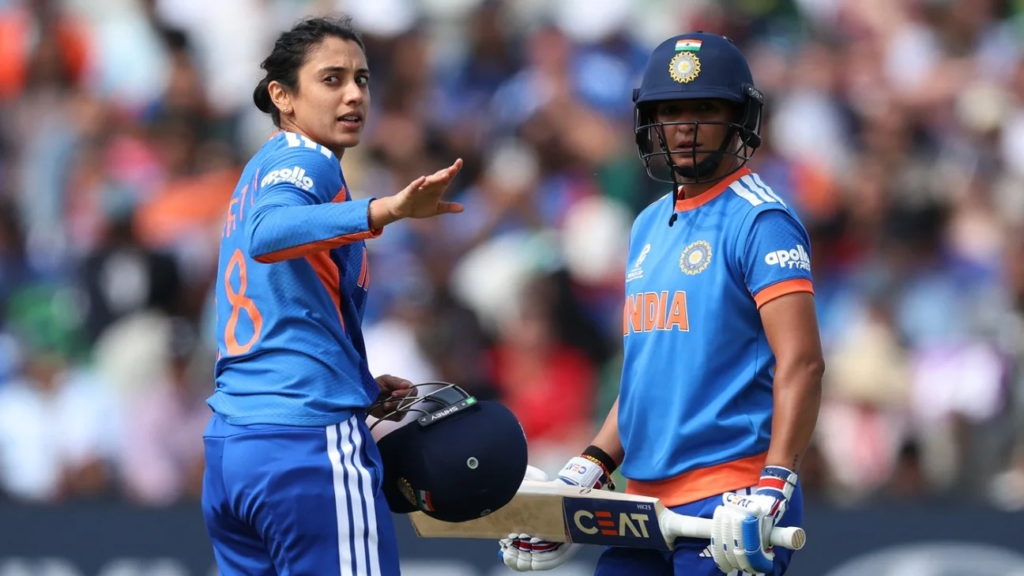
There is also a symbolic passing of the baton involved.
Mithali Raj’s name has been attached to many of the major batting landmarks in women’s cricket. Now Mandhana has moved beyond one of the most significant of those records.
The achievement does not diminish Raj’s career. Instead, it shows how far women’s international cricket has moved since Raj established her dominance.
Mandhana’s record-breaking innings is therefore part of a larger generational story — one Indian batting great’s record giving way to another.
What Comes Next for Mandhana?
The most immediate priority is India’s Asia Cup campaign.
The record has already been written. The captaincy question, however, will continue.
Mandhana does not need the captaincy to establish her legacy. She has already become one of the defining batters of her generation, and her latest innings has strengthened that position even further.
But if Indian selectors eventually decide to make her the all-format captain, the decision would represent something larger than a change in the leadership column.
It would signal that India’s next phase of women’s cricket is being built around a player who has already become the country’s statistical leader.
For now, Mandhana’s story is moving on two tracks at once: she is breaking the records of the past while potentially preparing to lead the future.
And after a 124-ball? No — a 124-run masterclass from just 64 balls, the question surrounding her is no longer simply how many more records she can break.
It is how much responsibility India is prepared to place on her shoulders.