








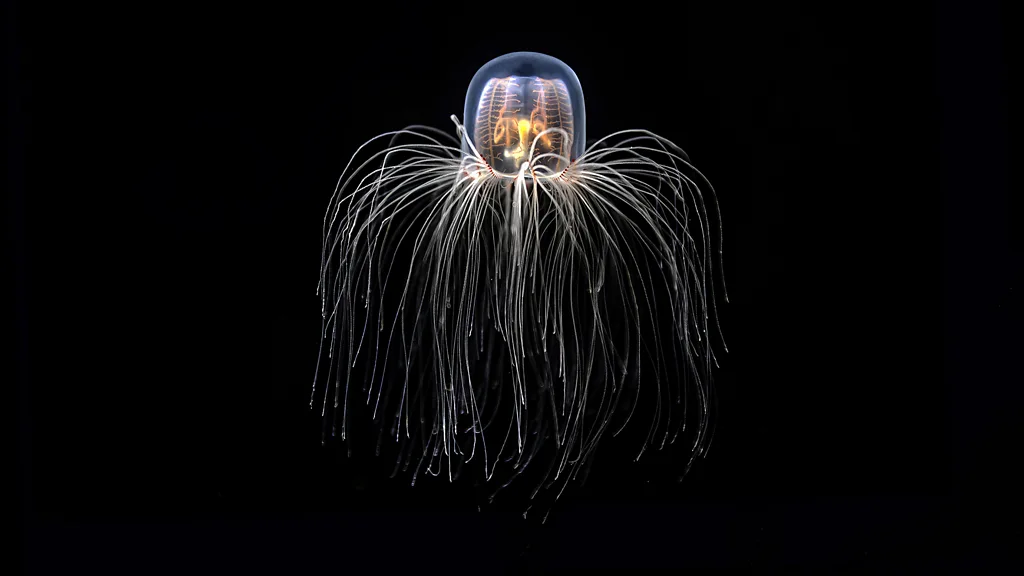
A tiny marine creature known as the immortal jellyfish is helping scientists investigate one of biology’s biggest mysteries: whether ageing-related damage can be reversed. The species, Turritopsis dohrnii, has the remarkable ability to return from its adult stage to an earlier stage of life under certain conditions.
Researchers are studying the genetic and cellular mechanisms behind this transformation to understand whether similar processes could eventually help treat age-related diseases in humans.
How the Immortal Jellyfish Reverses Its Life Cycle
Unlike most adult animals, Turritopsis dohrnii can transform into a cell mass that develops into a polyp, an earlier stage in the jellyfish life cycle. The polyp can then produce new jellyfish.
This process is triggered by stress or unfavourable conditions. During the transformation, some specialised cells change their identity through a process known as transdifferentiation, allowing the organism to rebuild itself.
The ability has earned the species its nickname, although it is not literally invincible. Predators, disease and environmental changes can still kill it.
Genetic Clues to Longevity
Scientists are examining the genes that help the jellyfish repair DNA damage and maintain telomeres, protective structures at the ends of chromosomes. Telomeres generally shorten as cells divide, and their maintenance is associated with cellular ageing.
A 2022 study comparing the immortal jellyfish with a related species identified differences in genes linked to DNA repair, telomere maintenance and other biological processes.
Researchers are also investigating genes that become active when the jellyfish enters its rejuvenation stage. Understanding how these genes work together could provide valuable insights into cellular regeneration.
Could the Discovery Help Humans?
Scientists hope that studying the jellyfish may eventually contribute to research into tissue repair and diseases associated with ageing.
Potential areas of interest include healing damaged tissues, understanding age-related vision loss and investigating neurodegenerative conditions such as Alzheimer’s disease.
However, these possibilities remain research goals rather than established treatments. Human cells and tissues are far more complex, and the jellyfish’s biological mechanisms cannot simply be transferred to people.
Researchers must also understand how to control cell reprogramming safely. Uncontrolled changes in cell identity and growth could create serious risks, including cancer.
Why the Jellyfish Is Not Truly Immortal
Despite its extraordinary abilities, the immortal jellyfish remains vulnerable. Some individuals may not successfully rejuvenate, and scientists do not yet know whether there is a limit to how many times an individual can repeat the process.
Its survival also depends on suitable environmental conditions, available food and protection from predators.
What Scientists Hope to Learn
The immortal jellyfish offers an unusual opportunity to study how living organisms maintain and rebuild their tissues. By identifying the genetic pathways behind its life-cycle reversal, scientists hope to deepen their understanding of ageing, cellular repair and regeneration.
Although practical medical applications remain a long way off, this small marine animal could help researchers uncover new approaches to studying age-related degeneration and the limits of biological repair.