







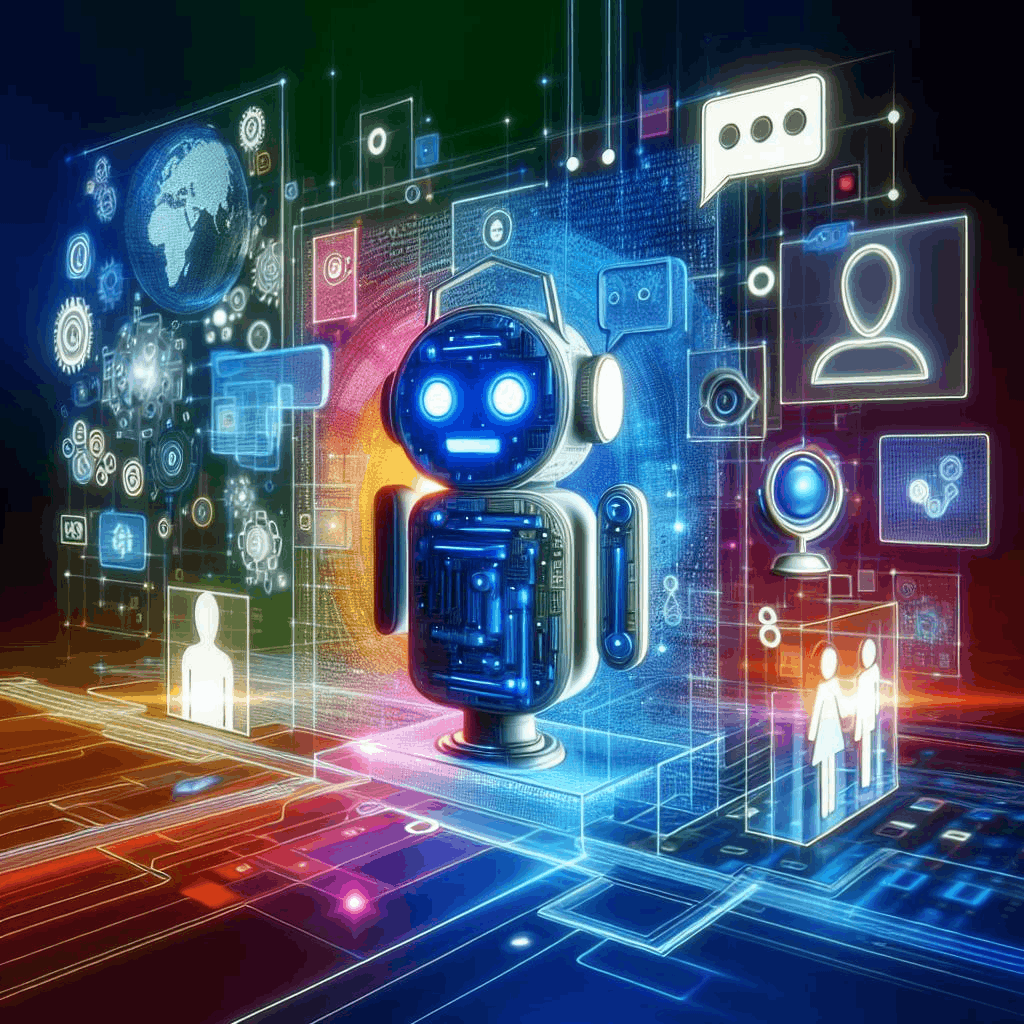
Artificial intelligence is entering a new phase. After years of chatbots and generative AI tools that primarily answered questions or created content, the focus is increasingly shifting towards AI agents that can understand objectives, make decisions and complete multiple steps on a user’s behalf.
That change could make 2026 an important year for the development of AI-powered assistants.
Instead of simply asking an AI system to write an email or find information, users could increasingly rely on assistants to organise tasks, coordinate information and help manage workflows from start to finish.
From answering questions to taking action

Traditional AI assistants generally wait for a prompt and then provide a response. AI agents are designed around a different idea: give the system a goal and allow it to work through the steps required to achieve it.
For example, an AI agent could potentially research information, compare options, organise the findings and prepare an output without requiring the user to provide instructions at every stage.
This shift from conversation to action is one of the most important developments in today’s AI landscape.
Personal AI assistants could become more useful
AI-powered personal assistants are also becoming more sophisticated.
Future assistants could potentially learn a user’s preferred ways of working, understand recurring tasks and provide more contextual help. Instead of treating every interaction as an isolated question, an assistant could use relevant context to make its responses more useful.
That could eventually turn AI from an occasional productivity tool into something people interact with throughout the day.
Businesses are looking at AI agents for repetitive work
The business case for AI agents is particularly strong where employees spend large amounts of time on repetitive digital tasks.
Companies could use agentic systems to assist with areas such as:
- Customer-service requests
- Research and information gathering
- Scheduling and administrative work
- Document processing
- Sales support
- Internal knowledge management
- Data analysis
- Software and workflow assistance
The objective isn’t necessarily to replace every human task. In many cases, the bigger opportunity is to allow employees to spend less time on repetitive processes and more time on decisions that require human judgement.
Customer service could become more automated
Customer support is another area where AI agents could have a major impact.
A conventional chatbot might answer a customer’s question. A more capable AI agent could potentially understand the problem, retrieve relevant information, check available options and guide the customer through several stages of a resolution.
That could make digital customer service more responsive while reducing the workload on human support teams.
However, businesses will still need clear safeguards for situations involving sensitive information, financial decisions or complaints that require human intervention.
AI agents could change how people use software
One of the more interesting possibilities is that users may eventually spend less time navigating individual applications.
Instead of opening several programs to complete a task, a person could potentially tell an AI assistant what they want to accomplish and allow it to coordinate the necessary tools.
For example, a request such as preparing a meeting could involve checking a calendar, gathering relevant documents, summarising previous discussions and preparing an agenda.
The AI would effectively become a layer between the user and multiple software services.
The workplace may become more AI-assisted
The rise of AI agents could also change the traditional workplace workflow.
Employees may increasingly work alongside specialised AI systems rather than using one general-purpose chatbot for everything. One agent could assist with research, another with customer communication and another with data or administrative tasks.
This could create a new model of digital teamwork in which people remain responsible for strategy and judgement while AI systems handle parts of the execution.
Privacy will become a bigger issue
More capable AI assistants also create a significant privacy challenge.
An assistant that is genuinely useful may need access to more information about a user’s work, preferences, documents or schedule. The more information an AI system can access, the more important questions around data protection, permissions and security become.
Companies will therefore need to balance convenience with control.
Users should be able to understand what information an AI agent can access, what actions it can perform and when human approval is required.
Human oversight won’t disappear
Despite the rapid development of agentic AI, humans are unlikely to become irrelevant.
AI systems can process information quickly, but important decisions can involve context, ethics, accountability and consequences that go beyond technical execution.
The most practical future may therefore be one where AI handles routine execution while humans remain responsible for important decisions.
What AI agents could mean for 2026 and beyond

The next stage of artificial intelligence may not be defined simply by bigger chatbots. It could be defined by AI systems that can do more with less instruction.
As businesses experiment with agentic workflows and consumers become more comfortable with AI-powered assistants, the boundary between software tools and digital assistants could become increasingly blurred.
The biggest question is no longer just whether AI can answer a question.
It is whether AI can understand what needs to be done, complete the right steps and know when a human needs to take over.
That shift could make AI agents one of the defining technology trends of 2026.