







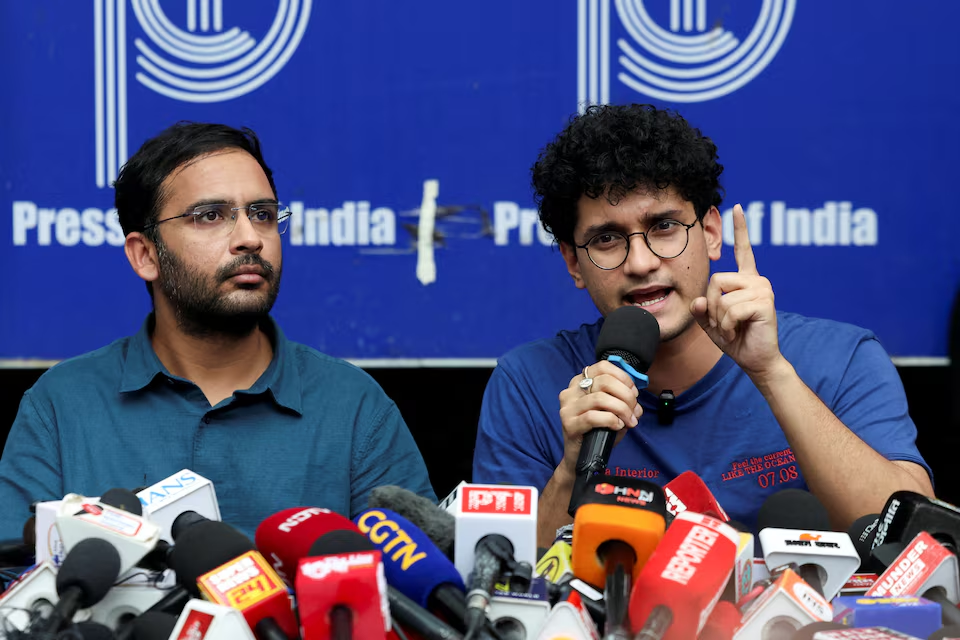
Two leaders of the youth-led Cockroach Janta Party (CJP), Ashutosh Ranka and Saurav Das, have been sent to five days of judicial custody following a protest at Delhi’s Jantar Mantar, according to a Reuters report published on October 14, 2026.
The development comes amid continuing demonstrations demanding the resignation of Chief Election Commissioner Gyanesh Kumar over changes to electoral rolls. The controversy has intensified tensions between opposition groups, youth activists and election authorities.
CJP Leaders Detained After Entering Jantar Mantar
Ranka and Das were among a group of activists who entered the grounds of Jantar Mantar on October 13 after crossing barricades. The protesters raised slogans demanding Kumar’s resignation.
The action followed restrictions on demonstrations at the historic site, which Delhi Police said was no longer an officially designated protest venue. Authorities have identified alternative locations for public demonstrations.
Why Were the Leaders Sent to Judicial Custody?
According to their lawyer, the two leaders were sent to judicial custody for allegedly violating undertakings given to authorities following their earlier release.
Delhi Police cited repeated violations and concerns that the activists could encourage further breaches of the law if released on bail. The detention has added to the ongoing dispute over the movement’s protest campaign.
CJP Says Protests Will Continue
Cockroach Janta Party leader Ajinkya Shinde said the movement would not be intimidated by the imprisonment of its members. The party has continued to mobilise young people around issues including unemployment, education and public accountability.
The group previously organised a prolonged sit-in over alleged examination paper leaks, which was followed by the resignation of Union Education Minister Dharmendra Pradhan earlier in 2026.
Voter-List Revisions Fuel Political Tensions
The latest demonstrations centre on revisions to India’s electoral rolls that have reportedly removed more than 130 million names. The figures include people recorded as deceased, individuals who have relocated and people whose whereabouts could not be established.
Opposition parties allege that the changes could disproportionately affect Muslim voters and other minorities. The Election Commission has denied favouring any political party and has said voters whose names were wrongly deleted can re-enrol. The BJP has also rejected accusations that the electoral process is being manipulated.
Jantar Mantar Restrictions Add to the Dispute
The decision to remove Jantar Mantar from the list of designated protest venues has become another point of contention. The location has long been associated with demonstrations on political, social and public-interest issues.
The latest detentions follow wider protests and police action in Delhi earlier this month, when thousands of demonstrators were reportedly detained ahead of a planned rally. The movement’s response to the five-day judicial custody order could shape the next phase of its campaign.
What Happens Next?
The immediate focus remains on the legal proceedings involving Ranka and Das and whether the CJP will organise further demonstrations. The broader dispute over electoral-roll revisions continues to draw attention from opposition parties and student groups.
The developments highlight the ongoing tension between public protest, restrictions on demonstrations and demands for greater transparency in the electoral process.
