





Prime Minister Narendra Modi has reaffirmed India’s bold space ambitions, targeting an indigenous space station by 2035 and landing an Indian astronaut on the Moon by 2040.
Speaking via video conference at the International Space Summit in Paris on September 10, 2026, Modi said: “Looking ahead, our goal is to establish an Indian space station by 2035 and send an Indian to the Moon by 2040.” He stressed that the benefits of these missions must reach all of humanity and called for global cooperation, sustainability, and adherence to international law in space.
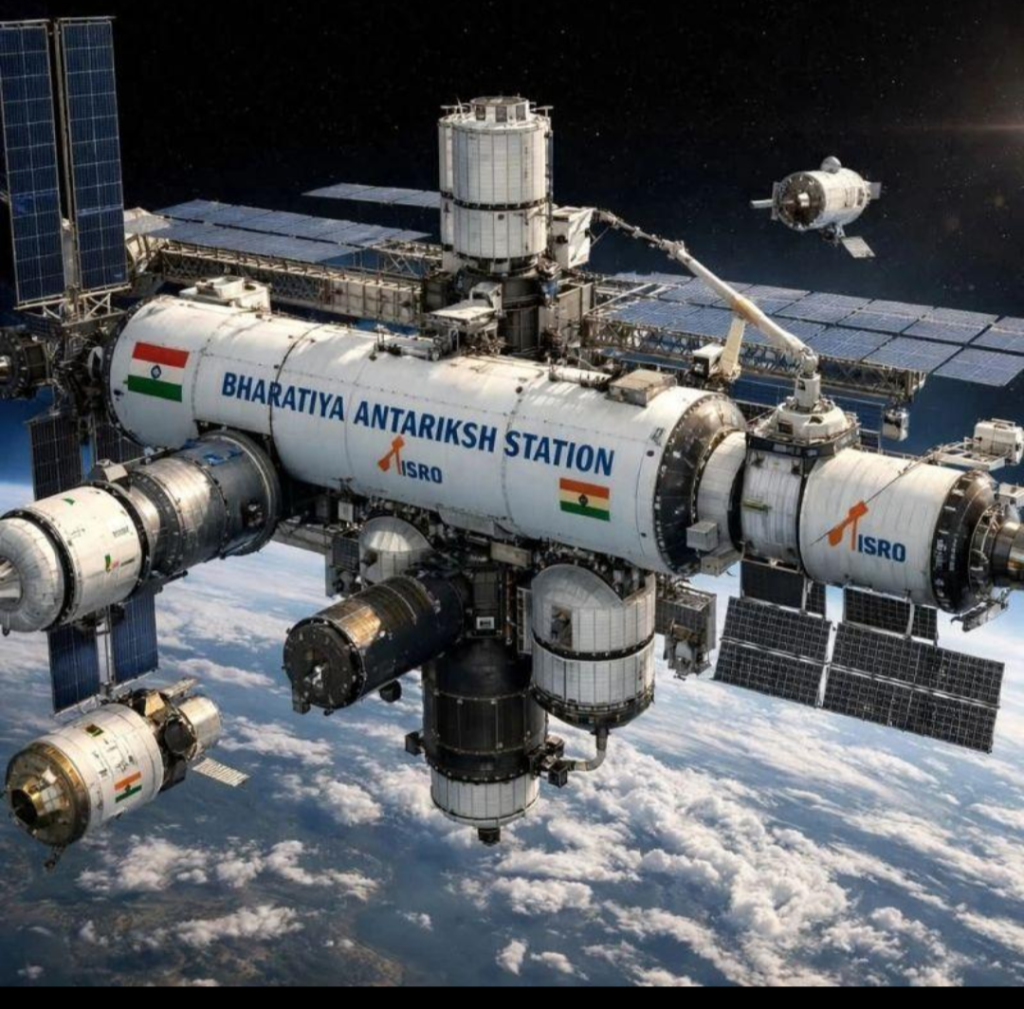
The planned station is known as the Bharatiya Antariksh Station (BAS) or Bharatiya Antariksha Station. It is designed as a modular facility with five modules. The first module (BAS-01) has already received government approval and is targeted for launch by 2028. The full station is expected to become operational by 2035, enabling longer-duration human presence in low Earth orbit (around 400–450 km) for microgravity research, technology demonstration, and preparation for deeper space missions.
This forms a core part of India’s Space Vision 2047, which also includes advances in reusable launch vehicles, sample-return lunar missions (such as Chandrayaan-4), and broader human spaceflight capabilities building on the Gaganyaan programme.
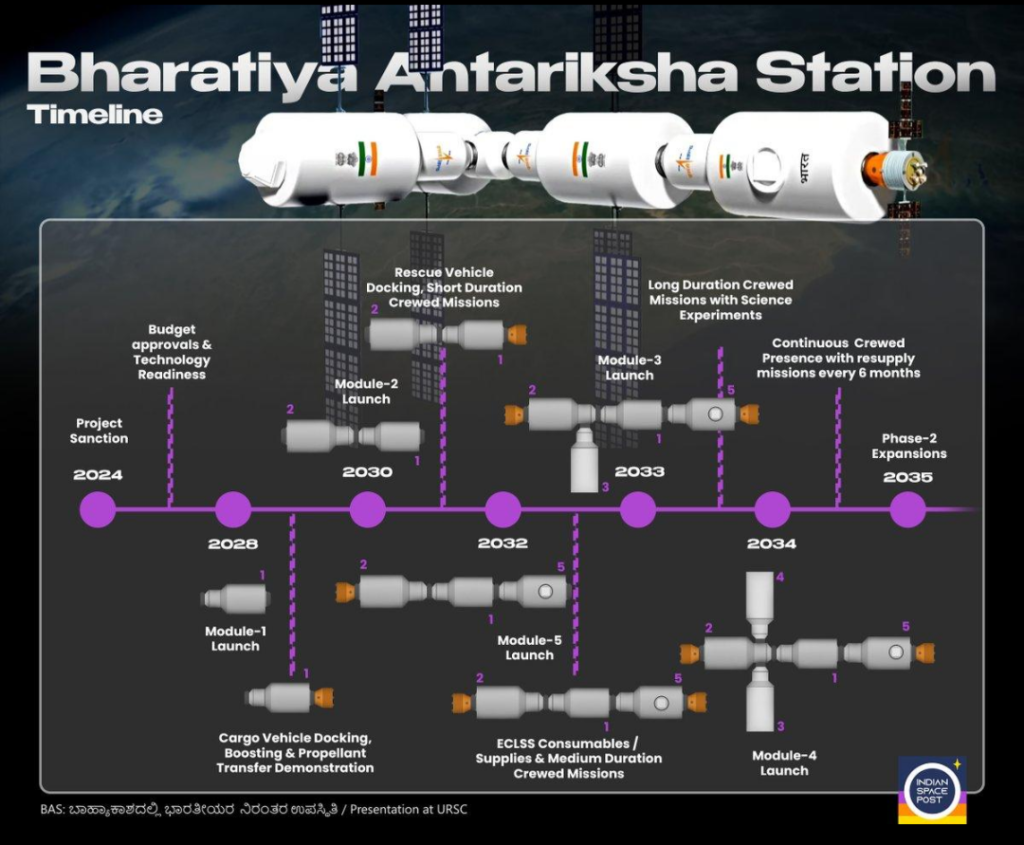
Modi highlighted recent milestones that have laid the foundation: Chandrayaan-3’s historic soft landing near the Moon’s south pole, the Aditya-L1 solar observatory, India’s growing role in launching satellites for other nations (over 430 satellites from 34 countries), and the participation of an Indian astronaut on the International Space Station. He praised ISRO scientists and noted the expanding role of private companies alongside the space agency.
The Prime Minister also invited international partners, including long-standing collaborator France, to join India as “co-travellers” in future exploration, innovation, and protection of the space environment.
ISRO Chairman V. Narayanan has separately confirmed progress, stating that work on the space station is advancing under the leadership of the government, with the first module already approved and the full station targeted for 2035.
These goals position India among a small group of nations with independent long-duration human spaceflight and deep-space capabilities, while emphasising peaceful, inclusive, and sustainable use of outer space.
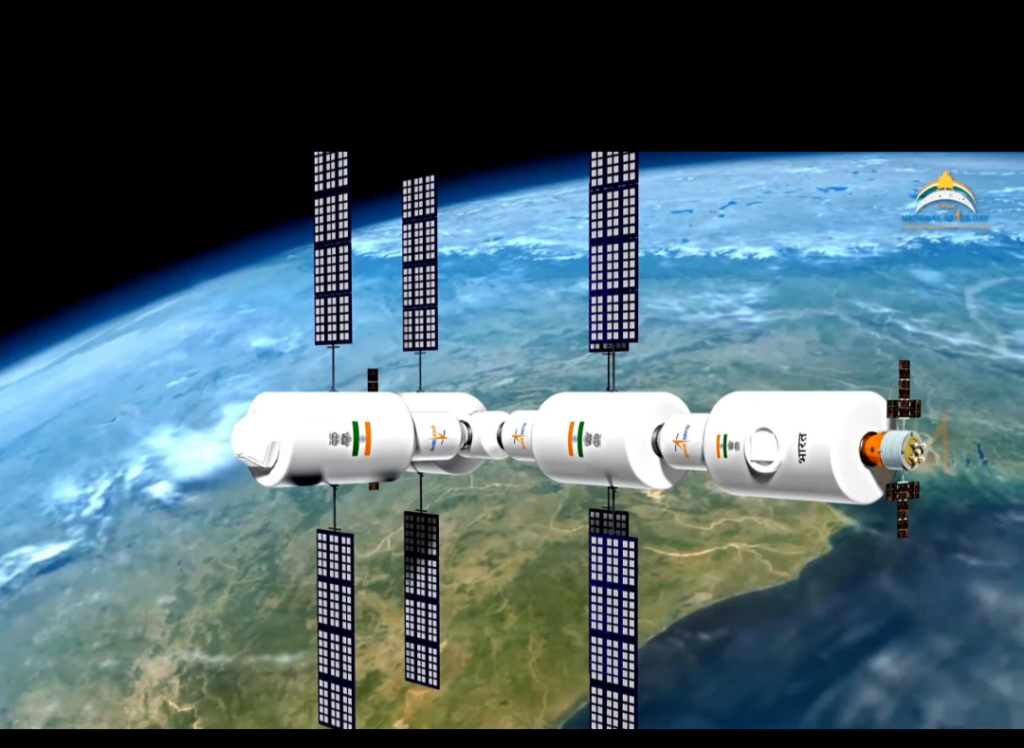
Official updates on the Bharatiya Antariksh Station and related missions continue to be tracked through ISRO and the Department of Space.
PM Modi’s address at the International Space Summit (Paris, 10 September 2026), statements by ISRO Chairman V. Narayanan, government briefings on Space Vision 2047, and contemporary reports from Business Standard, Firstpost, LiveMint, and others.