








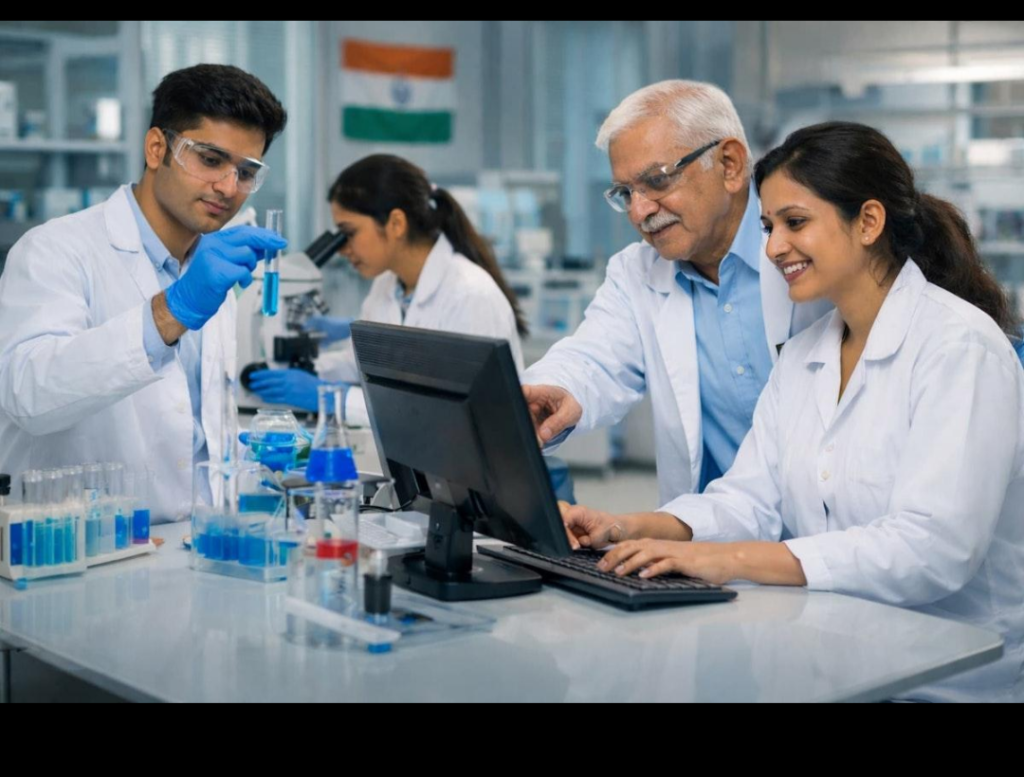
India’s health-research ecosystem is gathering significant momentum, driven by increased funding, policy reforms, inter-institutional collaboration, and a clear shift toward translating scientific discoveries into practical healthcare solutions.
The Department of Health Research (DHR) budget has grown more than fivefold since 2014–15, reaching ₹4,821 crore in the 2026–27 Budget Estimates — a roughly 24% increase over the previous year. This expansion supports broader grant architectures at the Indian Council of Medical Research (ICMR), including tiered funding for early-stage ideas, intermediate projects, and centres of advanced research.
A draft National Health Research Policy 2026 aims to overhaul the ecosystem by aligning research more closely with India’s disease burden, prioritising indigenous innovation, evidence-based policymaking, and measurable public-health impact over pure academic output. The policy proposes stronger governance, capacity building, and evaluation metrics focused on real-world outcomes such as clinical practice, indigenous technologies, and health programmes.
Collaboration is intensifying. CSIR and ICMR have recently set an integrated roadmap prioritising joint work in diagnostics, genomics, infectious diseases, digital health, antimicrobial resistance, precision health, and One Health surveillance. The goal is to accelerate translational pipelines so that laboratory advances move faster into diagnostics, vaccines, digital tools, and public-health applications.
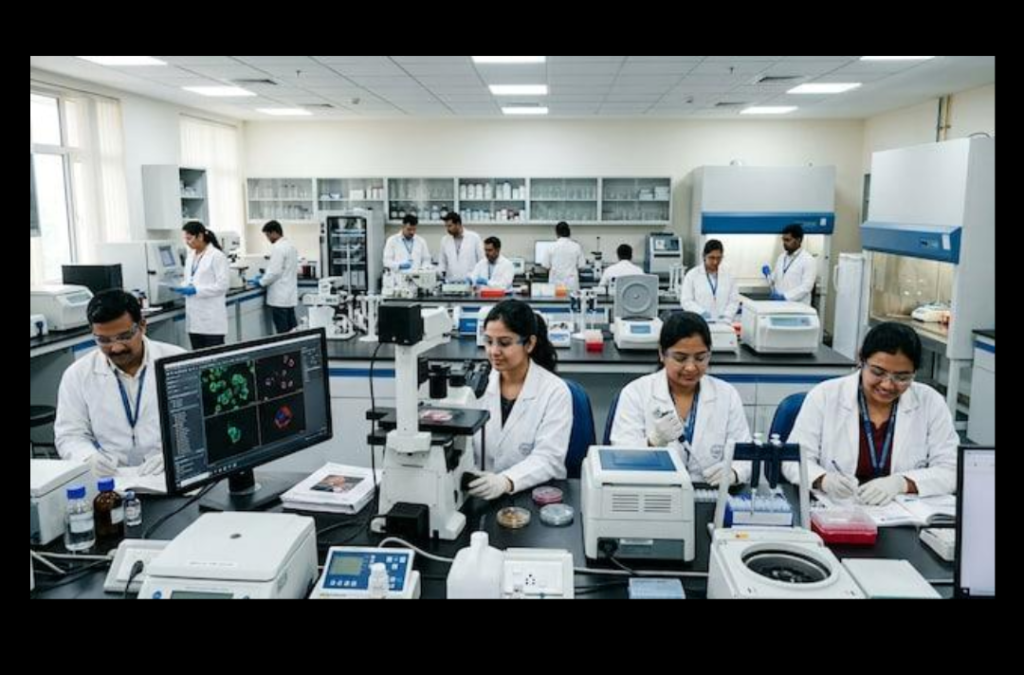
Digital health is a major growth area. Initiatives under the Ayushman Bharat Digital Mission (ABDM), the IndiaAI Mission, and new AI-in-healthcare roadmaps (including SAHI) are expanding electronic health records, remote monitoring, AI-assisted diagnostics, and data interoperability. Researchers and startups are increasingly focusing on converting findings into scalable solutions — from low-cost diagnostics and portable platforms to AI-driven decision support and technology transfers via platforms such as Medical Innovations Patent Mitra.
BioNEST incubators, expanded clinical-trial networks (including early-phase capabilities), and events linking innovators with industry are helping bridge the gap between discovery and deployment. Officials and experts note that India is moving from primarily manufacturing generics and vaccines toward becoming a source of original, affordable medical technologies suited to both domestic needs and global markets.
While challenges remain including overall R&D spending as a share of GDP and the need for wider institutional capacity the combination of policy focus, funding growth, digital infrastructure, and translational intent signals a maturing and more impactful health-research landscape.