








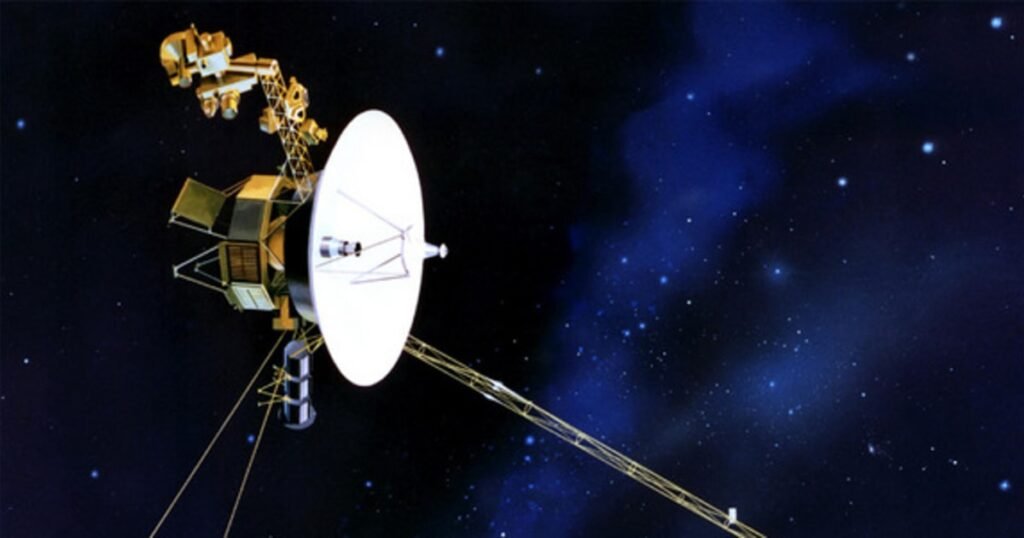
NASA’s Voyager 1 continues its extraordinary journey through deep space, carrying humanity’s message farther than any other human-made spacecraft. Launched in 1977, the spacecraft has spent nearly five decades travelling away from Earth and remains one of the most remarkable achievements in space exploration.
Voyager 1 is now around one light-day of travel time from Earth, meaning a signal travelling at the speed of light takes roughly a full day to cover the distance between Earth and the spacecraft. The milestone puts into perspective just how far the probe has travelled since leaving Earth.
The spacecraft crossed into interstellar space in 2012, after passing beyond the heliosphere—the vast bubble created by the solar wind around our Solar System. Since then, Voyager 1 has continued sending scientific information about the environment beyond the Sun’s immediate influence.
Despite its age, Voyager 1 has continued operating far beyond its original mission expectations. NASA engineers have gradually switched off or modified spacecraft systems to conserve its limited power, allowing the probe to continue communicating with Earth.
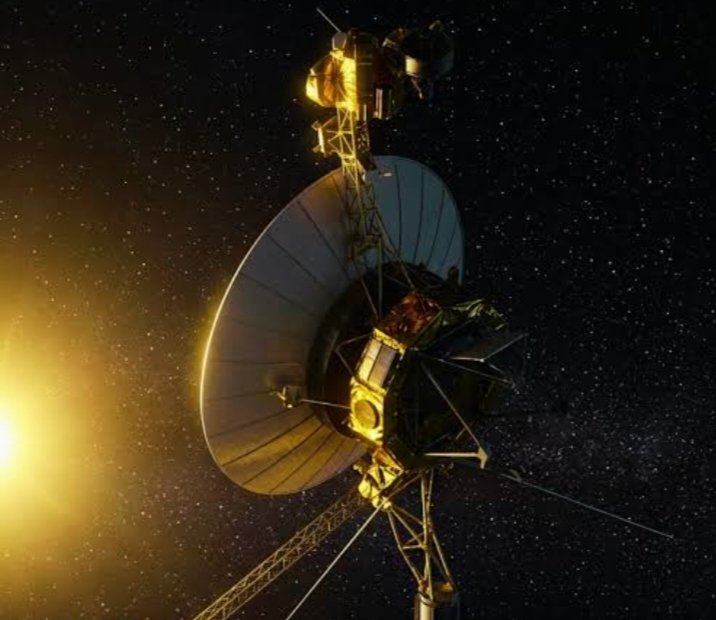
The journey is particularly remarkable because Voyager 1 is travelling through a region no human spacecraft had explored before. Its instruments have provided scientists with valuable information about the conditions between stars and the boundary between our Solar System and interstellar space.
The spacecraft’s enormous distance also creates a communication challenge. Radio signals need many hours to travel between Earth and Voyager 1, meaning engineers cannot communicate with the probe in real time.
Voyager 1’s continuing journey is therefore more than a space mission—it is a record of human curiosity, engineering and exploration stretching across billions of miles of space.
NASA continues to monitor its ageing spacecraft as long as its remaining power and systems allow.