









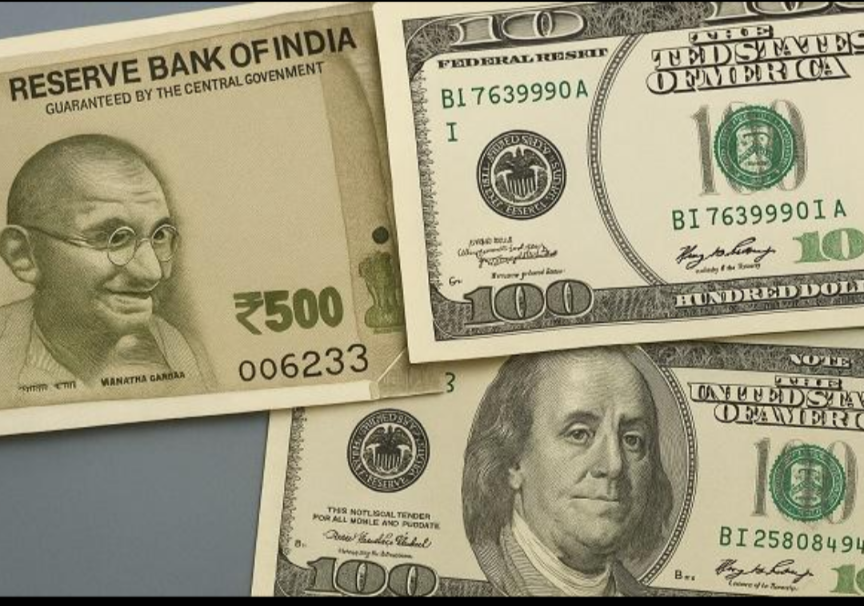
The Indian rupee recorded its sharpest weekly decline in four months, falling about 1.1% to close near ₹95.55 per US dollar on Friday, September 11, 2026. The currency weakened for the fourth consecutive session, pressured by elevated crude oil prices and rising global bond yields.
On the day, the rupee slipped around 0.1% and briefly touched weaker levels near 95.79 before recovering partially, aided by suspected intervention from the Reserve Bank of India (RBI) and a modest correction in oil prices.
Higher oil prices remained the dominant factor. Brent crude was set to end the week above $100 a barrel for the first time since mid-May, driven by ongoing geopolitical tensions in the Middle East, including concerns over shipping routes such as the Strait of Hormuz and the Red Sea. Elevated energy costs raise India’s import bill and increase dollar demand.
Rising US bond yields added further pressure by strengthening the dollar and reducing the appeal of emerging market currencies. The combination erased much of the rupee’s early-September gains, when it had touched a two-month high near 94.30.
RBI Support
RBI Governor Sanjay Malhotra indicated that the central bank would support the forex markets as needed. Traders reported possible dollar-rupee sell/buy swaps aimed at managing liquidity and limiting sharp depreciation. India’s strong foreign exchange reserves and domestic growth fundamentals continue to provide underlying support.
Outlook
Analysts expect the rupee to remain sensitive to crude oil trends, US yield movements, and global risk sentiment in the near term. Key levels around 95–96 are being closely watched, with the possibility of further volatility if oil prices stay elevated or foreign outflows persist.
The sharp weekly drop highlights the vulnerability of the currency to external shocks, even as domestic factors and central bank actions help cushion extreme moves.