







California is usually associated with Hollywood, Silicon Valley, surf beaches, redwood forests and the Gold Rush. Yet along the rugged Sonoma Coast stands a historic site that seems to belong to a completely different chapter of North American history.
Its name is Fort Ross.
More than two centuries ago, Russian settlers established a fortified trading and agricultural settlement here, creating the southernmost outpost of Russia’s North American expansion. The settlement operated from 1812 into the early 1840s and connected the Russian world of Alaska with the Pacific coast of what is now California.
Today, the wooden structures and surrounding landscape offer visitors an opportunity to explore one of California’s least expected historical stories.
Why Did Russia Come to California?
The story began much farther north.
During the late 18th and early 19th centuries, Russian commercial interests expanded across Alaska, where the fur trade was a major source of wealth. But maintaining distant settlements in Alaska created a practical problem: food and other supplies were difficult to produce locally in sufficient quantities.
The Russian-American Company therefore looked south.
California offered a milder climate, fertile land, forests and access to the Pacific. It could potentially provide agricultural supplies for Russian settlements farther north while also supporting the lucrative sea-otter trade.
The idea was not simply to build a military fortress. Fort Ross was conceived primarily as a commercial, agricultural and maritime base.
The Settlement Rose on the Sonoma Coast
In 1812, Russian-American Company official Ivan Kuskov arrived on the Sonoma Coast with a small group of Russian craftsmen and Alaska Native workers.
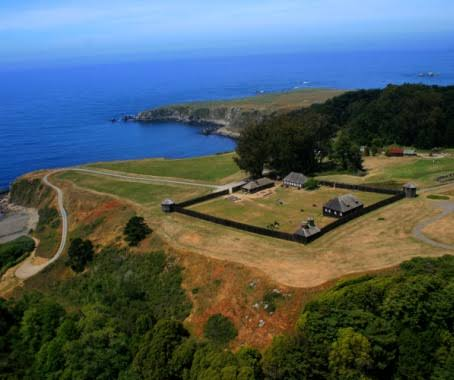
The location had been selected after years of exploration. It offered access to timber, water, farmland, grazing areas and the ocean.
Construction began on the site known to the Kashia Pomo people as Metini. By August 1812, the Russians had completed the main stockade and established the settlement that became known as Ross.
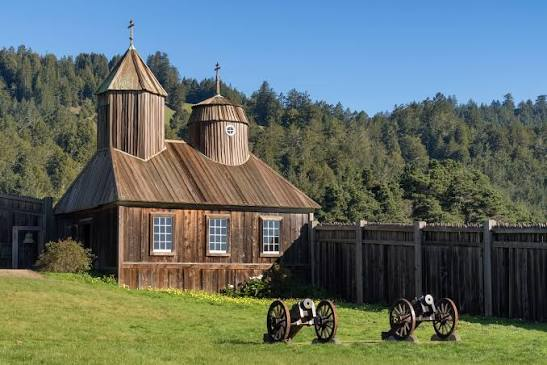
The fort featured wooden walls, defensive blockhouses and cannon positions. But its appearance could be misleading.
Despite its fortified design, Fort Ross functioned primarily as a trading and agricultural outpost rather than a conventional military base.
Fort Ross Was More Multicultural Than Its Name Suggests
One of the most fascinating aspects of Fort Ross is the number of different communities connected to its history.
The settlement brought together Russians, Alaska Native peoples and California Native communities, including the Kashia Pomo, Coast Miwok and Southern Pomo.
Historical records show that the population changed over time and included people of mixed Russian and Native ancestry. By the 1830s, Fort Ross had become a remarkably diverse community for its time.
That history is important because Fort Ross was not an empty piece of wilderness waiting to be discovered. The settlement was built on the ancestral lands of the Kashia Pomo, whose presence in the region long predated the arrival of the Russians.
Some local Native people worked at the settlement in agriculture, livestock, construction and other activities, while Alaska Native workers were deeply involved in the Russian-American Company’s maritime and hunting operations.
A Tiny Russian World on the Pacific
Fort Ross gradually developed into more than a stockade.
There were gardens, orchards, workshops, storage buildings and a shipyard. Russian settlers produced agricultural goods that could be sent north to Alaska, while ships and maritime activities supported the wider trading network.
Homes also appeared outside the main fortification.
This residential area became known as the Sloboda, a small village of wooden houses and gardens. It helped transform Fort Ross from an isolated outpost into a functioning community.
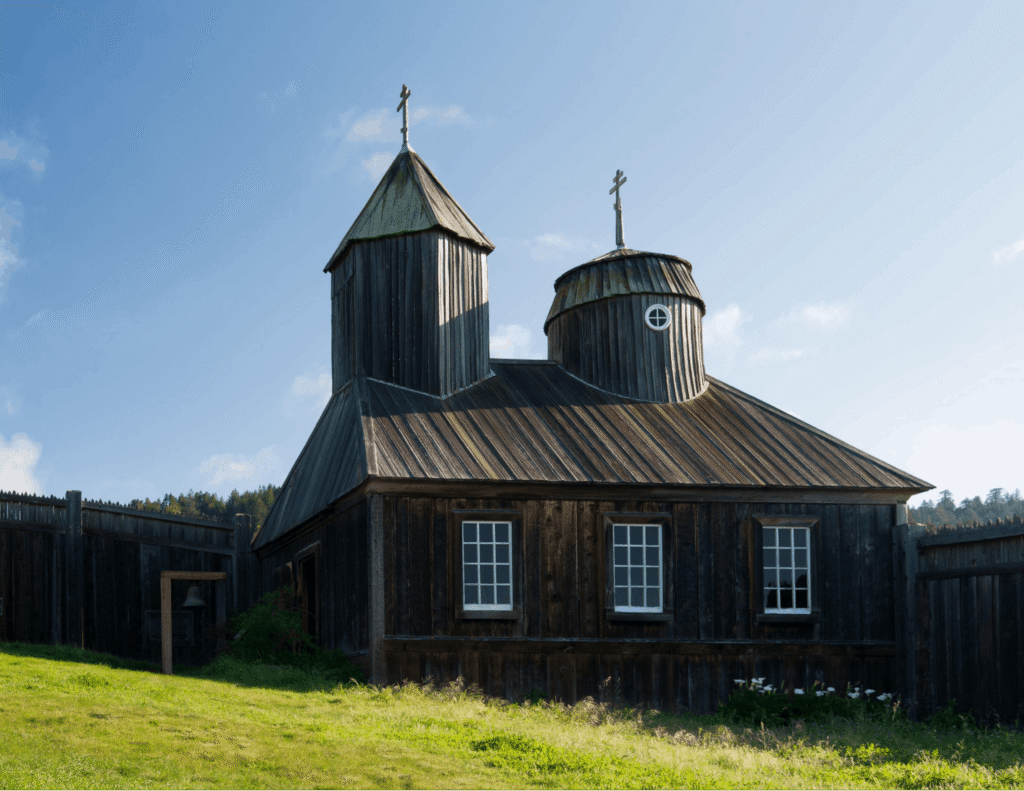
The settlement even had an Orthodox Christian presence. A chapel dedicated to St Nicholas was constructed in the 1820s, reflecting the religious traditions carried across the Russian Empire’s Pacific settlements.
Russia’s Neighbours Were Already There
The Russian arrival did not happen in isolation.
Spanish authorities had established settlements farther south in California, while Indigenous communities had lived across the region for generations. The Russian presence therefore existed within a complicated political and commercial landscape.
Relations with Spanish and later Mexican authorities could be pragmatic despite competing territorial claims. Trade developed between the Russian settlement and neighbouring communities even when official policies made such commerce complicated.
That made Fort Ross an unusual meeting point between several expanding powers and local communities.
It was simultaneously a Russian commercial outpost, an Indigenous homeland, part of the Spanish and Mexican political world, and eventually a piece of the rapidly changing California landscape.
Why Did the Russian Settlement Disappear?
Fort Ross ultimately faced a basic economic problem: it never became as successful as its planners had hoped.
The agricultural operation struggled to produce enough surplus to justify the expense of maintaining the distant settlement. Meanwhile, the sea-otter trade that had helped motivate Russian expansion was declining.
Russia also faced difficulties maintaining a permanent presence so far south.
By the late 1830s, the Russian-American Company was preparing to liquidate its California operation. The settlement’s assets were eventually sold to John Augustus Sutter in 1841.
The Russian era was effectively coming to an end.
By early 1842, the remaining Russian colonists had departed, closing a remarkable chapter in California history.
What Happened After the Russians Left?
The site did not become a ghost town overnight.
After the Russian-American Company departed, Fort Ross entered another phase of its history. The property was used for ranching and other activities, while buildings and equipment were dispersed or altered.
Over time, however, historians and preservationists recognised the importance of the Russian settlement.
California eventually acquired the site, and Fort Ross became part of the state’s historic-park system. Today, Fort Ross State Historic Park preserves and interprets the area’s Russian, Indigenous and later ranching histories.
Why Fort Ross Still Matters
Fort Ross is fascinating precisely because its story does not fit neatly into one national narrative.
It demonstrates how far Russian commercial expansion reached across the Pacific. It reveals the importance of Alaska Native maritime workers to the Russian-American enterprise. It shows how Russian settlers interacted with Indigenous communities in California. And it provides a physical reminder of a period when several competing powers were shaping the future of the Pacific coast.
The traces of that era have survived in more than buildings.
Historical research has identified Russian influences in the local cultural landscape, including Russian-derived words preserved in the Kashia language and place names associated with the Russian period.
A Different Way to See California
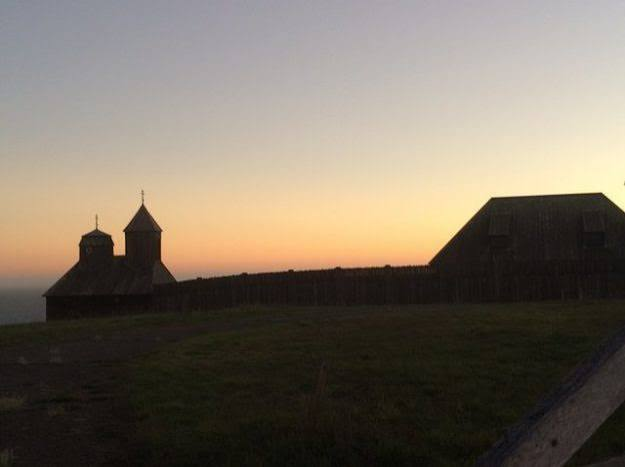
For modern visitors, Fort Ross offers something very different from California’s better-known attractions.
There are no Hollywood premieres here and no towering skyscrapers.
Instead, there is a wooden stockade overlooking the Pacific, historic buildings, coastal scenery and the remains of a community that once connected California to Russian America.
Standing there, it becomes easier to understand that California’s past was never a single straight story.
Before the state became part of the United States, its coast was shaped by Indigenous peoples, Spanish missions and settlements, Mexican rule, Russian traders and many other communities.
Fort Ross is one of the places where those histories briefly intersected.
And that makes this quiet coastal landmark more than an old fort.
It is a reminder that some of the most surprising chapters of history are hiding in places travellers might otherwise drive past.