







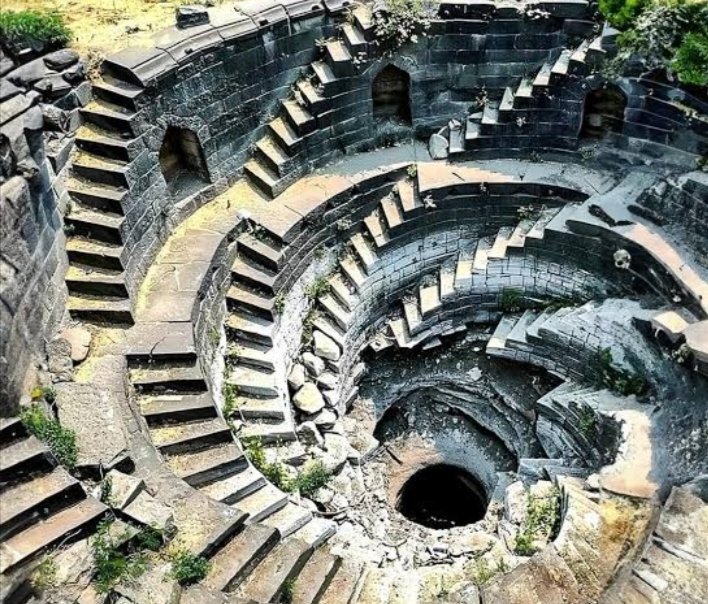
Ancient India continues to surprise the world with its remarkable architecture and engineering techniques. A stunning example is this nearly 1,000-year-old stepwell, designed with an extraordinary spiral layout and stairways extending in eight directions.The unique structure showcases how ancient builders combined functionality, geometry and architectural creativity. From above, the stepwell creates a mesmerizing spiral pattern, making it look almost like a giant geometric design carved into the earth.Stepwells were traditionally designed to provide access to water while also serving as important architectural and social spaces. Structures like this demonstrate the advanced understanding of construction and water management that existed centuries ago.The unusual eight-direction staircase design makes this ancient monument particularly fascinating. Even today, its symmetry and construction continue to attract attention online, leaving viewers amazed by the engineering skills of the people who built it.Watch the video and take a closer look at this incredible piece of ancient Indian architecture.
The stepwell was designed not only as a source of water but also as an impressive architectural space. Its carefully constructed steps allowed people to reach different levels of the well as the water level changed.The spiral arrangement gives the monument a spectacular appearance, particularly when viewed from above. The symmetry and repeating patterns make the structure look remarkably modern despite its ancient origins.
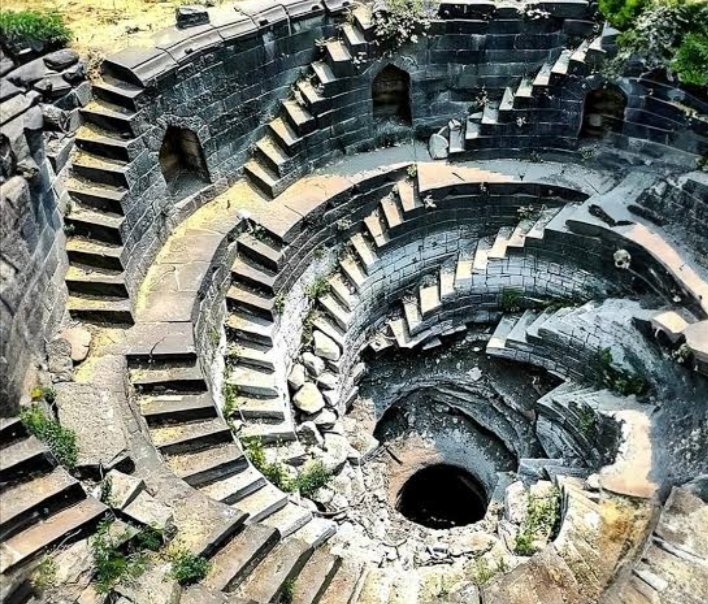
The construction of stepwells required careful planning. Builders had to understand the terrain, water levels, structural stability and movement of people around the well.The eight-directional layout seen in this remarkable structure adds another layer of complexity to its design. It stands as an example of how ancient Indian engineering combined practical needs with artistic architecture.
Stepwells played an important role in several parts of India, especially in regions where water conservation was essential. Many were also used as gathering places and became important parts of local communities.Today, these monuments offer valuable insight into India’s architectural and engineering heritage. Their designs continue to inspire historians, architects and visitors.This 1,000-year-old spiral stepwell is more than just an ancient structure—it is a reminder of the extraordinary knowledge and craftsmanship of earlier generations.