




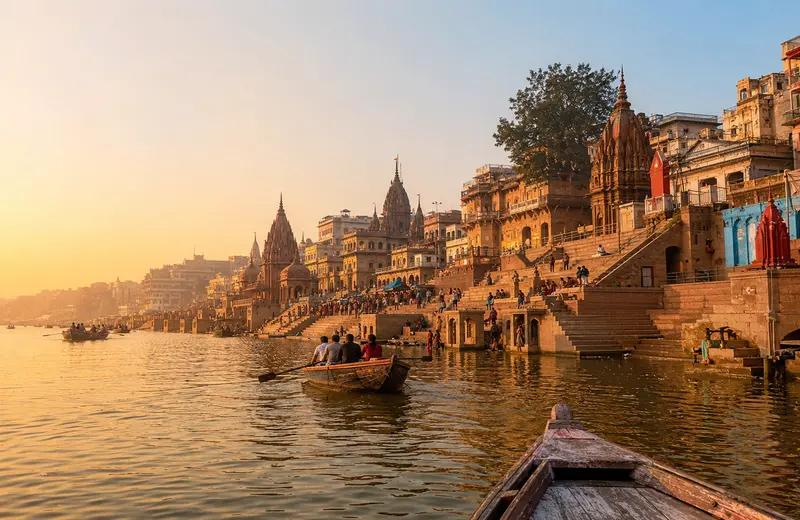
Varanasi is generally considered most pleasant for sightseeing between October and March, according to official tourism information.
Here are eight experiences worth adding to a winter itinerary.
1. Begin the Day With the Ganga at Sunrise
If there is one experience worth setting an early alarm for, it is the riverfront at dawn.
Head towards the ghats before the city becomes busy and watch boats gradually appear on the Ganga. In winter, morning mist can create a soft backdrop around the river and the historic buildings lining the waterfront.
The official Varanasi district tourism site describes the ghats as particularly striking at dawn, when the first light falls across the riverfront.
A morning boat ride also offers a different perspective of the city from the one seen while walking through its lanes.
Travel idea: Keep your first morning relatively free instead of packing it with sightseeing. The riverfront is best experienced without rushing.
2. Walk the Ghats Instead of Only Photographing Them
Varanasi’s ghats are more than viewpoints for photographs. They form an important part of the city’s daily life, with rituals, prayers, conversations, boats and local activity unfolding along the river.
Start with one section of the riverfront and walk at an unhurried pace. Stop when something catches your attention rather than trying to cover every ghat in one morning.
The Varanasi district administration notes that the city’s ghats stretch for roughly six kilometres along the river and can be approached from several points, including Dashashwamedh Ghat.
Winter’s cooler conditions make this kind of slow exploration considerably more comfortable than attempting it during the hotter months.
3. See the Ganga Aarti From a Different Perspective
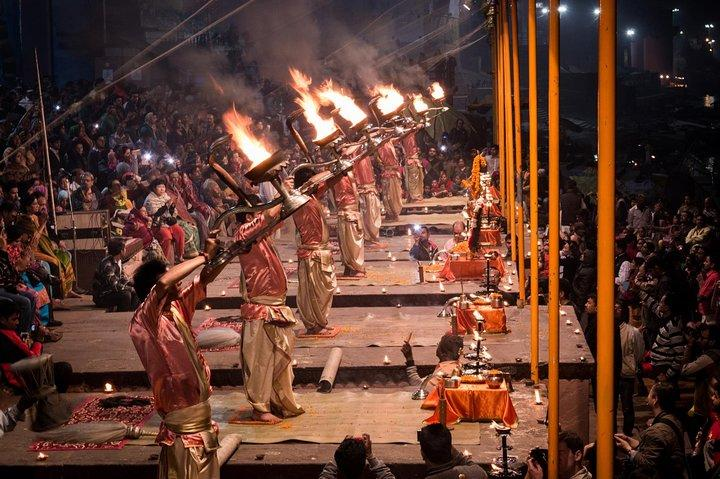
The evening Ganga Aarti at Dashashwamedh Ghat is among Varanasi’s best-known experiences, but visitors don’t necessarily have to experience it from the busiest section of the steps.
You can watch from the river or find a suitable viewpoint along the surrounding ghats, depending on access and crowd conditions.
As the sun disappears, lamps, bells and devotional music transform the riverfront. It is one of those Varanasi experiences where the atmosphere matters as much as the ceremony itself.
Photography tip: Avoid spending the entire ceremony looking through your phone. Take a few photographs and then put the camera away.
4. Get Lost in the Old City’s Lanes
The character of Varanasi isn’t limited to the river.
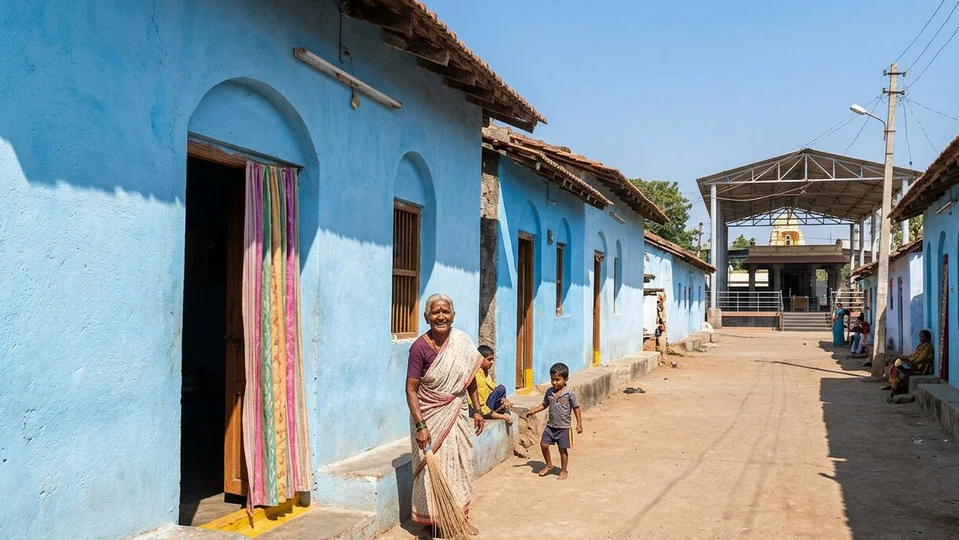
Move inland and explore the narrow lanes around the old city, where temples, traditional homes, small shops, food stalls and workshops appear around seemingly every corner.
This is also where you can discover everyday details that don’t necessarily appear in conventional sightseeing itineraries.
The district’s official tourism portal highlights Banaras’ long traditions in music, crafts, food, oral traditions and local culture.
Remember: These are living neighbourhoods, not an open-air museum. Keep noise low, avoid blocking narrow lanes and ask before photographing people or private spaces.
5. Make Winter Your Season for a Banarasi Food Trail
Cooler weather makes Varanasi particularly inviting for exploring its food culture.
Instead of sitting down for just one large meal, turn the day into a series of small stops. Try local breakfast dishes in the morning, explore snacks during the afternoon and finish with a warm drink or dessert in the evening.
Banarasi food culture is closely connected with the city’s wider traditions, and the official district tourism portal specifically highlights local specialities including paan and thandai.
For visitors trying unfamiliar street food, choose busy establishments with good turnover and pay attention to basic food and water hygiene.
6. Spend Half a Day in Sarnath
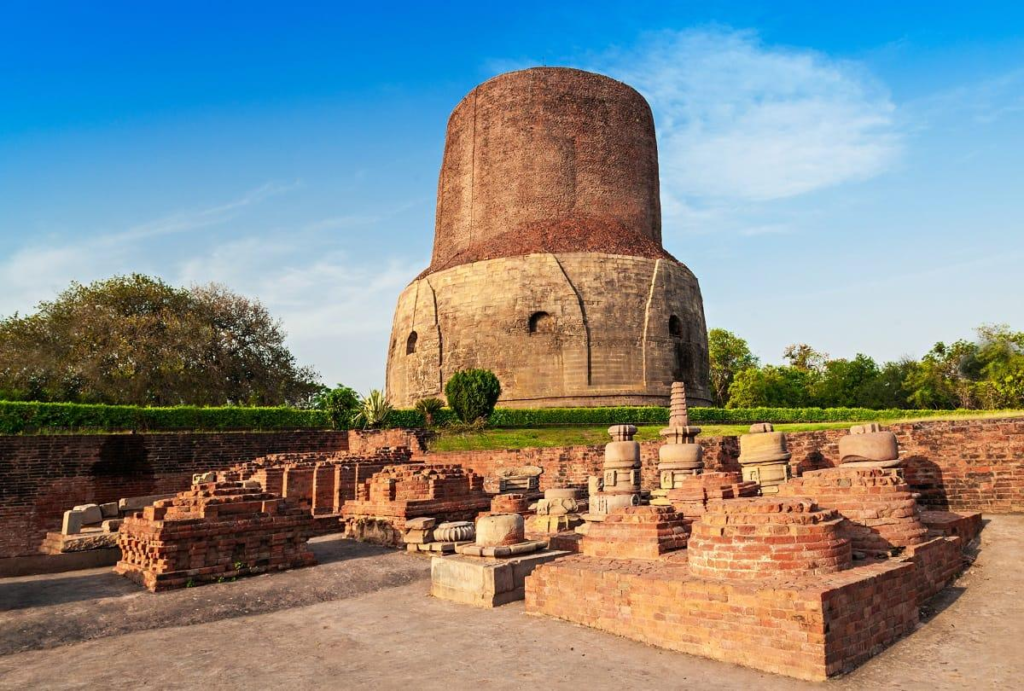
After the intensity of central Varanasi, Sarnath provides a noticeably quieter experience.
Located a short distance from the city, Sarnath is associated with Buddha’s first sermon and features important Buddhist monuments, archaeological remains, museums and monasteries.
Incredible India describes Sarnath as a serene contrast to the busy atmosphere of Varanasi, making it a natural addition to a winter itinerary.
Don’t treat Sarnath as a quick photo stop. Give yourself enough time to walk around the archaeological area and explore its historical significance.
7. Leave One Evening for Music and Culture
Varanasi’s cultural identity extends far beyond its temples.
The city has long traditions of classical music, dance, folk performance and musical gatherings. The district administration itself highlights Banaras’ distinctive musical and performance traditions.
Depending on what’s happening during your visit, look for a legitimate cultural performance, music programme or local event.
This can make your winter trip feel less like conventional sightseeing and more like an introduction to the city’s living culture.
8. Keep One Morning Completely Unplanned
This may sound like an unusual travel tip, but it can be one of the best decisions you make in Varanasi.
Don’t schedule every hour.
Leave one morning for wandering, sitting beside the river, returning to a favourite lane, browsing a market or simply watching the city wake up.
What Makes Winter Different in Varanasi?
Winter is particularly appealing because the season combines comfortable sightseeing conditions with atmospheric mornings along the Ganga.
The official Incredible India tourism portal recommends October to March as a pleasant period for exploring the ghats, taking boat rides and visiting cultural attractions, while noting that winter mornings can bring fog over the river.
That makes early mornings especially photogenic—but travellers should also allow extra time when fog or visibility affects local transport.