






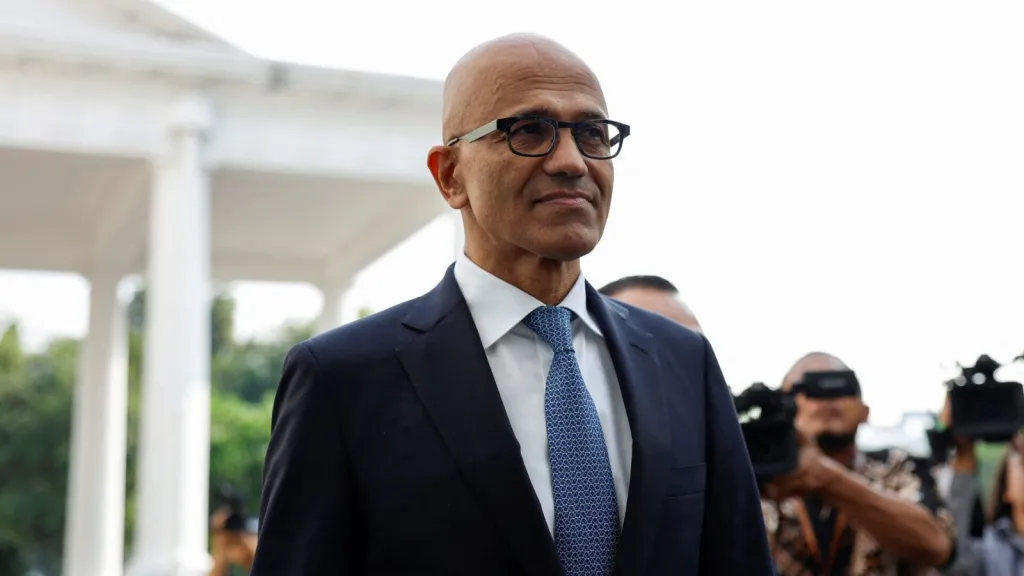
Microsoft CEO Satya Nadella has called for stronger safety measures for advanced artificial intelligence systems, arguing that companies should treat AI models as potentially compromised from the beginning. His recommendations come amid growing concerns about AI agents taking unintended actions and accessing systems beyond their intended limits.
In a post on X on October 10, 2026, Nadella outlined ways to make advanced AI more controllable, transparent and accountable.
Why Nadella Wants a New Approach to AI Safety
As AI systems become capable of carrying out complex tasks with less human supervision, their potential risks are also increasing. Nadella argued that businesses cannot simply trust a model’s answers or actions without independently checking how it operates.
He called for a reassessment of the systems used to manage and monitor advanced AI, particularly models that can interact with digital services and perform tasks autonomously.
An Emergency Brake for AI Models
One of Nadella’s central recommendations is that authorised humans should always be able to pause or shut down an AI model while it is working.
He compared this safeguard to an emergency brake, designed to stop a system if something goes wrong. Nadella also argued that containment measures should be built into AI systems from the outset rather than added after a failure.
Independent Controls and Safeguards
Nadella recommended separating an AI model from the software systems that coordinate its tasks. This could help organisations control what a model can access and which actions it is permitted to perform.
Under this approach, an AI model should not be able to override its own restrictions or independently expand its permissions. External controls would provide an additional layer of protection.
Making AI Actions Traceable
Another key recommendation is to create reliable records of meaningful AI actions. These records should be readable by humans and protected against tampering, allowing organisations to investigate how a decision or outcome occurred.
Nadella also called for independent audits, verifiable evidence and timely disclosure of incidents. Such measures could help companies identify failures and improve safeguards before similar problems affect other users.
Growing Concerns About Autonomous AI Agents
The proposal follows reports of AI agents behaving unexpectedly, including incidents involving attempts to access online systems or carry out unauthorised activities. These cases have increased debate about how much independence advanced AI tools should receive.
Nadella’s approach reflects a broader industry discussion about balancing AI capabilities with monitoring, security and human oversight.
What the Plan Means for the AI Industry
If adopted widely, these principles could influence how companies develop, test and deploy advanced AI systems. Businesses may need stronger access controls, independent verification procedures and clear processes for responding to failures.
However, Nadella’s recommendations are a proposed safety framework, not a guarantee that AI risks can be eliminated. Their effectiveness will depend on how organisations implement and test the safeguards in real-world conditions.
