








1. Eight Major Technology Companies Affected
The companies named in the suspension are Microsoft, Adobe, Cognizant, Infosys, Tata Consultancy Services, Wipro, HCL Technologies and Capgemini. Several are major employers of technology professionals in the United States, including workers from India.
The decision could affect employees who rely on employer sponsorship to pursue permanent residency.
2. What Is the PERM Green Card Programme?
PERM stands for Program Electronic Review Management. It is a labour-certification process administered by the US Department of Labor and is an important step in many employment-based green card applications.
Employers generally must demonstrate that there are not enough qualified, available US workers for the relevant position and that hiring a foreign worker will not adversely affect the wages and working conditions of similarly employed US workers.
3. Why Has the US Taken This Action?
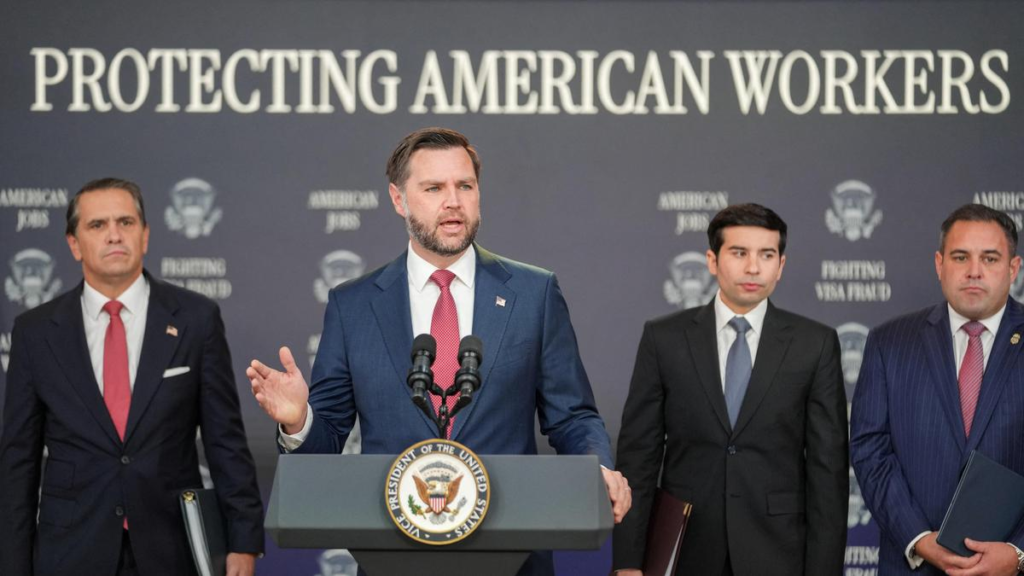
US officials have accused the affected companies of misusing employment-based immigration programmes and undermining opportunities for American workers. Vice President JD Vance singled out Microsoft, citing its workforce reductions and use of foreign-worker visa programmes.
The government has said it will not accept new or process pending PERM applications involving the named companies. The allegations are part of ongoing scrutiny, and company-specific findings have not been fully detailed publicly.
4. Microsoft Responds to the Allegations
Microsoft has defended its immigration practices, saying most of its US workforce consists of American employees. The company stated that about 80% of the roughly 6,000 H-1B applications it filed in the previous fiscal year involved extensions or changes of status for existing employees.
Microsoft also said its applications for new employees concerned people already legally present in the United States. It said it looked forward to providing the administration with additional information.
5. What Does This Mean for Indian IT Workers?
The decision has particular relevance for Indian technology professionals working in the US through companies such as Infosys, TCS, Wipro and HCLTech.
Workers whose permanent residency applications depend on the affected employers may face delays or uncertainty while the restrictions remain in place. The impact on individual employees will depend on their immigration status and the stage of their application.
TCS said it would comply with the US government’s directive and noted that its PERM applications had been in single digits over the previous two years. The company said it did not expect the suspension to affect its workforce strategy or customer engagements.
6. Are H-1B Visas Also Suspended?
No. The announcement concerns participation in the PERM labour-certification process. It does not automatically cancel existing H-1B visas or green cards.
H-1B status allows eligible foreign professionals to work temporarily in the US, while PERM is a separate process used in many employer-sponsored routes to permanent residency. The distinction is important for workers trying to understand how the decision may affect them.
7. What Happens Next?
The immediate outlook depends on how the suspensions and related investigations proceed. Companies may need to respond to government inquiries, while affected employees may need to seek guidance on their individual cases from qualified immigration professionals.
For the technology industry, the decision adds another layer of uncertainty around international recruitment and long-term employee retention in the US. Its broader impact will become clearer as further details emerge.
