








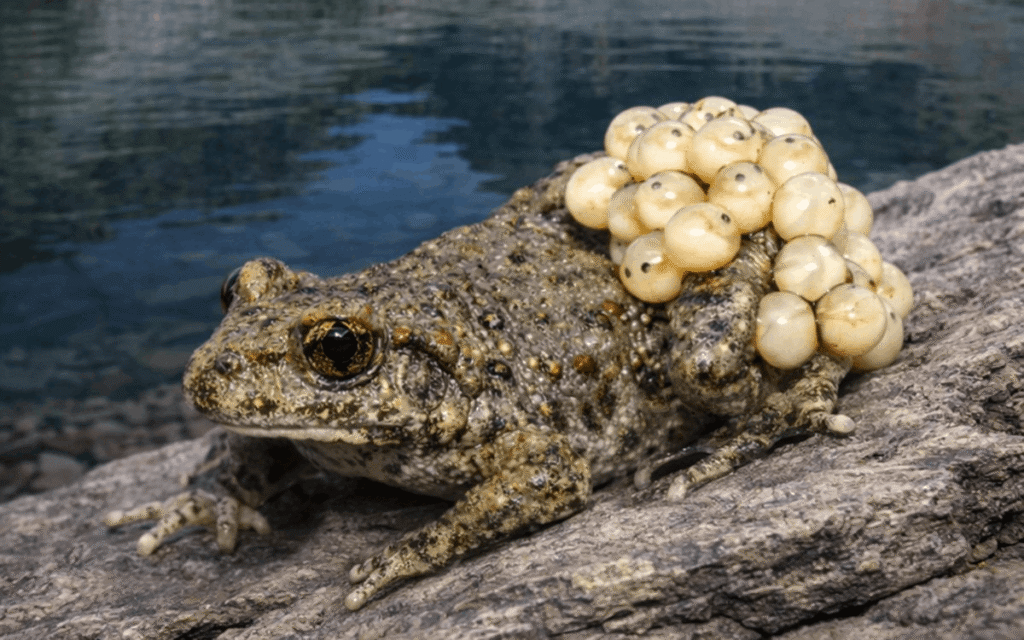
A deadly fungal disease has wiped out amphibian populations around the world, but some groups of common midwife toads are showing an unexpected ability to survive and recover.
Scientists from University College London, ZSL and Imperial College London have now identified a possible reason: some toads develop important immune defenses much earlier in life.
The Deadly Threat Facing Amphibians
The fungus Batrachochytrium dendrobatidis, commonly known as Bd, causes a disease called chytridiomycosis. It attacks amphibian skin and can interfere with the animals’ ability to maintain the right balance of water and essential minerals.
The disease becomes particularly dangerous as tadpoles transform into adults and develop tougher, keratin-rich skin that the fungus can infect.
Immune Protection May Start Earlier
Researchers studied common midwife toads living around four lakes in the Pyrenees in France and Spain.
While Bd remained present at all the sites, three populations had recovered after suffering major declines. Another population continued to experience heavy deaths.
The major difference appeared to be when the toads developed their antimicrobial defenses.
Toads that were recovering had more mature skin-based immune defenses while they were still tadpoles. This meant they entered adulthood with stronger protection against the fungus already in place.
Scientists Found More Than 1,000 Peptides
The team examined antimicrobial peptides released from the animals’ skin using advanced mass spectrometry.
They identified 1,152 different peptides, although only seven had previously been known.
Populations whose tadpoles produced a wider variety of these compounds were generally doing better despite the continued presence of the fungus.
Could the Discovery Help Humans?
Scientists are now investigating exactly how these peptides work and which ones have strong antimicrobial properties.
The discovery could eventually have wider importance because natural organisms have previously provided compounds that became useful medicines. Researchers say these newly identified peptides could potentially offer clues in the fight against antimicrobial resistance, although much more research is needed.
A New Clue for Amphibian Conservation
The study suggests that surviving a devastating disease may depend not only on whether an animal has an immune response, but when that response develops.
Understanding why some toad populations mature their defenses earlier could help scientists develop better strategies for protecting amphibians threatened by chytrid fungus and other diseases.