





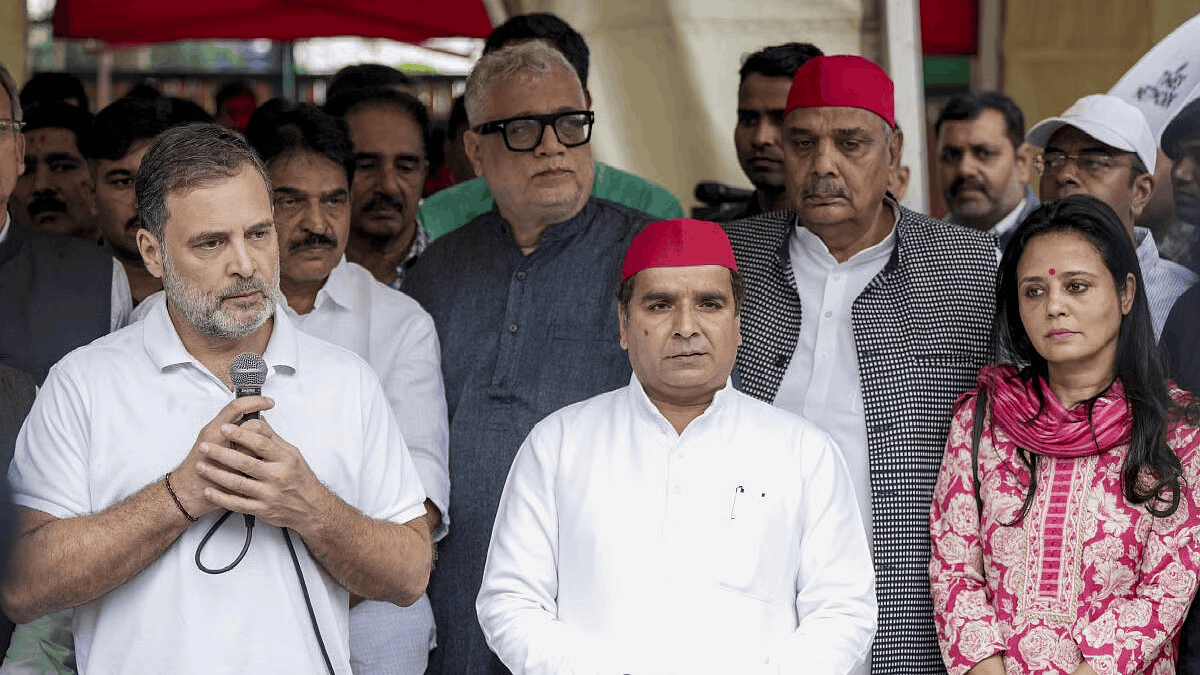
The Congress-led INDIA bloc has approached the Supreme Court seeking permission to formally question the Election Commission of India (ECI) through 48 written questions concerning the nationwide Special Intensive Revision (SIR) of electoral rolls. The move has intensified the political and legal dispute over voter registration, electoral transparency and the functioning of the constitutional poll body.
The application was submitted by opposition leaders, including Rahul Gandhi, as part of their ongoing legal challenge to the SIR exercise. They want senior Election Commission officials to provide detailed responses on how important decisions were taken and whether all three members of the Commission approved them.
1. Rahul Gandhi Leads INDIA Bloc’s Legal Initiative
Rahul Gandhi and other INDIA bloc representatives have requested the Supreme Court’s permission to serve 48 interrogatories on the Election Commission.
The questions are intended to obtain specific information about the Commission’s decision-making procedures, the implementation of SIR and changes to digital voter registration systems.
The opposition leaders have argued that the information is primarily available with the Election Commission and that written responses would help establish the facts surrounding the controversy.
2. Chief Election Commissioner Asked to Explain SIR Decisions
One of the central issues raised in the application concerns the authorisation of the nationwide SIR exercise.
The petitioners want to know who approved the decision, when it was taken and whether it was collectively discussed by Chief Election Commissioner Gyanesh Kumar and the two Election Commissioners, Sukhbir Singh Sandhu and Vivek Joshi.
They have also sought information about whether any disagreements or objections were recorded during the decision-making process.
3. Changes to Form 6 Become Another Major Concern
The INDIA bloc has raised questions about Form 6, which is used by eligible citizens to apply for inclusion in electoral rolls.
The opposition wants the Election Commission to explain who authorised changes to the online registration process and whether the additional declaration introduced during SIR had the approval of the Commission.
The petitioners believe that clarity on these procedures is necessary to understand how voter registration and inclusion were handled.
4. Opposition Questions Centralised Electoral Data Systems
Another important part of the 48 questions concerns ECINET and ERONET, the digital platforms used in election administration and electoral-roll management.
The INDIA bloc wants details about their centralisation, access controls and the officials responsible for managing voter information.
The application also raises questions about whether changes to electoral records can be properly tracked through digital audit trails, including details of additions, deletions and modifications.
5. Election Commission Rejects Allegations of Unilateral Decisions
The Election Commission has maintained that its major decisions relating to the SIR exercise were taken unanimously by all three members.
In its submissions before the Supreme Court, the poll body has rejected allegations that the Chief Election Commissioner independently made important decisions without the approval of the other commissioners.
The Commission has also maintained that the additional declaration introduced during SIR was separate from the statutory Form 6 and did not constitute an amendment to the prescribed form.
These differing positions have become central to the ongoing legal dispute.
6. Supreme Court Hearing Could Become Important for Electoral Transparency
The Supreme Court had scheduled a hearing on November 17 concerning the INDIA bloc’s petitions challenging aspects of the SIR process.
The opposition’s latest application adds another dimension to the case by seeking permission to obtain sworn responses from senior election officials.
If the court permits the interrogatories, the responses could provide additional information about the Commission’s internal procedures and the decisions behind the electoral-roll revision.
However, permission to submit the questions is still a matter for the court to decide. The allegations raised by the opposition have not been established as findings of the Supreme Court.
What This Means for Indian Politics
The dispute over SIR has become a significant political issue for the Congress and other INDIA bloc parties. Their demand for detailed answers reflects continuing concerns about voter inclusion, election administration and institutional accountability.
For the Election Commission, the case presents an opportunity to defend its procedures and explain the decisions taken during the revision exercise.
The Supreme Court’s consideration of the application could influence the next stage of the debate over electoral transparency and the responsibilities of India’s election authorities.