







A rare finless porpoise found along India’s Arabian Sea coast has helped scientists uncover new information about the species’ genetics, habitat and conservation challenges.
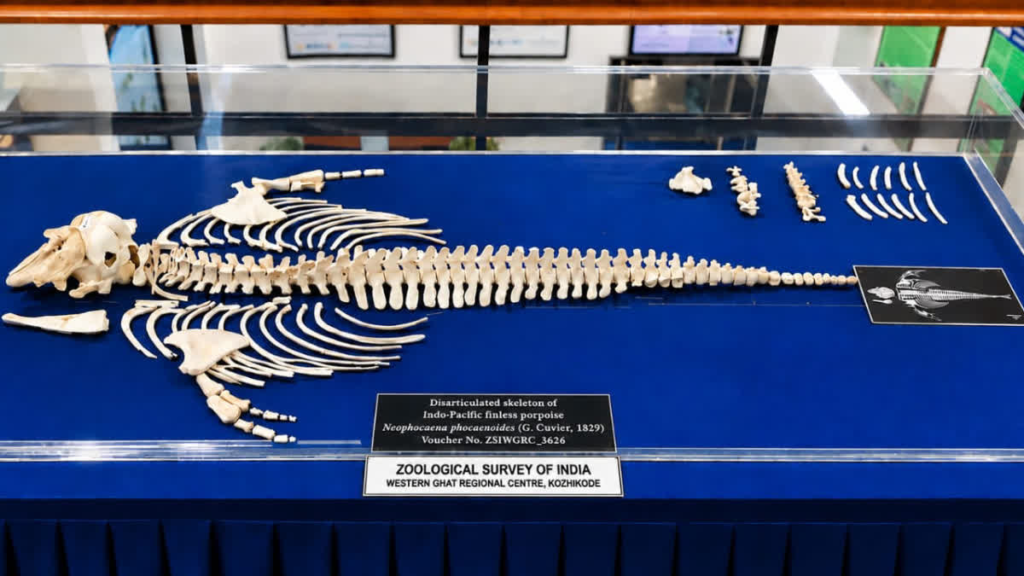
Researchers from the Zoological Survey of India (ZSI) and Pukyong National University in South Korea studied a wide-ridged Indo-Pacific finless porpoise found stranded on Kozhikode Beach in Kerala. Their findings have added to the limited scientific knowledge about the species in the Indian Ocean.
A Rare Opportunity for Scientists
The wide-ridged finless porpoise, Neophocaena phocaenoides, remains comparatively understudied across parts of its range, particularly in the Indian Ocean.
Scientists examined the stranded specimen using anatomical analysis, mitochondrial genome sequencing and ecological modelling.
Genetic Differences Revealed
The genetic analysis found that the Arabian Sea specimen forms a distinct lineage from Pacific populations. The researchers also identified high haplotype diversity, suggesting that the Indian Ocean population may have unique genetic characteristics.
However, the researchers noted that much broader sampling is needed before these patterns can be fully confirmed across the region.
Mapping Where the Porpoises Could Live
The team also used species-distribution modelling to identify suitable habitats for the animal. The analysis estimated around 378,540 square kilometres of potentially suitable habitat.
Bathymetry, or the depth and shape of the seafloor, was identified as the strongest environmental factor influencing the predicted distribution.
A Protection Gap
One of the study’s important findings concerns protected areas. Only about 23.4% of the identified suitable habitat overlaps with existing Marine Protected Areas or Important Marine Mammal Areas.
This leaves substantial areas where the species may face human-related pressures without the same level of protection.
Threats Along Coastal Waters
Scientists highlighted several potential threats, including accidental capture in fishing nets, vessel collisions, coastal development and marine pollution. High human pressure was also detected in some areas considered highly suitable for the species.
Why the Discovery Matters
The findings provide scientists with a clearer picture of the wide-ridged finless porpoise in the Indian Ocean. Understanding genetic differences and identifying important habitats can help researchers develop more targeted conservation strategies.
The study also demonstrates how even a single stranded marine mammal can provide valuable information about a poorly understood species.
More Research Is Needed
The researchers emphasise the need for wider genetic sampling across the Indian Ocean. More data could help determine whether the genetic patterns identified in this study represent distinct regional populations.
For a species facing growing pressure in coastal waters, such research could play an important role in understanding where protection efforts are most needed.