







SpaceX has launched the 15th test flight of its Starship rocket, bringing the company closer to its ambition of developing a fully reusable launch system. The November 13 mission from Starbase in South Texas was designed to demonstrate an ambitious achievement: sending the spacecraft into orbit and bringing it back to its original launch site.
Although the spacecraft successfully reached orbit and deployed satellites, the mission encountered a setback when its Super Heavy booster failed to complete its planned return. The upper-stage spacecraft continued its journey, with its own recovery attempt remaining a major objective.
1. Starship Flight 15 Takes Off From Texas
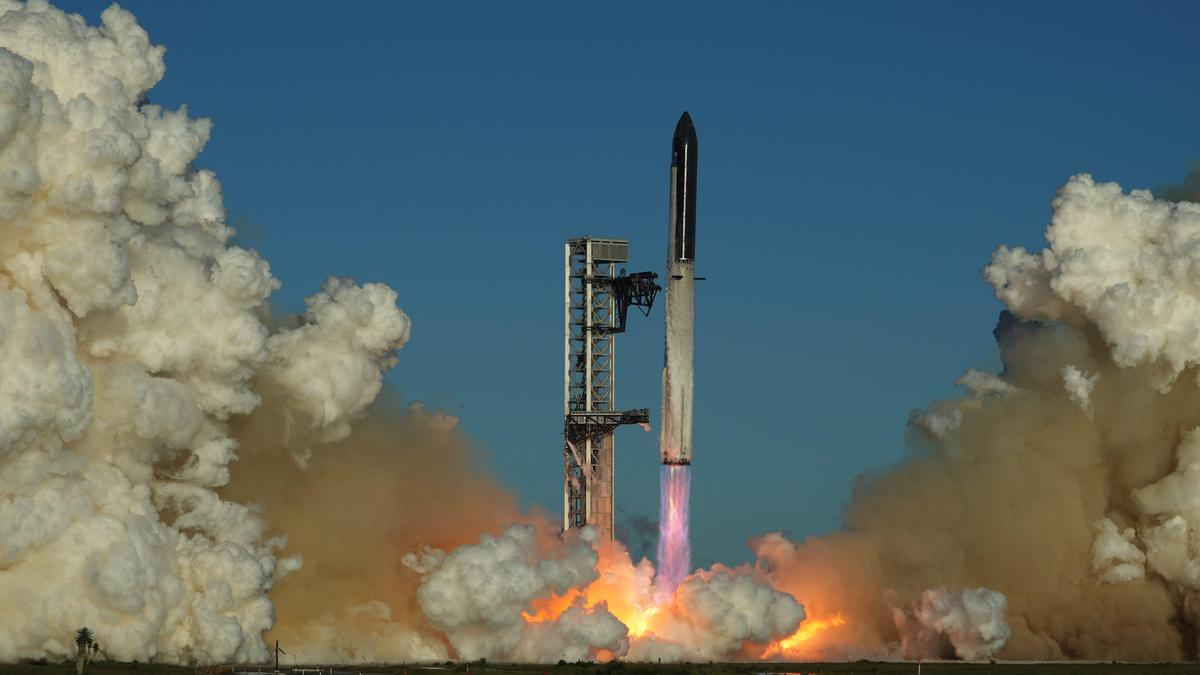
The massive Starship rocket lifted off from SpaceX’s Starbase facility in South Texas on November 13, 2026.
Standing approximately 124 metres tall when combined with its booster, the vehicle consists of two major components: the Super Heavy first-stage booster and the Starship upper-stage spacecraft.
The launch marked the programme’s 15th integrated flight test since 2023. It was also the second mission to carry operational Starlink satellites into orbit.
2. Super Heavy Booster Faces a Return Failure
One of the most important objectives was to recover both rocket stages using SpaceX’s mechanical-arm landing system, popularly known as the chopsticks.
However, the Super Heavy booster did not complete its planned return to the launch tower. It was diverted towards a designated area over the Gulf of Mexico, where it briefly hovered before exploding above the water.
The incident prevented SpaceX from achieving the planned double recovery.
The reason for the diversion had not been established in the initial reports, but the spacecraft’s upper stage continued its mission.
3. Starship Reaches Orbit and Deploys 26 Starlink Satellites
Despite the booster setback, the upper-stage Starship successfully reached orbit approximately 27 minutes after launch.
The spacecraft also carried 26 Starlink satellites, which were released during the mission.
The deployment was important for SpaceX’s satellite internet business, as the company continues expanding its network and increasing its capacity.
The mission therefore combined a commercial satellite deployment with a major test of next-generation rocket technology.
4. Why SpaceX Wants to Recover the Entire Rocket
Traditional rocket launches often involve discarding stages after they have completed their work. SpaceX wants to change this approach by making Starship and its Super Heavy booster reusable.
Recovering both stages could help reduce the cost of launching satellites, cargo and eventually astronauts into space.
The company’s landing-tower system uses two large mechanical arms to catch returning rocket stages as they descend vertically.
SpaceX has previously demonstrated successful catches of the Super Heavy booster, but recovering the upper-stage Starship directly at its launch tower represents a different and more challenging milestone.
5. Starship’s First Planned Return From Orbit
The upper-stage spacecraft was expected to complete approximately 14 orbits around Earth before beginning its return journey.
The planned flight duration was around 22 hours, with a return to Starbase targeted for November 14.
During re-entry, Starship must withstand intense heating and maintain control while descending through Earth’s atmosphere.
If the spacecraft successfully returns to the launch tower and is caught by its mechanical arms, it would mark a major achievement in the development of a fully reusable orbital rocket.
6. NASA’s Moon Mission Also Depends on Starship
Starship is not being developed only for satellite launches. NASA has selected the spacecraft as part of its Artemis programme, which aims to return astronauts to the lunar surface.
SpaceX is working towards using Starship as a lunar lander for future crewed missions.
However, several important technologies still need to be demonstrated, including orbital refuelling, reliable spacecraft recovery and long-duration operations.
These capabilities will be essential for missions that require Starship to travel beyond Earth’s orbit.
7. What the Flight 15 Mission Means for Future Space Exploration
The 15th flight represents another important step in SpaceX’s testing programme, even though the planned booster recovery was unsuccessful.
The successful orbital flight and deployment of 26 satellites demonstrate progress in the spacecraft’s operational capabilities.
The bigger challenge remains proving that the entire launch system can be recovered, inspected, refurbished and launched again within a short period.
If SpaceX eventually achieves reliable full reusability, it could change the economics of satellite deployment and make ambitious lunar and deep-space missions more practical.
Conclusion
SpaceX’s Starship Flight 15 delivered an important combination of progress and setbacks. The spacecraft reached orbit and deployed its satellite payload, but the Super Heavy booster failed to complete its planned recovery.
The upper-stage return attempt remained a separate milestone that could determine how close the company is to achieving its first complete orbital round trip.
The results of this mission will provide valuable information for SpaceX as it continues developing reusable rockets for future commercial and human spaceflight missions.