







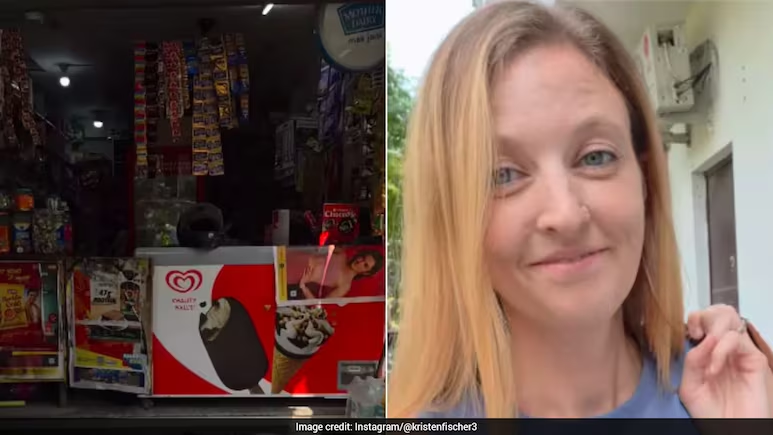
An American content creator living in Delhi has sparked an online conversation after sharing why she loves India’s neighbourhood kirana stores. Kristen Fischer praised their accessibility, describing how a quick walk from her home is enough to pick up everyday essentials.
A One-Minute Walk for Daily Essentials
In an Instagram video, Fischer took viewers along on a morning visit to a nearby kirana shop. Located less than a minute from her home, the store is a convenient stop for her regular shopping needs.
She purchased milk, paid in cash and returned home within minutes. Fischer described the experience as fast and convenient. <Cite refs={[“turn759398news0″,”turn759398search5”]} />
Why She Loves India’s Kirana Stores
Fischer highlighted how small shops are spread throughout Indian neighbourhoods, making everyday essentials easily accessible without requiring a long journey.
She called kirana stores an important part of how the country functions, appreciating the convenience of having local shops within walking distance.
Social Media Users Join the Conversation
Her video prompted users to reflect on the everyday advantages of India’s neighbourhood shopping culture. Some commenters pointed out that many residents take the easy availability of nearby shops for granted.
Others compared the experience with places where grocery shopping can depend more heavily on having access to a car. The discussion showed how ordinary routines can look different to people from other countries.
Kirana Stores Amid the Quick-Commerce Boom
India’s kirana shops are operating in a changing retail landscape, with quick-commerce platforms offering groceries and household essentials through rapid home delivery.
While online services offer convenience, local stores provide another option: customers can walk in, buy what they need and return home without placing an online order.
More Than Just Grocery Shops
For many neighbourhoods, kirana stores are familiar parts of daily life. Their proximity, personal interactions and role in serving regular customers help distinguish them from larger supermarkets and app-based services.
Fischer’s experience offered a reminder that convenience does not always require an app or doorstep delivery. Sometimes, it is simply the shop around the corner.
