






Exercise is an important part of healthy ageing, but more intense training is not always better. A recent discussion by metabolic specialist Dr Sumit Sharma has highlighted how certain exercise habits may place unnecessary stress on the body when performed too frequently or without adequate recovery.
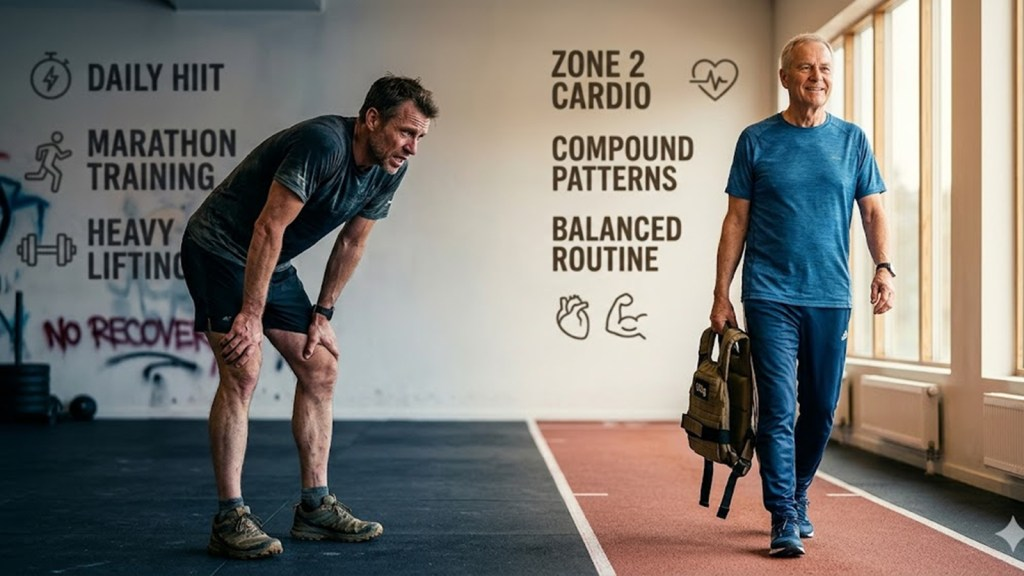
Dr Sharma, who has 21 years of medical experience, pointed to daily HIIT, excessive long-distance running and heavy lifting without sufficient recovery as habits that may contribute to joint and connective-tissue problems over time.
Daily High-Intensity Workouts May Not Be Necessary
High-Intensity Interval Training can be an effective form of exercise, but doing demanding sessions every day may leave insufficient time for the body to recover.
Experts quoted by Indian Express note that high-impact workouts and overtraining can increase stress on joints, particularly when people lack adequate conditioning or use poor technique.
Excessive Running Can Also Stress the Body
Running offers cardiovascular benefits, but repeatedly performing high-impact activities without appropriate progression or recovery can contribute to wear and injuries.
This does not mean running is inherently harmful. The intensity, frequency, surface, footwear, technique and an individual’s fitness level all matter.
Heavy Lifting Needs Recovery
Strength training can help preserve muscle mass and bone density as people age. However, repeatedly lifting heavy loads without allowing muscles and connective tissues to recover can increase the risk of injury.
Proper technique, gradual progression and rest days can make strength training more sustainable.
What a Balanced Routine Could Include
Dr Aniket Mule, a consultant in internal medicine quoted by Indian Express, recommends combining different forms of exercise rather than relying only on high-intensity workouts.
A balanced routine can include strength training, walking, swimming or cycling, mobility work and flexibility exercises.
Recovery Is Part of Fitness
Rest should not be viewed as wasted workout time. Recovery allows the body to adapt to exercise and can help reduce the risk of repeatedly stressing the same muscles and joints.
For long-term fitness, the focus can shift from exercising as hard as possible to exercising consistently while maintaining strength, mobility and cardiovascular health.
The Goal Is to Stay Active for Longer
Exercise remains one of the important tools for maintaining physical function with age. But sustainable fitness is not necessarily about constantly increasing intensity.
Choosing appropriate exercises, using proper form and giving the body enough time to recover may help people remain active and functional for years to come.