





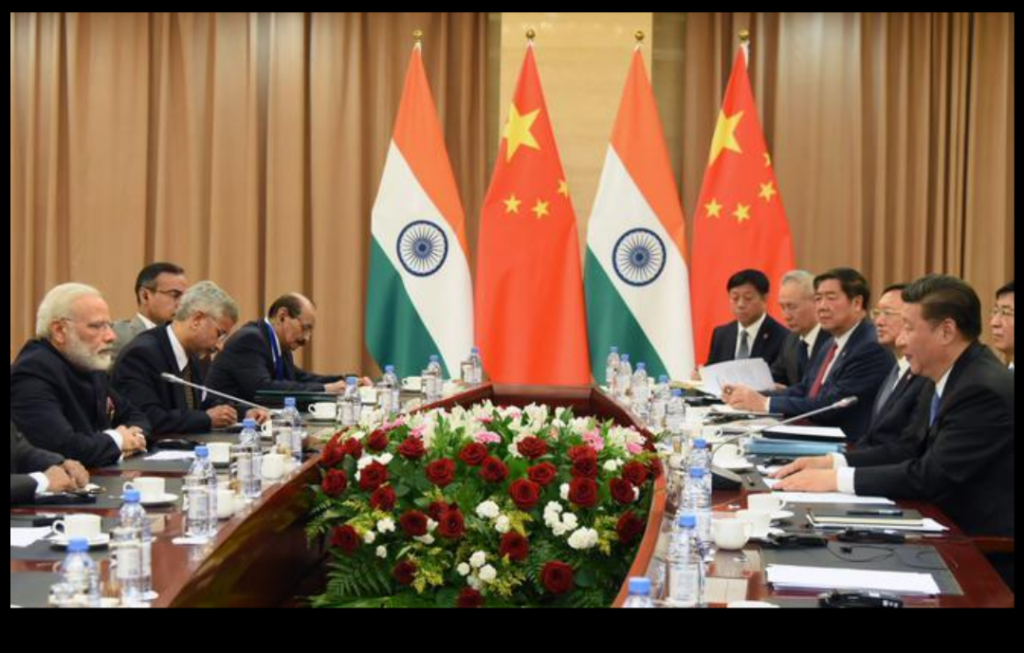
India-China relations are showing clear signs of a cautious thaw after years of heightened tension following the deadly 2020 Galwan Valley clash. As Chinese President Xi Jinping arrives in New Delhi for the 18th BRICS Summit (his first visit to India in seven years), the two Asian giants are focusing on practical steps to improve people-to-people links, trade, and economic engagement—while the long-standing border dispute remains unresolved.
Several concrete measures mark the gradual normalisation:
Direct flights resumed: After a multi-year suspension, multiple routes have restarted. These include Beijing-Delhi (Air China), Kolkata-Shanghai (IndiGo), Kunming-Kolkata (China Eastern), and the upcoming Guangzhou-New Delhi service by China Southern Airlines starting 21 September 2026. More connectivity is expected to boost business and tourism travel.
Visa facilitation: India has eased procedures for Chinese business professionals and reopened tourist visas. A new e-business visa category has been introduced to support technical and commercial exchanges. China has also streamlined processes for Indian travellers.
People-to-people and border trade: The Kailash Mansarovar Yatra has resumed, border trade points (Nathu La, Lipulekh, and Shipki La) have reopened, and educational, journalistic, and cultural exchanges are gradually returning.
Economic engagement: Bilateral trade has grown significantly, with China remaining India’s largest source of imports (around $132 billion in FY 2025-26) and total trade reaching approximately $151–155 billion. India has selectively eased some restrictions on Chinese investments and equipment in priority sectors such as electronics, solar energy, and power equipment, while continuing to prioritise supply-chain security and reducing the large trade deficit.
High-level political contacts have increased, including meetings between National Security Adviser Ajit Doval and Chinese Foreign Minister Wang Yi, as well as previous interactions between Modi and Xi in 2024 and 2025.
Military disengagement at key friction points along the Line of Actual Control (LAC) was completed by late 2024. Both sides maintain that peace and tranquillity largely prevail, with enhanced communication mechanisms (new military hotlines, additional meeting points for commanders, and ongoing Working Mechanism and Special Representatives talks).
However, substantial troop deployments continue on both sides. Full de-escalation and a final boundary settlement remain distant goals. Recent Special Representatives talks produced an eight-point consensus focused on managing differences, identifying less-contentious sections for possible delimitation work, and preventing misunderstandings. Indian officials describe the situation as “stable but sensitive.”