








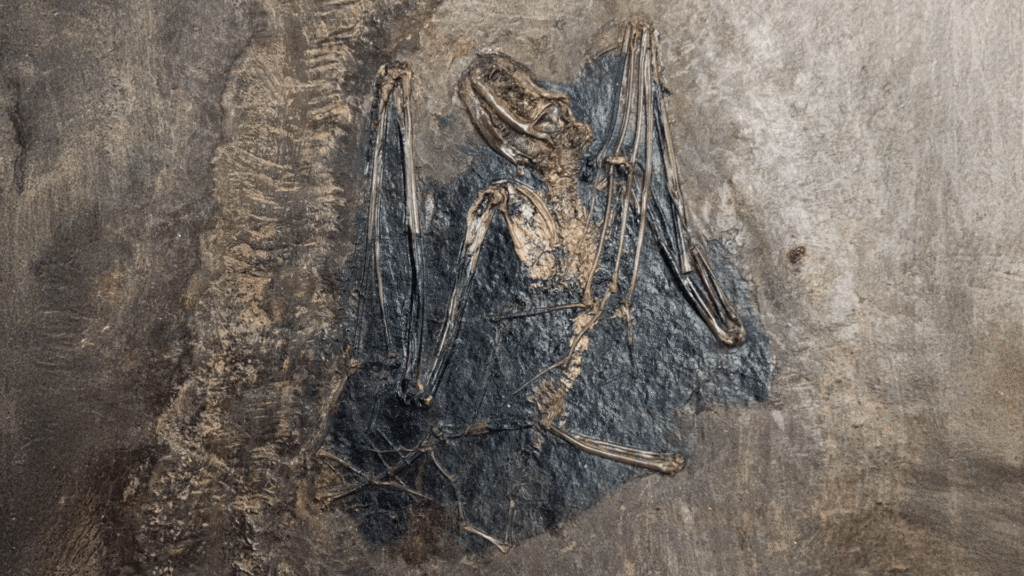
Bats may have an unexpected origin story. A large international study combining genetic data from living bats with fossils suggests that these remarkable flying mammals may have first evolved in Europe around 65 to 60 million years ago.
A New Look at Bat Evolution
For decades, scientists have debated where bats first appeared. Africa, Asia and North America have all been proposed as possible origins.
The new research brings together evidence from 103 bat genomes and 44 fossil bats, giving researchers a broader picture of how bat families evolved and spread around the world.
Europe May Have Been the Starting Point
The study suggests that bats emerged in Europe during the late Paleocene, roughly 65–60 million years ago.
Their descendants later spread into Africa before different lineages expanded into regions including the Americas, Asia and Australia.
Flight Was an Early Advantage
Bats are the only mammals capable of sustained powered flight. The researchers’ findings suggest that powered flight appeared very early in bat evolution.
This ability may have helped early bats reach new habitats and contributed to their remarkable evolutionary expansion.
Echolocation May Be Just as Ancient
The study also provides clues about echolocation, the ability many bats use to navigate and locate prey through sound.
Analysis of fossil evidence suggests echolocation had already emerged close to the beginning of bat evolution, meaning this ability may have been present before modern bat groups began diversifying.
A Massive Genetic Resource
Researchers reconstructed the evolutionary relationships of bat families using genomic information from living species alongside fossil evidence.
The work involved 137 researchers from 64 countries through the Bat1K research effort. The resulting genetic resource could help scientists investigate how traits such as flight, echolocation, longevity and disease resistance developed.
Why Bat Evolution Matters
Bats represent about one-fifth of all living mammal species and occupy ecosystems across much of the planet. Understanding their evolutionary history can help scientists study how major biological adaptations emerge and spread.
The researchers also found that parts of the bat genome, including the X chromosome, provided particularly useful signals for resolving relationships between different bat groups.
What Scientists Can Learn Next
The new evolutionary map gives researchers a foundation for studying the genetic changes behind some of the most unusual features in mammals.
From powered flight to echolocation, bats offer a rare opportunity to understand how evolution can produce complex adaptations over millions of years.