





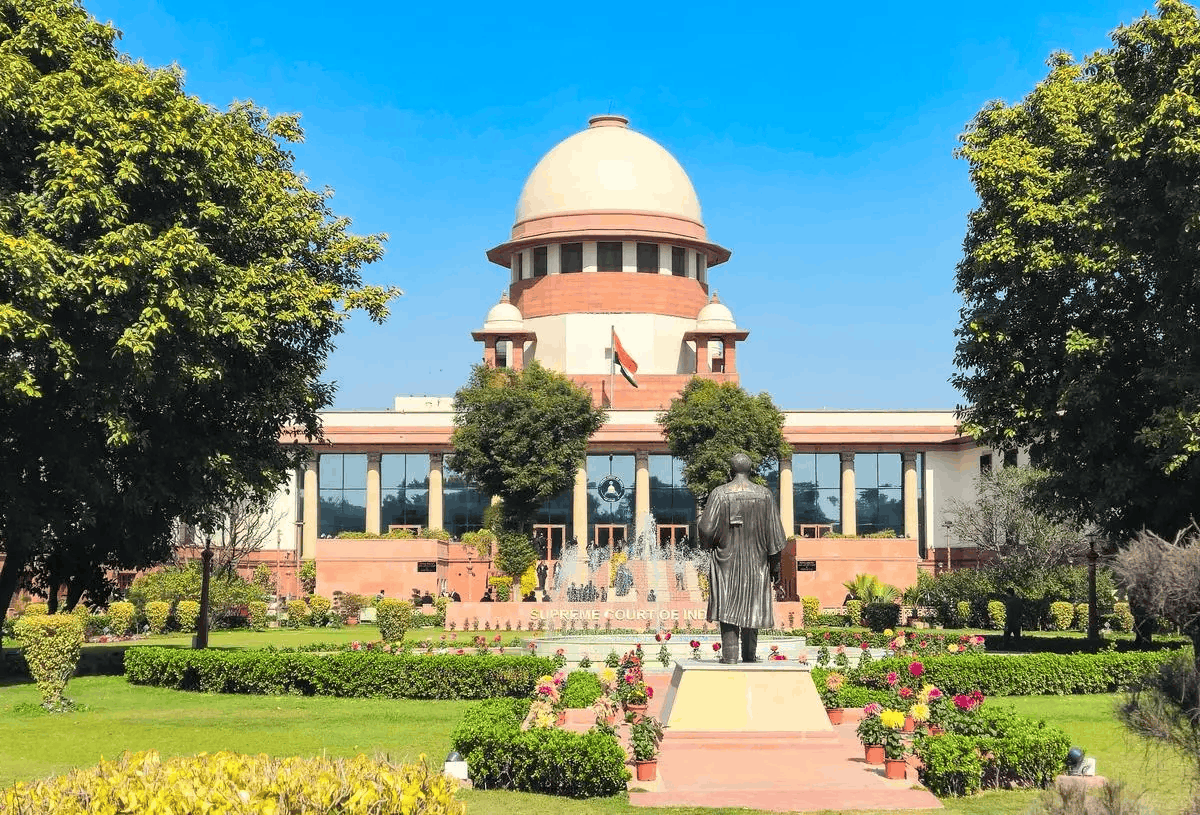
The Supreme Court has strongly criticised the Centre over its arrangements for relocating Delhi’s historic Central Secretariat Library as part of the Central Vista redevelopment project. The court expressed concern about the treatment of the library’s valuable collection of approximately 8.5 lakh books, including rare historical publications and documents dating back several centuries.
During a hearing on November 16, the bench questioned the urgency behind shifting the collection without adequate arrangements. It emphasised that the books represent an important part of India’s intellectual and cultural heritage and must be handled responsibly.
1. Supreme Court Expresses Concern Over Library Relocation
A bench comprising Justices Sanjay Kumar and Sanjeev Sachdeva questioned the government’s approach towards relocating the 135-year-old library, currently housed at Shastri Bhawan in New Delhi.
The building is scheduled for redevelopment under the Central Vista project, making relocation necessary. However, the court was concerned that authorities had not adequately demonstrated how the extensive collection would be protected and accommodated.
Justice Sanjay Kumar criticised the apparent haste in moving the books and stressed the importance of preserving the historic collection.
2. Around 8.5 Lakh Books Face Relocation
The Central Secretariat Library houses approximately 8.5 lakh books, including rare publications, government records, historical documents and gazetteers.
Some materials are particularly valuable because of their historical significance, with certain books dating back to 1702.
The Supreme Court questioned whether sufficient arrangements had been made to protect the collection during transportation and storage. It also sought clarity about the space available at the proposed temporary and permanent locations.
3. Another 2.25 Lakh Books Raise Preservation Concerns
The hearing also brought attention to approximately 2.25 lakh books belonging to the Tulsi Sadan Library, which was closed in 2011 after construction work affected its original location at the National School of Drama campus.
According to the Centre, these books are currently stored in a facility in RK Puram, Delhi.
The amicus curiae informed the court about concerns regarding their storage conditions, including books kept in cartons for several years. The court expressed displeasure over the prolonged situation and questioned why such valuable collections had not received proper attention.
4. Centre Explains Temporary and Permanent Relocation Plans
The Centre informed the Supreme Court that temporary accommodation for the Central Secretariat Library has been identified at Netaji Nagar in Delhi.
The proposed temporary facility covers approximately 3,890.45 square metres and is expected to have a storage capacity of around 6.25 lakh books.
For permanent accommodation, the government has earmarked approximately 5,583 square metres in the upcoming Kartavya Bhawan-4 building. This space is intended to accommodate both the Central Secretariat Library and the Tulsi Sadan Library.
The government has indicated that construction of Kartavya Bhawan is scheduled for completion by December 2028.
5. Supreme Court Stops Immediate Shifting of Books
The court recorded the Centre’s assurance that no books from the Central Secretariat Library would be shifted before the next hearing.
The decision followed concerns raised by the amicus curiae about the proposed relocation schedule and the adequacy of the temporary facilities.
The Supreme Court has scheduled the next hearing for November 20, when it will examine the government’s affidavit and further details about the proposed arrangements.
6. Central Vista Project Faces Questions Over Heritage Preservation
The controversy has raised broader questions about balancing infrastructure redevelopment with the protection of historical and educational institutions.
While the Central Vista project involves major changes to government buildings and administrative infrastructure, the library dispute highlights the importance of preserving valuable public collections during redevelopment.
The Supreme Court’s intervention has brought renewed attention to the responsibility of government authorities to ensure that important historical resources are not damaged, neglected or inadequately stored during relocation.
What Happens Next?
The November 20 hearing will be important in determining whether the Centre’s proposed arrangements adequately address concerns about space, storage and the preservation of the two library collections.
The case also highlights a wider issue concerning the protection of India’s documentary heritage. The future of these historic collections will depend on whether authorities can provide suitable facilities and ensure their long-term preservation.