








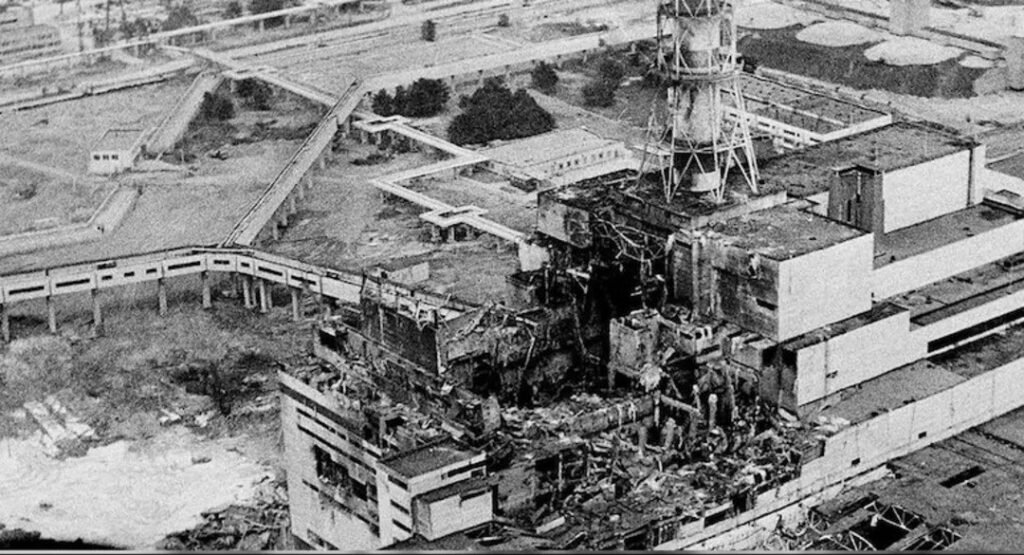
Nearly four decades after the 1986 Chernobyl nuclear disaster, scientists have discovered that some radioactive particles released during the accident have retained much of their original internal structure. The findings could help researchers better understand how radioactive contamination behaves over time and assess its potential environmental and health risks.
Researchers from Leibniz University Hannover and the Helmholtz-Zentrum Dresden-Rossendorf in Germany examined six microscopic radioactive particles collected from the Chernobyl Exclusion Zone in Ukraine. The study was published in the Journal of Hazardous Materials.
What Did Scientists Discover?
The researchers studied particles measuring between 8 and 50 micrometres. Despite decades of exposure to environmental conditions, the particles retained much of their original crystalline structure.
The samples included particles resembling uranium dioxide nuclear fuel, fragments fused with zirconium-containing material, and particles altered by the reactor’s graphite fire.
Their different chemical compositions could influence how they deteriorate and release radioactive substances into the surrounding environment. The findings suggest that some particles are more resistant to environmental degradation than previously expected.
How Was the Research Conducted?
Scientists used a technique called X-ray diffraction to investigate the particles’ internal structures. By analysing how X-rays interacted with the materials, researchers could identify different crystalline compounds within the samples.
The analysis revealed that important components of the nuclear fuel had remained largely intact. This provides valuable information about how radioactive materials can persist in soil long after a nuclear accident.
What Does This Mean for the Environment?
The findings could improve scientific models used to estimate how radioactive contamination moves through soil and other environmental materials.
If radioactive substances remain trapped within relatively stable particles, their release into the environment may occur differently than previously assumed. Understanding this process is important for assessing contamination risks and planning long-term radioactive waste management.
However, the researchers emphasised that the results cannot be applied to every radioactive particle in the exclusion zone.
Does This Mean Chernobyl Is Safe?
No. Structural stability does not mean that radioactive particles are harmless. The examined materials remain radioactive, and their behaviour depends on their composition and environmental conditions.
The study covered only six particles from two locations, making it too limited to establish the overall safety of the wider region. Other particles may degrade differently and release radioactive substances over time.
Why the Discovery Matters
The research offers a closer look at the lasting environmental legacy of the Chernobyl disaster. It also highlights the importance of studying radioactive materials at a microscopic level to understand their long-term behaviour.
Further research involving more samples from different locations will be necessary to determine how widely these findings apply and what they mean for environmental protection and public health.
