








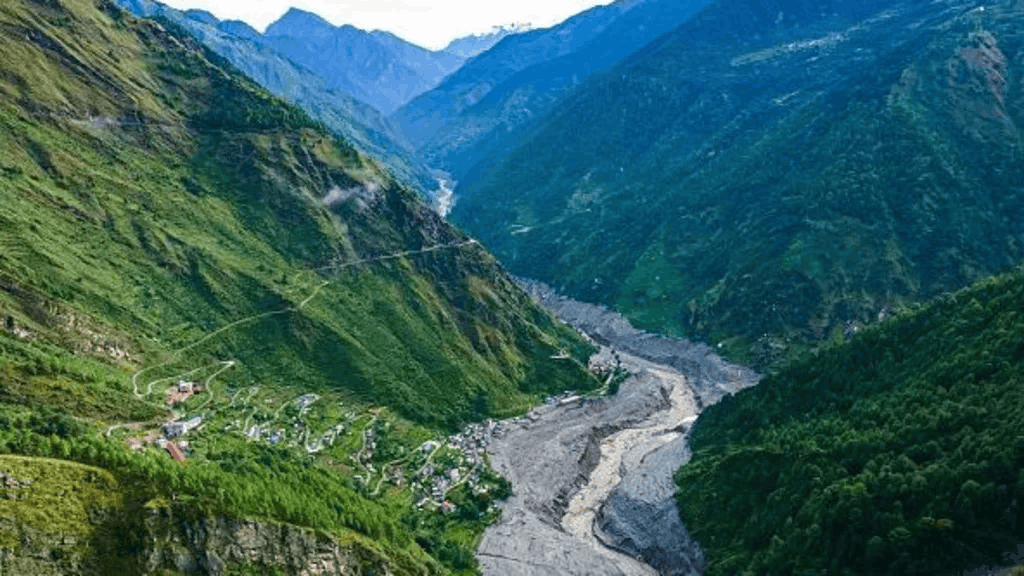
Nepal’s Prime Minister Balendra Shah has proposed a regional climate cooperation mechanism involving Nepal, India and China to address the growing threat of climate-related disasters in the Himalayas. The proposal, highlighted during his recent address to the United Nations General Assembly, calls for stronger cross-border disaster response, scientific data sharing and collaboration on climate risks.
Nepal Calls for a Himalayan Climate Resilience Mechanism
Shah proposed establishing a Himalayan Climate Resilience Mechanism to help countries in the region prepare for and respond to climate-related emergencies. He argued that the Himalayas should become a centre of international cooperation rather than a region divided by political tensions and fragmented information.
A senior Nepalese foreign ministry official said the proposal was at an early stage, with government agencies working to develop a preliminary framework. India and China have not formally responded to the proposal.
Rising Climate Risks Across the Himalayas
The Himalayan region is warming faster than the global average, contributing to glacier retreat, thawing permafrost and an increased risk of landslides, avalanches and glacial lake outburst floods.
These disasters can cross national borders, threatening communities, roads, infrastructure and livelihoods across Nepal, India, Bhutan and neighbouring regions.
A report released by the International Centre for Integrated Mountain Development (ICIMOD) in March found that glacier ice loss across the Hindu Kush Himalaya region has accelerated significantly, with the rate of loss doubling after 2000 compared with the 1974–1999 period.
Meanwhile, glaciers on the Qinghai-Tibet Plateau have shrunk by 24% in area over the past six decades, according to Chinese scientific estimates cited in the report.
India and China Face Shared Environmental Challenges
India and China share a disputed Himalayan frontier stretching approximately 3,500 kilometres. Territorial disagreements have resulted in military confrontations and prolonged tensions along the Line of Actual Control.
Despite these differences, both countries face common environmental threats. Rivers originating on the Tibetan Plateau flow into downstream regions, making timely information about rainfall, river levels and glacial lakes important for disaster preparedness.
Researchers have also warned that heavier rainstorms could increase landslide hazards across the Himalayas and Tibet in the coming decades.
Previous Cooperation Efforts Have Made Limited Progress
Past attempts to encourage joint Himalayan research between India and China have struggled to produce sustained cooperation.
In 2009, the two countries agreed to undertake joint research into the effects of global warming on Himalayan and Tibetan glaciers. However, the initiative did not progress beyond an initial meeting, according to retired Indian glaciologist DP Dobhal.
Water data sharing has also faced difficulties. Agreements under which China provided hydrological information on the Brahmaputra and Sutlej rivers have expired, according to information presented by India’s government in Parliament in August 2025.
The interruptions have highlighted the challenges of maintaining scientific cooperation amid broader diplomatic and security tensions.
Data Sharing Remains a Major Hurdle
Experts say one of the biggest obstacles is the sensitive nature of information collected in border regions. Data about river flows, terrain and remote locations can support disaster management but may also be viewed as strategically important by national security agencies.
Analysts believe that recent diplomatic engagement between India and China could create opportunities for limited environmental cooperation. However, unresolved border disputes remain a significant concern.
Regional organisations such as ICIMOD have worked for decades to promote cooperation on mountain hazards and flood early-warning systems, although progress has been gradual.
Experts Suggest Practical Steps
Climate specialists say cooperation could begin with measures that do not require countries to disclose highly sensitive information.
Suggested steps include jointly identifying high-risk glacial lakes, developing common monitoring standards, sharing basic disaster-risk information and ensuring that urgent flood warnings reach neighbouring countries without delay.
Such measures could help governments prepare for emergencies before they escalate into cross-border disasters.
Can Nepal Bring the Three Countries Together?
Nepal’s proposal highlights the need for regional coordination as climate change increases the risks facing Himalayan communities. However, turning the initiative into a functioning mechanism will depend on political willingness, scientific cooperation and agreement over what information countries are prepared to share.
For Nepal, the immediate challenge is to persuade India and China to explore practical cooperation despite their longstanding territorial disagreements. Whether the proposal advances will become clearer as Nepal develops its framework and the two neighbouring powers respond.
