





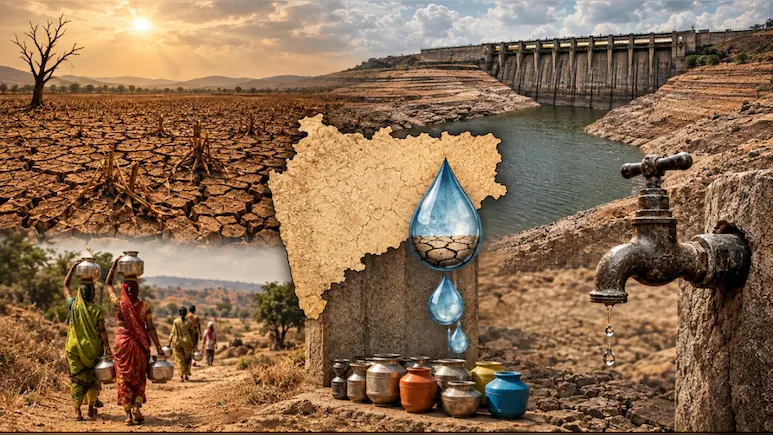
Maharashtra is introducing stricter water conservation measures as weak monsoon rainfall, high temperatures and declining water reserves raise concerns about a worsening water crisis. Cities including Nagpur, Pune and Chhatrapati Sambhajinagar are adopting restrictions to reduce wastage and protect drinking water supplies.
The measures include fines for wasting water, action against illegal connections and scheduled supply cuts. Authorities are urging residents, industries and housing societies to use water responsibly as the state prepares for prolonged shortages.
Nagpur Announces ₹5,000 Fine for Water Wastage
Nagpur Municipal Corporation has announced a ₹5,000 penalty for each reported instance of water wastage. The restrictions cover activities such as washing vehicles, cleaning streets and courtyards, watering gardens and using drinking water for construction.
Authorities also plan to conduct inspections to identify illegal water connections and tampering with water meters. Violators could face criminal proceedings, including the registration of FIRs.
The civic body is also looking at alternative water sources, including restoring old wells and using recycled wastewater for activities that do not require drinking-quality water.
Pune Introduces Weekly Water Supply Cuts
Pune is preparing to implement scheduled water restrictions as part of the state’s conservation strategy. According to the report, a city-wide supply cut is planned for Thursdays, beginning October 15, while the broader state directive calls for at least a 10% reduction in water consumption from October 16.
Vehicle-washing centres have been directed to close until further notice. The use of drinking water for construction, gardening and swimming pools will also be restricted.
Residents have been advised against washing vehicles, courtyards and footpaths with municipal or borewell water. Housing societies must keep sewage treatment plants operational and use treated wastewater for gardening and toilet flushing.
Chhatrapati Sambhajinagar Faces Heavy Evaporation Losses
Chhatrapati Sambhajinagar faces a different challenge as high temperatures contribute to substantial water loss from the Jayakwadi Dam. The report estimates daily evaporation at approximately 1.649 billion litres, placing additional pressure on available reserves.
The situation is particularly concerning in the drought-prone Marathwada region, where water availability remains a major concern for households, agriculture and other essential needs.
Weak Monsoon Raises Concerns Across Maharashtra
The state’s water stress has been linked to inadequate monsoon rainfall, persistent heat and concerns about the possible influence of El Niño. With the next monsoon still months away, authorities are attempting to manage existing supplies more carefully.
Maharashtra has also directed local bodies to implement a minimum 10% water cut from October 16, with planning extending through August 31, 2027. Drinking water is being given priority in the allocation of available resources.
What Residents Should Know
Residents should avoid unnecessary water use, repair leaking taps and pipes, and follow local civic restrictions. Drinking water should not be used for washing vehicles, cleaning outdoor spaces or watering gardens where alternative sources are available.
Housing societies and businesses can help by reusing treated wastewater wherever permitted. People should also check announcements from their municipal corporations for the latest rules, penalties and supply schedules.
Water Conservation Becomes a Priority
The restrictions across Maharashtra highlight the growing need for careful water management amid unpredictable rainfall and rising temperatures. While fines and supply cuts aim to discourage waste, public cooperation and the reuse of treated wastewater will also be important in protecting essential supplies.
Authorities face the challenge of balancing household needs, agriculture and economic activity while ensuring that available drinking water lasts through the coming months.
