








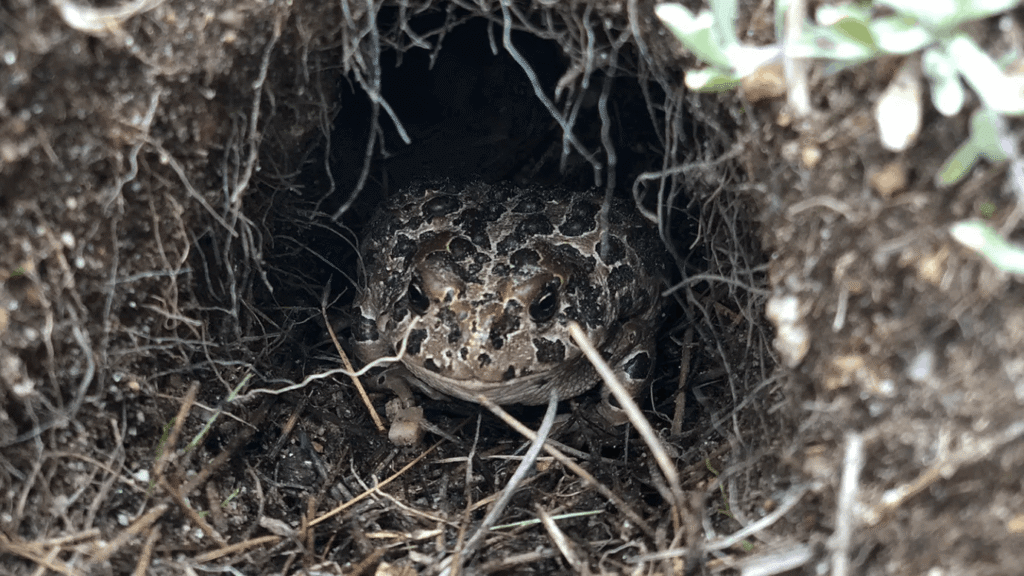
A new study has uncovered an unexpected threat facing young Yosemite toads: a deadly fungal infection may become more severe while the animals are hiding underground during winter.
Researchers found that Batrachochytrium dendrobatidis (Bd), commonly known as chytrid fungus, can proliferate during the toads’ winter dormancy. The discovery challenges the assumption that the greatest infection risk occurs when the amphibians are breeding in water.
Young Toads Face a Hidden Winter Risk
Yosemite toads live in California’s high-elevation Sierra Nevada and spend several months each year sheltered underground during a hibernation-like state called brumation.
Researchers studied the animals before and after their first winter and found a major increase in Bd infections among young toads after they emerged from their burrows.
According to the study, Bd prevalence in first-year toads increased more than fourfold during winter dormancy.
A Fungus Usually Associated With Water
Bd is a water-associated pathogen that infects amphibians through their skin. Because Yosemite toads spend much of their lives on land, scientists had questions about how the fungus persists through their long winter period.
The new findings suggest that the fungus can remain with the animals and become more prevalent while they are sheltering underground.
Researchers are still investigating exactly how the infection spreads or intensifies inside the winter refuges. One possibility is that young toads enter dormancy with infections that are initially difficult to detect.
Why the Discovery Matters
The Yosemite toad is listed as threatened under the U.S. Endangered Species Act and occurs in a restricted region of California’s Sierra Nevada. Disease is among the factors affecting the species, alongside habitat and environmental pressures.
Understanding when and where Bd infections become more severe could help conservation teams design better protection strategies.
Conservation Plans May Need to Change
The discovery is already influencing conservation work. According to UCLA researchers, the findings have informed captive-rearing and reintroduction efforts, including the timing of when young toads are released into the wild.
The study highlights how important it is to look beyond obvious disease hotspots. For the Yosemite toad, a place that appears to offer protection from harsh winter conditions may also provide an environment where a dangerous pathogen can persist.
A New Piece of the Amphibian Disease Puzzle
The research adds to growing evidence that chytrid fungus can behave differently across seasons, species and environments. Scientists say identifying the periods when infection increases could be crucial for protecting vulnerable amphibian populations.
For Yosemite toads, the biggest danger may not always be in the ponds where they breed it could also be hidden beneath the snow.