








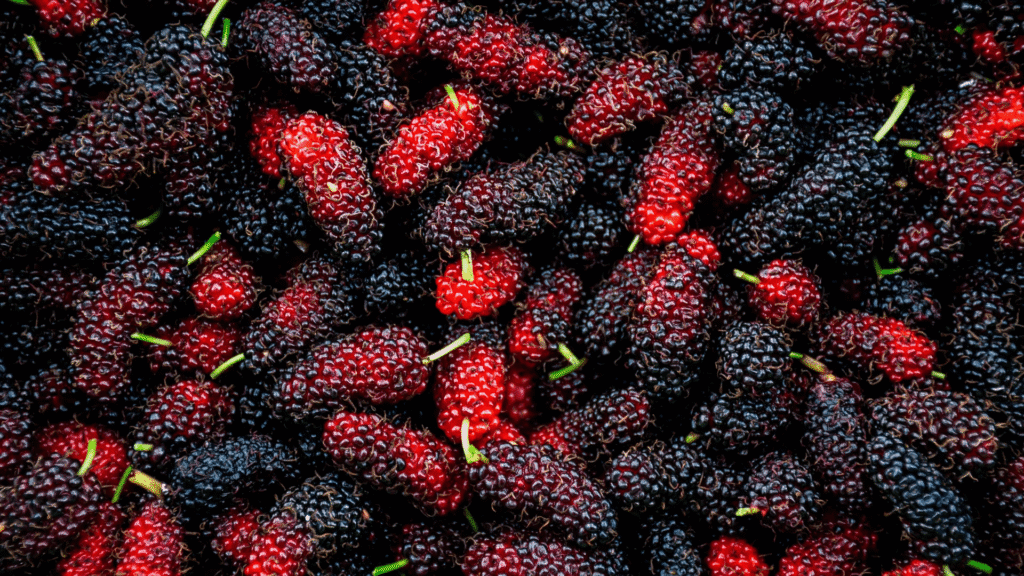
Mulberries could be more interesting to scientists than their sweet taste suggests. New research involving scientists from Wroclaw Medical University has examined how compounds found in mulberry leaves and fruit may interact with gut bacteria and influence metabolic processes.
A review published in Biomolecules suggests that mulberry preparations may alter the composition and activity of the gut microbiome. However, researchers stress that most of the evidence so far comes from laboratory and animal studies, and the effects have not yet been confirmed in humans.
Different Parts of the Plant Contain Different Compounds
Researchers looked primarily at white mulberry (Morus alba) and also examined black mulberry (Morus nigra).
Mulberry leaves contain compounds such as 1-deoxynojirimycin (DNJ), polyphenols and polysaccharides. Black mulberry fruit contains anthocyanins, other phenolic compounds and polysaccharides.
These substances can interact differently with microorganisms in the gut.
Mulberry May Change the Gut Microbiome
Some studies reviewed by the researchers found that mulberry preparations could change the composition and activity of gut bacteria.
These changes were sometimes accompanied by increased production of short-chain fatty acids, including acetate, propionate and butyrate. Such compounds are produced by gut microbes and play roles in normal intestinal function.
Processing Could Make a Difference
One interesting aspect of the research is that how mulberry is processed may influence its biological effects.
Drying, fermentation and extraction can alter the amount and combination of active compounds. This means two products made from the same type of mulberry may not necessarily have identical effects on gut bacteria.
Researchers therefore say the plant variety, part used and processing method all need to be considered when studying mulberry preparations.
Stronger Effects Seen in Mice
Some of the more notable findings came from experiments involving mice fed a high-fat diet.
A preparation containing both polyphenols and polysaccharides from white mulberry fruit produced more favourable changes in gut bacteria than either component alone. The changes were also associated with improvements in some measures related to metabolic health and intestinal function.
In another experiment, researchers transferred gut bacteria from treated mice to other animals, which also showed improvements in certain metabolic disturbances.
Human Evidence Is Still Missing
Despite the promising findings, researchers caution against assuming that the same effects occur in people.
The review found that human studies directly examining mulberry preparations and the gut microbiome are still lacking. Much of the available evidence comes from animal models and laboratory experiments.
Future clinical trials will need to examine standardised mulberry preparations to determine whether the observed changes in gut bacteria translate into measurable health benefits in humans.
Why This Research Matters
The study adds to growing scientific interest in the relationship between food-derived compounds and the gut microbiome.
It also suggests that there may not be one simple “active ingredient” responsible for mulberry’s potential effects. Instead, combinations of compounds, the plant part used and processing techniques may all influence how the body and gut microbes respond.
For now, mulberry remains an interesting subject of research rather than a proven treatment for metabolic or digestive conditions.