


The rules of professional life are changing, and Gen Z is playing a visible role in that shift. From bringing iced coffee into interviews to asking about after-hours messages, younger jobseekers are approaching workplace culture differently from previous generations.
What may once have been considered too casual or too direct is increasingly becoming part of a broader conversation about comfort, communication and personal boundaries.
The Iced Coffee Debate
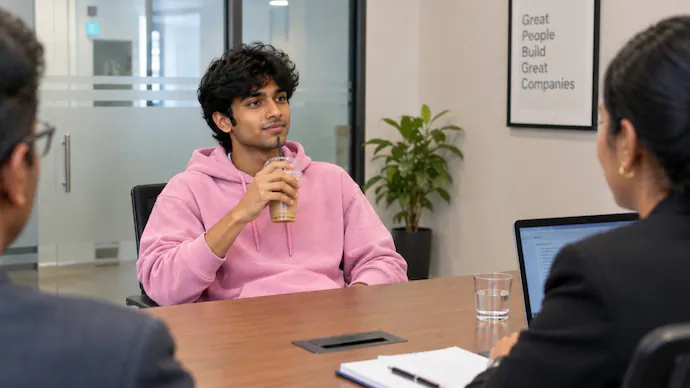
A viral discussion began after recruiter Caitlin Wehniainen questioned whether candidates should arrive at interviews carrying iced coffee or other drinks.
For some recruiters, it can make an interview feel overly casual. Others argue that a drink should not matter if the candidate is prepared and communicates well.
The debate has grown into a larger discussion about what professionalism should look like in today’s workplace.
Dressing Rules Are Becoming Less Formal
Traditional interview clothing is also evolving. Sneakers, oversized clothing, hoodies, coloured hair and piercings are increasingly visible in professional settings.
Recruiters quoted by India Today noted that appearance can still reflect awareness of the workplace, but clothing does not necessarily determine how effectively someone can perform a job.
The growing difference is between looking appropriate for a particular workplace and following outdated dress rules simply because they have always existed.
Emojis Have Entered Professional Conversations
Digital communication has also changed workplace etiquette. Some recruiters now encounter emojis in messages involving interviews, salary discussions and other professional conversations.
For Gen Z, emojis can feel like a natural part of everyday communication. For older professionals, however, the same symbol can sometimes appear too informal or difficult to interpret.
The difference reflects how generations can attach different meanings to the same digital language.
Asking About Work-Life Boundaries
Another noticeable change is the willingness to ask about workplace boundaries before accepting a job.
Questions about replying to messages after working hours, flexibility, management styles and company culture may now appear during interviews rather than after someone joins.
For younger candidates, understanding these expectations can be part of deciding whether a workplace suits their lifestyle.
Rescheduling Is Becoming More Direct
Some HR professionals have also noticed that younger candidates are more comfortable sending short messages when they need to reschedule an interview.
Rather than providing lengthy explanations, a candidate may simply communicate the change and give a brief reason. Some recruiters see this as overly casual, while others view it as a clearer way of communicating personal constraints.
Ghosting Has Become a Workplace Issue
Not every change has been welcomed. Recruiters say some candidates disappear after confirming interviews, accepting offers or even reaching their joining date.
Unlike asking direct questions or setting boundaries, disappearing without communication can create practical problems for employers and candidates.
The expectation of keeping professional communication open remains important regardless of generation.
The Interview Is Becoming a Two-Way Conversation
Perhaps the biggest change is that candidates increasingly see interviews as an opportunity to assess employers too.
Questions about growth, workplace culture, flexibility, management and working hours can help jobseekers understand what they may be signing up for.
The result is a changing professional culture where traditional etiquette meets a younger generation that is more willing to discuss how work fits into everyday life.