








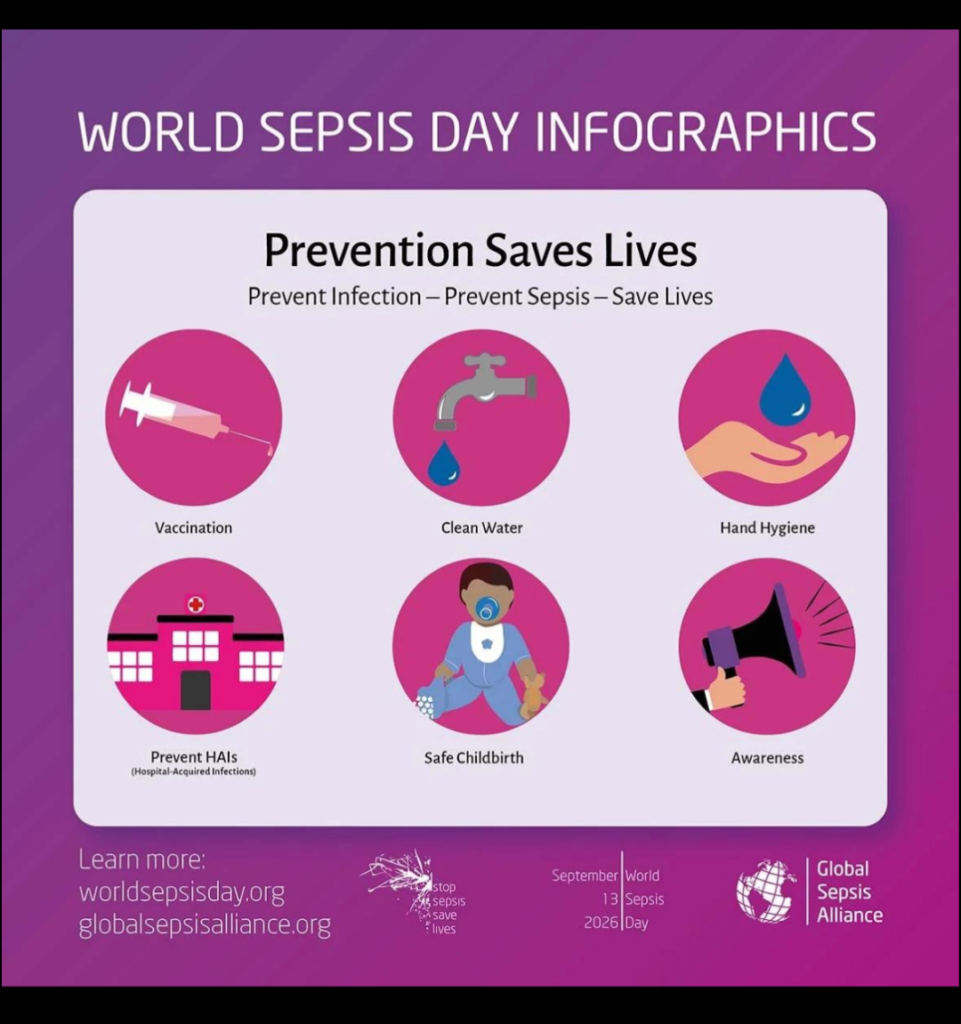
September 13 is observed every year as World Sepsis Day, a global initiative dedicated to raising awareness about sepsis — a life-threatening medical emergency that arises when the body’s response to an infection causes injury to its own tissues and organs.
Initiated in 2012 by the Global Sepsis Alliance (GSA), the day unites healthcare professionals, policymakers, survivors, families, and the public in the fight against one of the world’s most under-recognised health threats.
2026 Theme: “Invest in Sepsis – Save Lives”
The official theme for World Sepsis Day 2026 is “Invest in Sepsis – Save Lives.” It calls for greater investment in prevention, early detection, health systems, healthcare workers, innovation, and preparedness. The campaign stresses that societies are already paying the high cost of sepsis through deaths, long-term disability, and healthcare expenses — and that timely investment can prevent millions of cases and save lives.
The Global Burden of Sepsis
Sepsis affects an estimated 48.9 million people worldwide each year and is linked to approximately 11 million deaths — nearly 1 in 5 of all global deaths. It disproportionately impacts:
Newborns and children under five
Women (including maternal cases)
Older adults
People with weakened immune systems or chronic conditions
Many survivors also face long-term physical, cognitive, or psychological challenges.
What Is Sepsis and Why Early Action Matters
Sepsis is not the infection itself but the body’s extreme, dysregulated response to it. Common sources include infections of the lungs, urinary tract, abdomen, skin, or bloodstream. Without rapid treatment, it can progress to septic shock, multi-organ failure, and death.
Early recognition and treatment — including prompt antibiotics, fluid resuscitation, and source control — can dramatically improve survival rates. Every hour of delay increases the risk of death.