








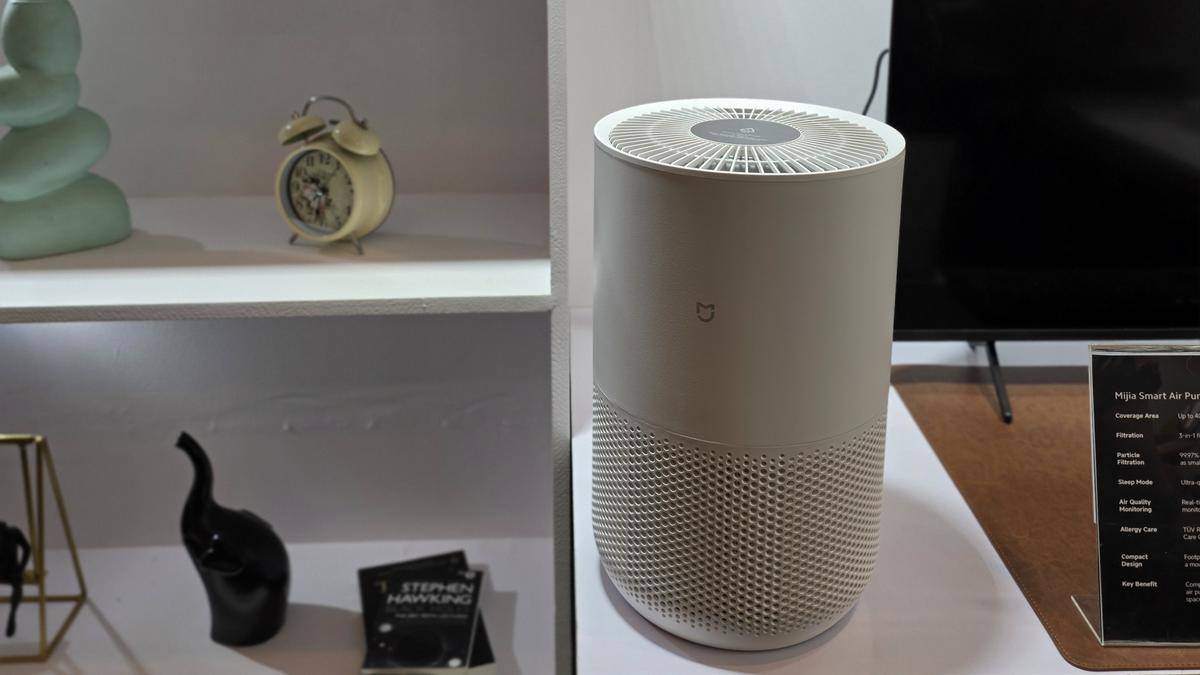
Air purifiers are increasingly becoming essential household appliances in India as worsening air pollution raises concerns about indoor air quality. Demand has risen sharply in November 2026, with consumers purchasing these devices not only in Delhi-NCR but also in cities across Maharashtra, Karnataka, Tamil Nadu and Telangana.
The growing interest is also changing the air purifier market. Buyers are increasingly looking beyond basic filtration and showing interest in smart features, app-based controls and real-time air quality monitoring.
Air Purifier Sales More Than Double
Retailers and manufacturers have reported a significant increase in purchases this year.
Infiniti Retail, which operates Croma, said its air purifier sales volumes had more than doubled in 2026. Amazon India also reported that sales on its platform doubled within a single week.
Xiaomi India reported approximately fourfold year-on-year growth in its air purifier sales, reflecting the expanding demand for indoor air-cleaning products.
Demand Spreads Beyond Delhi-NCR
Delhi-NCR continues to be India’s largest market for air purifiers. It accounted for nearly 80 per cent of sales volumes until 2025.
However, consumer interest is gradually expanding to other regions. Mumbai and several cities in Maharashtra, Karnataka, Tamil Nadu and Telangana are witnessing increased demand.
This suggests that indoor air pollution is becoming a concern for households beyond traditionally high-pollution metropolitan areas.
Smart Features Influence Buying Decisions
Modern air purifiers are attracting buyers with features designed to make monitoring and controlling indoor air quality easier.
Some of the increasingly popular features include:
- Live AQI sensors: Display indoor air quality readings.
- App-based controls: Allow users to operate devices through smartphones.
- Automatic operation: Adjust purification according to detected air quality.
- Multiple filtration layers: Combine different filters to capture airborne particles and reduce odours.
- Heating and humidification: Offer additional functions in selected models.
Consumers are also using online shopping assistants to compare products based on room size, filter types and additional features.
Pollution Changes Consumer Buying Habits
Earlier, many households purchased air purifiers only when pollution levels became particularly severe during winter.
Manufacturers now report a gradual shift towards buying these appliances before the pollution season reaches its peak. Growing awareness of indoor air quality is encouraging consumers to consider air purification as a year-round requirement rather than an occasional purchase.
Companies have also increased product availability to meet demand during periods of poor outdoor air quality.
India’s Air Purifier Market Could Reach ₹1,000 Crore
The expanding demand is creating significant growth opportunities for manufacturers and retailers.
According to estimates from consulting firm The Knowledge Company, India’s air purifier market was valued at approximately ₹320 crore in FY2025. It is projected to reach ₹1,000 crore by FY2030, representing an estimated compound annual growth rate of 26 per cent.
The increasing adoption of smart appliances and greater awareness of indoor pollution are expected to support this expansion.
What Should Consumers Consider Before Buying?
With more models entering the market, selecting an appropriate air purifier requires attention to more than just its price or smart features.
Consumers should consider the room size, Clean Air Delivery Rate (CADR), filter quality, replacement-filter costs and maintenance requirements. A purifier should have sufficient capacity for the space where it will be used.
HEPA filtration is an important feature to examine when comparing products designed to remove fine airborne particles. Buyers should also remember that an air purifier can improve indoor air quality but cannot eliminate every source of pollution or replace efforts to reduce outdoor emissions.
Air Purifiers Move Towards Mainstream Household Use
The latest sales figures indicate a changing attitude towards indoor air quality in India. What was once considered a premium appliance is increasingly being viewed as a practical household investment.
As pollution concerns spread across more cities, manufacturers are expected to focus on affordability, improved filtration and smarter technology to attract a wider range of consumers.