







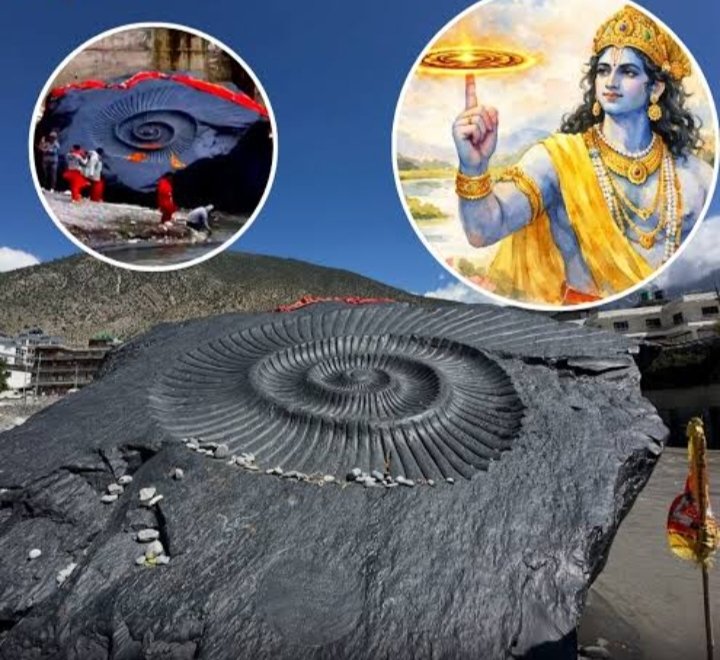
The structure seen in the viral video is actually a 22-foot-tall Shaligram sculpture located in Jomsom, Mustang, Nepal. It was created by Nepali artists during a sculpture workshop held from April 20 to May 4, 2026. The sculpture was unveiled before the recent flood disaster and was created from a large rock near the Kali Gandaki River.
Shaligrams are naturally occurring ammonite fossils found mainly in the Kali Gandaki River region of Nepal. They have deep religious significance in Hindu traditions and are revered as manifestations or symbols of Lord Vishnu. Their geological origin dates back to an ancient marine environment that existed millions of years ago. The important distinction is that natural Shaligram fossils do exist, but the giant structure shown in this viral video is a modern artistic sculpture, not a newly discovered 175-million-year-old fossil.
Social media posts claimed that a 31-tonne Shaligram, around 175 million years old, had suddenly appeared near Muktinath following the Nepal disaster.Fact-checkers found no reliable evidence that such a natural Shaligram was newly discovered there. The viral visuals instead correspond to the large sculpture created at Jomsom earlier in 2026.
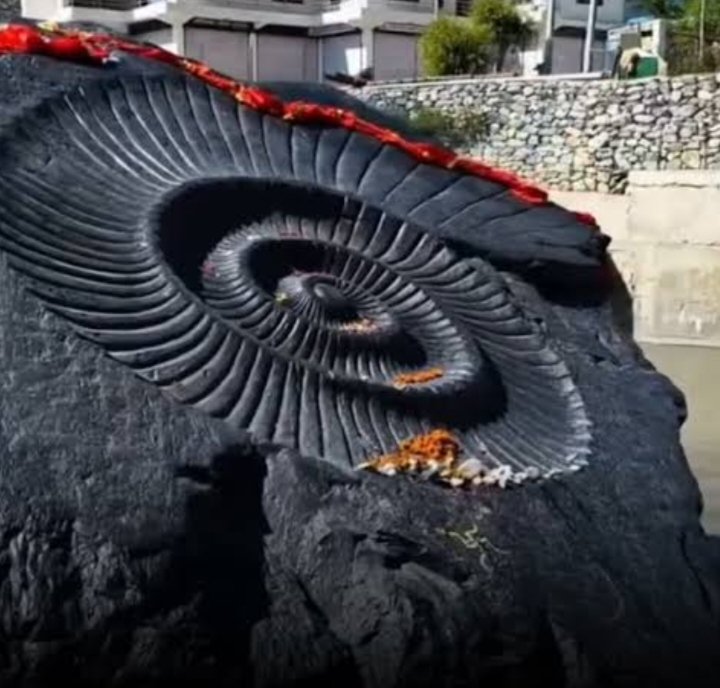
The giant sculpture was not created overnight.A special sculpture workshop was conducted from April 20 to May 4, 2026, lasting around 15 days.According to reports from Nepal, more than 36 sculptors and artists participated in the programme.During the workshop, artists used large rocks found around the Kali Gandaki River area to create several religious and cultural sculptures. These included representations of Shaligram, Lord Shiva, Goddess Parvati, Lord Vishnu, Buddha, as well as Himalayan wildlife such as the snow leopard and Himalayan sheep.The project was intended to highlight the cultural, religious and artistic significance of the Mustang region.
While viral social media posts claim that the giant Shaligram suddenly appeared after the recent floods, available news reports tell a different story.The giant Shaligram sculpture was officially unveiled on May 28, 2026, following religious ceremonies.Reports state that Jagadguru Shankaracharya Sri Sri Sri Vidhushekhara Bharati Mahaswamiji of Sringeri Sharada Peetham attended the event.This timeline is important because it shows that the structure was already present and publicly known before the viral posts began claiming that it had emerged following a natural disaster.
There is an important reason why the claim may appear convincing to many people.Natural Shaligram stones do have a very ancient geological history. The stones found naturally in the Kali Gandaki River region are generally associated with ammonite fossils.Shaligrams also have immense religious significance in Hinduism and are traditionally revered as sacred representations associated with Lord Vishnu.However, the ancient geological history of naturally occurring Shaligram fossils should not be confused with the modern sculpture created in Jomsom in 2026.The fact that genuine Shaligram fossils are millions of years old does not mean that the large sculpted rock shown in the viral video is itself a 175-million-year-old naturally discovered Shaligram.Fact-check reports indicate that the structure shown in the viral video was created in 2026 as part of the sculpture project in Jomsom.There is no credible evidence that a 31-tonne, 175-million-year-old Shaligram suddenly emerged near Muktinath as a result of the floods.More importantly, photographs and videos of the giant sculpture were already available online before the recent viral claims began circulating.Reports indicate that visuals of the sculpture had been shared on social media as early as June 2026. This further weakens the claim that the structure was newly exposed by a natural disaster.
Shaligram stones hold a special place in Hindu religious traditions.They are traditionally regarded as sacred manifestations or symbols associated with Lord Vishnu and are worshipped by devotees in temples and homes.The Kali Gandaki River valley in Nepal is particularly famous for naturally occurring Shaligram stones. The region is also closely connected with the famous Muktinath pilgrimage, one of the important spiritual destinations in the Himalayas.Because of this religious and cultural significance, the giant Shaligram sculpture created in Jomsom has attracted the attention of devotees, tourists and social media users.The sculpture also adds a new cultural attraction to the Mustang region, which is already known for its Himalayan landscapes, religious sites and traditional heritage.