




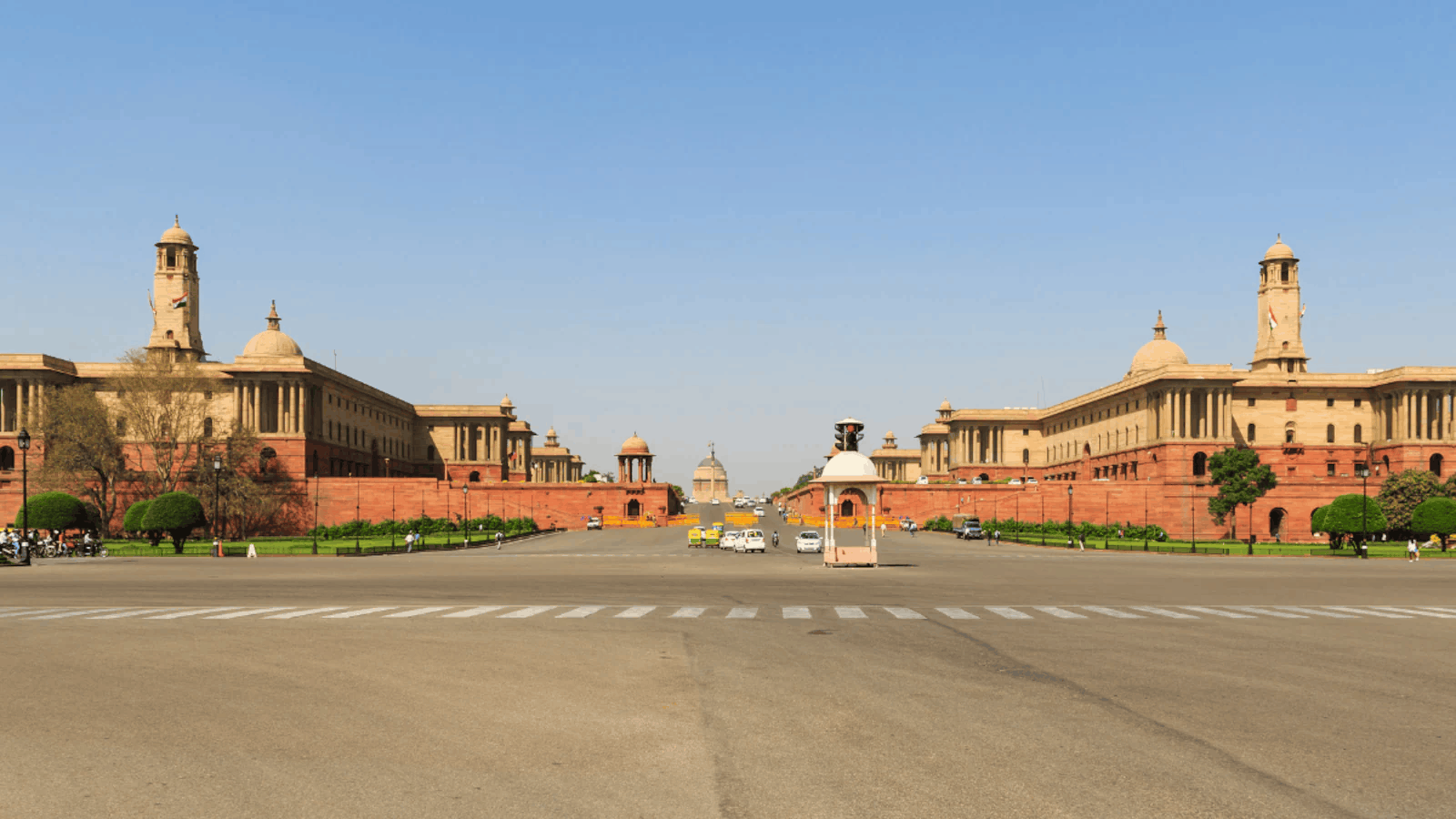
New Delhi is preparing to become home to one of the world’s biggest cultural attractions with the development of the Yuge Yugeen Bharat Museum. The ambitious project will transform the historic North Block and South Block buildings on Raisina Hill into a major national museum dedicated to India’s history, heritage and civilisational journey.
The Union Cabinet approved the project on November 11, 2026, with an estimated investment of ₹3,230 crore. The museum is expected to have the world’s largest display area, surpassing internationally recognised institutions such as the Louvre in Paris and the British Museum in London.
1. Historic Government Buildings to Become a Museum
The North Block and South Block buildings, which have served as important centres of India’s administration, will receive a new cultural purpose.
The project will use an adaptive reuse approach, preserving the architectural character and heritage significance of the historic structures while converting them into public exhibition spaces.
Together, the buildings will have a proposed built-up area of approximately 1,78,509 square metres.
2. Bigger Display Area Than the Louvre and British Museum
One of the most remarkable features of the project is its planned exhibition space.
The Yuge Yugeen Bharat Museum is expected to have approximately 1,00,000 square metres of display area. By comparison, the Louvre has around 73,000 square metres, while the British Museum has approximately 70,000 square metres.
This scale is expected to place Delhi among the world’s leading museum destinations and give visitors access to a much larger presentation of India’s cultural heritage.
3. Around 18 Lakh Objects Identified for the Collection
The museum is expected to bring together an extensive collection of historical and cultural objects from across India.
Around 18 lakh objects have been identified from the National Museum, museums under the Ministry of Culture, 52 Archaeological Survey of India site museums, state museums and private collections.
These collections will help present different periods of Indian history, including artistic traditions, archaeological discoveries, cultural practices and historical developments.
4. Galleries Will Explore India’s Knowledge and Cultural Traditions
The museum will feature thematic galleries covering a wide range of subjects. Planned themes include:
- Architecture and Cityscapes
- Mathematics and Astronomy
- Languages and Scripts
- Faith and Spirituality
- Trade, Ideas and Cultural Connections
- Art and Traditional Adornment
The exhibitions will combine historical collections with modern interpretation and immersive technologies to make India’s heritage accessible to domestic and international visitors.
5. First Gallery Expected to Open in 2027
The project will be developed in phases between the financial years 2026–27 and 2030–31.
The first gallery, based on the theme of Adornment, is expected to open in the North Block during the latter part of 2027. Additional galleries and facilities will be introduced gradually, with the overall project scheduled for completion by 2031.
The museum will also include collection storage, conservation facilities, research and learning spaces, and visitor amenities.
6. Major Tourism Attraction for Delhi
The government expects the museum to accommodate approximately one crore visitors annually. It is designed to attract tourists, students, researchers, historians and international visitors interested in India’s cultural heritage.
The project is also expected to generate revenue through ticket sales, guided tours, retail outlets, food facilities, events and digital experiences.
Its location on Raisina Hill, close to several important national landmarks, could further strengthen Delhi’s position as a major cultural and tourism destination.
7. A New Chapter for India’s Cultural Heritage
The transformation of North Block and South Block represents a significant change in how these historic buildings will be used. Once centres of government administration, they are being planned as public spaces where visitors can explore India’s history and cultural traditions.
If completed as scheduled, the Yuge Yugeen Bharat Museum could become one of the most significant museum developments in the country, bringing a vast collection of Indian heritage under one roof and giving Delhi a major new international attraction.